Insights From Liquid Chromatography-Mass Spectrometry-Measured Androgens in Indian Women With Polycystic Ovary Syndrome
Karthik Subramaniam, Nimmi Kansal

TL;DR
The study finds that androstenedione (A4) measured by LC-MS/MS is more effective than testosterone in diagnosing PCOS in Indian women.
Contribution
This study highlights the diagnostic potential of androstenedione in PCOS using LC-MS/MS, which may improve detection accuracy.
Findings
A4 had the highest diagnostic accuracy (AUC of 0.89) for PCOS compared to testosterone.
Many PCOS patients with normal testosterone levels had elevated A4 or DHEA.
A4 levels were significantly higher in PCOS-D phenotype compared to controls.
Abstract
Introduction: Hyperandrogenemia is the defining feature of polycystic ovary syndrome (PCOS). Increasingly androgens are being advocated to be measured through liquid chromatography-mass spectrometry (LC-MS/MS). The role of LC-MS/MS over immunoassay in diagnosis of PCOS has been debated over a long time. We analyzed the role of androgens as measured by LC-MS/MS in diagnosing women with PCOS. Materials and methods: We performed a prospective case-control study involving 59 women with PCOS compared with 30 age- and BMI-matched controls. Results: In PCOS phenotypes A-C (hyperandrogenic by definition), 19/47 (40%) had normal testosterone (T) levels but 14/19 (75%) had either elevated androstenedione (A4) or dehydroepiandrosterone. A4 had the highest area under curve (0.89) for diagnosing PCOS followed by T (0.81). Even in the PCOS-D phenotype (sonologic polycystic ovaries +…
Genes, proteins, chemicals, diseases, species, mutations and cell lines named across the full text — each resolved to its canonical identifier and authoritative record.
Click any figure to enlarge with its caption.
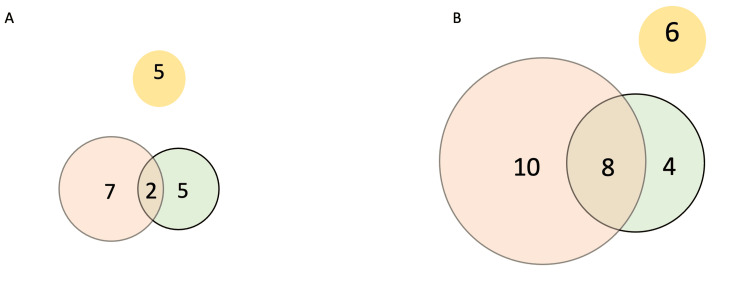 Figure 1
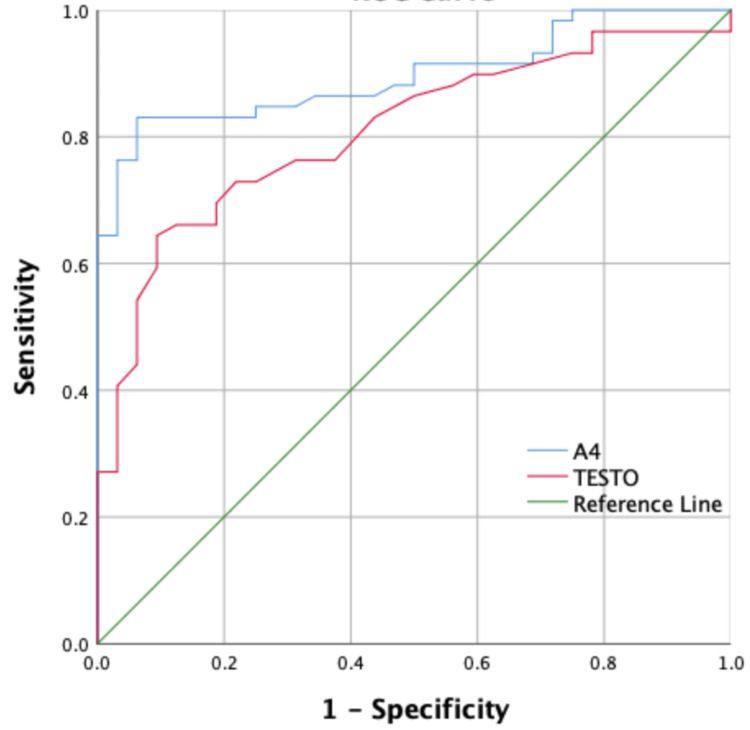 Figure 2
Peer Reviews
No public reviews on file for this paper yet. If you reviewed it on a platform where reviews are public (OpenReview, ICLR, NeurIPS, ICML), you can paste yours below so the community can read it here.
Videos
No videos yet. Explain this paper in a talk, walkthrough, or lecture? Add one.
Taxonomy
TopicsOvarian function and disorders · Hormonal and reproductive studies · Reproductive Biology and Fertility