Incidental detection of Cladosporium in cytology
Tummidi Santosh, Indranil Chakrabarti, Aparna Palit, Sonakshi Srivastava

TL;DR
This paper reports a case where a fungal organism, Cladosporium, was incidentally detected in a patient's cytology sample.
Contribution
The novelty lies in highlighting the incidental detection of Cladosporium using FNAC and ROSE in a clinical setting.
Findings
Cladosporium sps. was detected in a patient with elbow joint swellings via cytology.
FNAC combined with ROSE proved effective for rapid fungal detection.
Incidental fungal detection in cytology is a notable clinical challenge.
Abstract
Fungal infection incidental detection is a common encounter in cytopathology practices. Detection of the fungal organisms and awareness of the morphological features are challenges for the cytopathologist. We report a case of incidental detection of a fungal organism in a 67-year-old male patient with complaints of bilateral elbow joint swellings. Cytology was done and showed a fungal organism (Cladosporium sps.). Fine needle aspiration cytology (FNAC) along with Rapid on-site evaluation (ROSE) is a rapid, minimally invasive technique used for the diagnosis and detection of various fungi / parasites leading to early and definitive treatment. The online version contains supplementary material available at 10.1186/s13000-024-01469-2.
Genes, proteins, chemicals, diseases, species, mutations and cell lines named across the full text — each resolved to its canonical identifier and authoritative record.
Click any figure to enlarge with its caption.
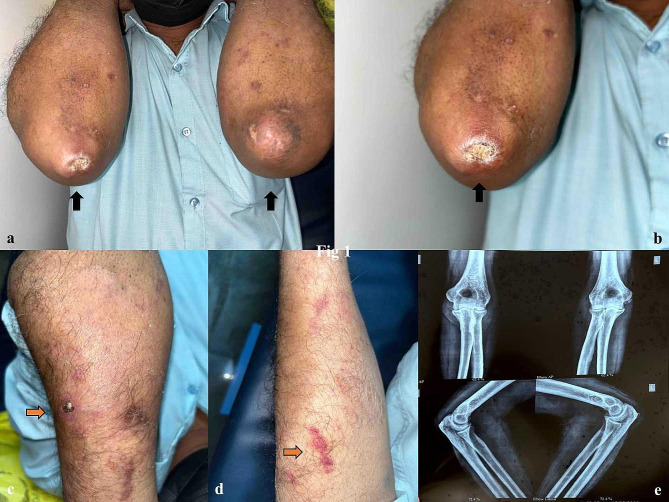 Figure 1
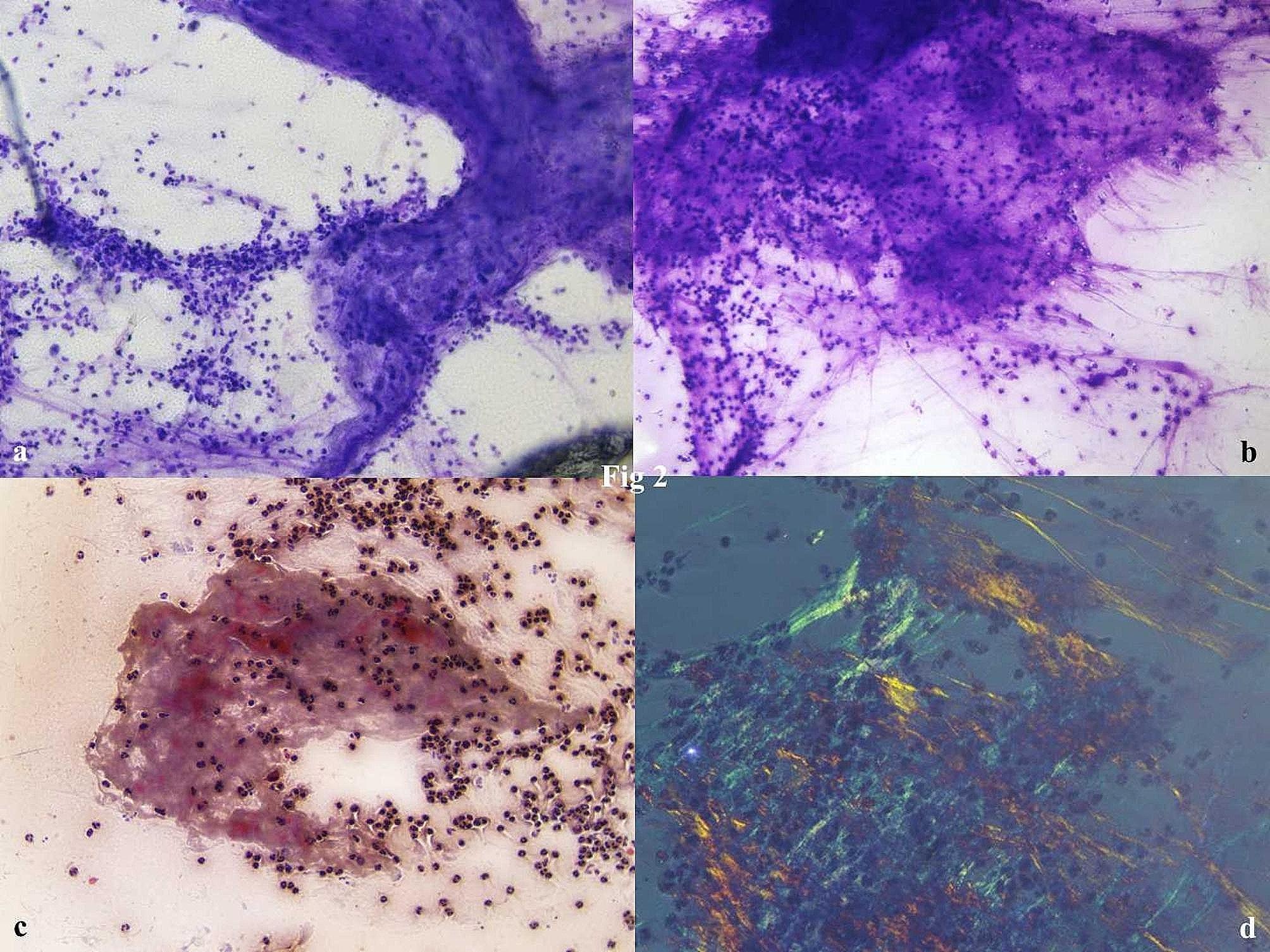 Figure 2
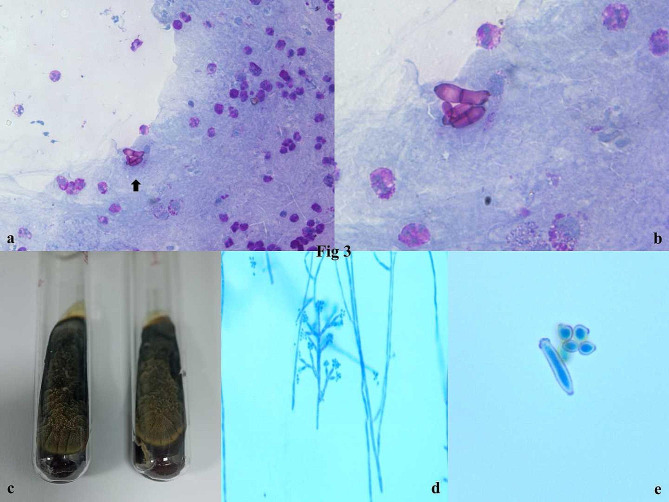 Figure 3
Peer Reviews
No public reviews on file for this paper yet. If you reviewed it on a platform where reviews are public (OpenReview, ICLR, NeurIPS, ICML), you can paste yours below so the community can read it here.
Videos
No videos yet. Explain this paper in a talk, walkthrough, or lecture? Add one.
Taxonomy
TopicsFungal Infections and Studies · Infectious Diseases and Mycology · Antifungal resistance and susceptibility