A signal-detection account of item-based and ensemble-based visual change detection: A reply to Harrison, McMaster, and Bays
Daniil Azarov, Daniil Grigorev, Igor Utochkin

TL;DR
This paper argues that ensemble information influences visual change detection, challenging previous conclusions about how people use memory for individual items.
Contribution
The paper introduces a new interpretation of optimal summation as an ensemble-based strategy and redefines the reference level for item-based performance.
Findings
Performance in change detection is influenced by the statistics of the whole memory set, even when only one item is tested.
Optimal summation can be interpreted as a holistic, ensemble-based decision strategy.
Both the authors' and Harrison et al.'s observers outperformed the redefined minimum rule for item-based strategies.
Abstract
Growing empirical evidence shows that ensemble information (e.g., the average feature or feature variance of a set of objects) affects visual working memory for individual items. Recently, Harrison, McMaster, and Bays (2021) used a change detection task to test whether observers explicitly rely on ensemble representations to improve their memory for individual objects. They found that sensitivity to simultaneous changes in all memorized items (which also globally changed set summary statistics) rarely exceeded a level predicted by the so-called optimal summation model within the signal-detection framework. This model implies simple integration of evidence for change from all individual items and no additional evidence coming from ensemble. Here, we argue that performance at the level of optimal summation does not rule out the use of ensemble information. First, in two experiments, we…
Genes, proteins, chemicals, diseases, species, mutations and cell lines named across the full text — each resolved to its canonical identifier and authoritative record.
Click any figure to enlarge with its caption.
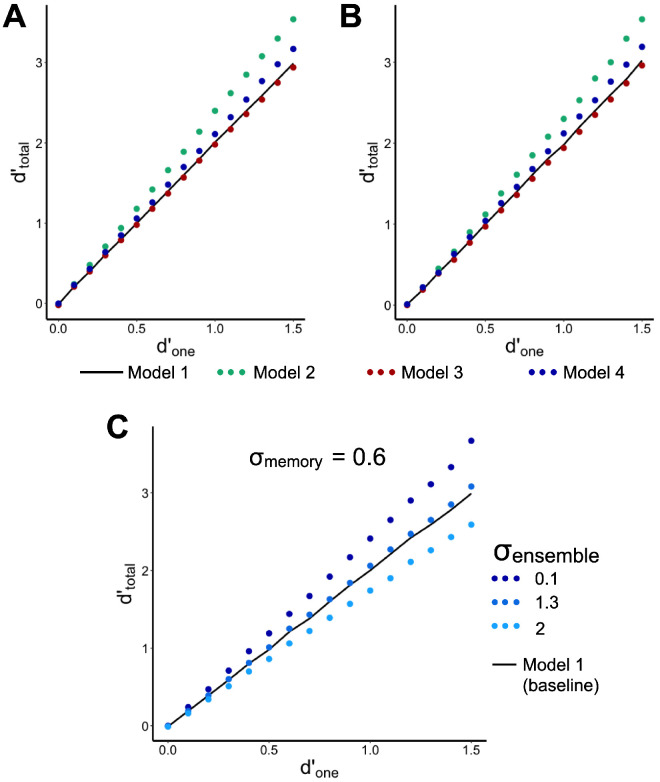 Figure 1
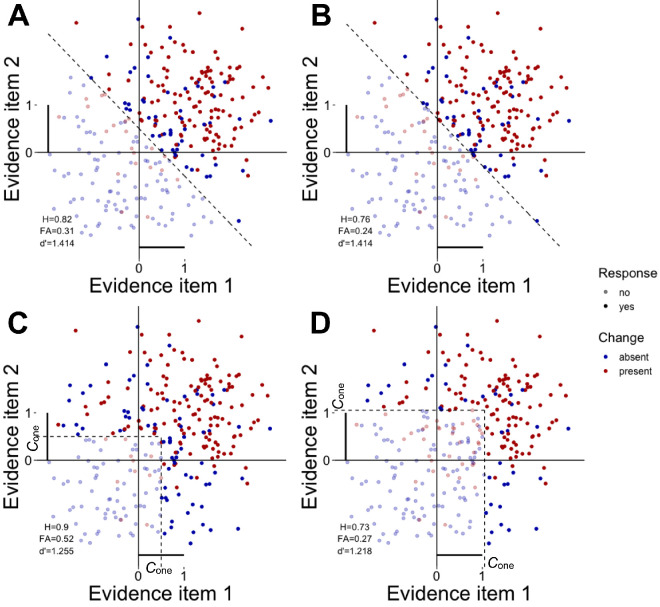 Figure 2
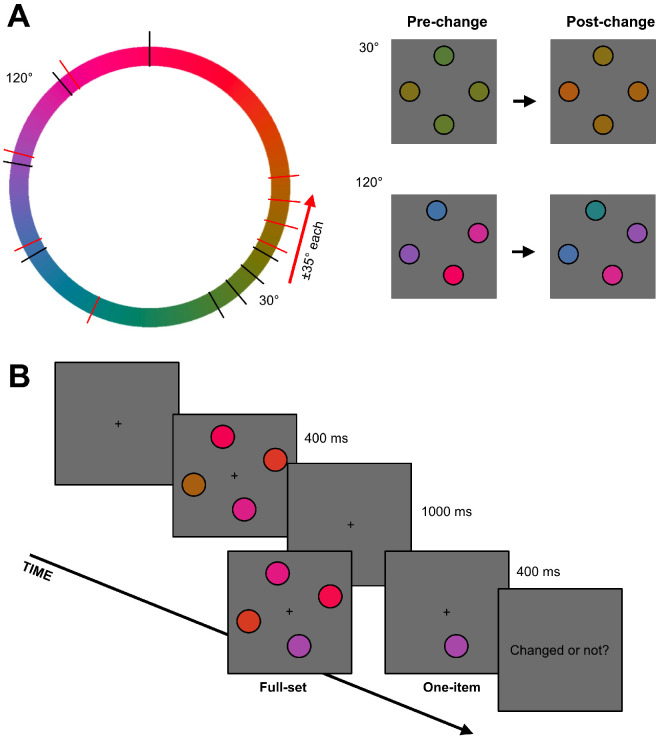 Figure 3
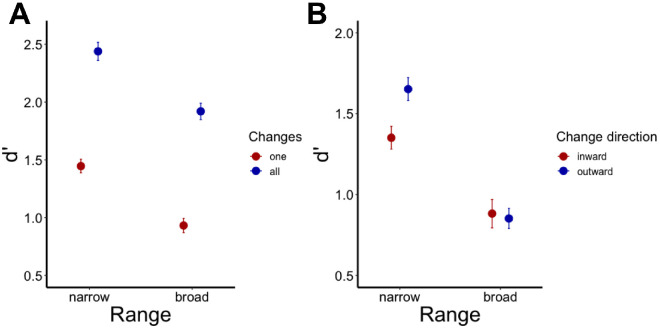 Figure 4
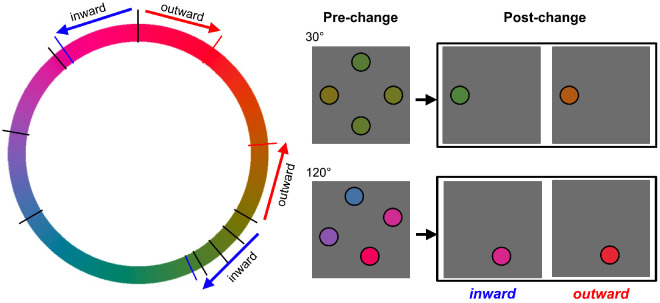 Figure 5
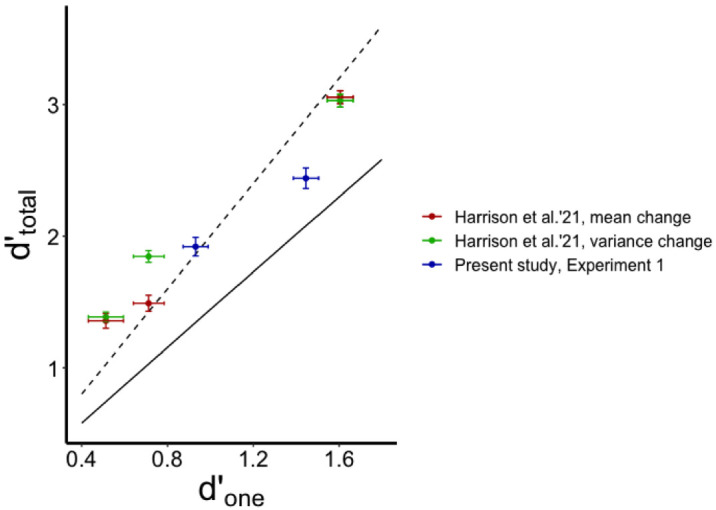 Figure 6
Peer Reviews
No public reviews on file for this paper yet. If you reviewed it on a platform where reviews are public (OpenReview, ICLR, NeurIPS, ICML), you can paste yours below so the community can read it here.
Videos
No videos yet. Explain this paper in a talk, walkthrough, or lecture? Add one.
Taxonomy
TopicsNeural and Behavioral Psychology Studies · Neural dynamics and brain function · EEG and Brain-Computer Interfaces