Hyperglycemia-Induced Complete Left-Sided Hemiballismus Due to Uncontrolled Diabetes in a 70-Year-Old Female: A Case Report
Taylor F Faust, Julee Reitzel, Aftab Khan, Garrett M Cail, Raphael Quansah

TL;DR
A 72-year-old woman with uncontrolled diabetes developed left-sided involuntary movements, possibly due to hyperglycemia affecting the basal ganglia.
Contribution
This case report highlights hyperglycemia as a potential cause of hemiballismus and emphasizes the need for further research into its mechanisms.
Findings
The patient exhibited left-sided hemiballismus linked to hyperglycemia and diabetic ketoacidosis.
The case suggests a possible connection between uncontrolled diabetes and basal ganglia dysfunction.
Management of hyperglycemia-induced hemiballismus remains complex and poorly understood.
Abstract
This report details the presentation of a 72-year-old female with left-sided continuous non-rhythmic involuntary movements persisting for two months. The movements affected the left side of her face, arm, and leg. The patient had a history of multiple hyperglycemic episodes and diabetic ketoacidosis. This report investigates the basal ganglia’s involvement in hemiballismus, a movement disorder possibly linked to the patient’s hyperglycemia. It discusses the complex management of hyperglycemia-induced hemiballismus and the need for more research to understand the underlying mechanism and optimal treatment strategies.
Genes, proteins, chemicals, diseases, species, mutations and cell lines named across the full text — each resolved to its canonical identifier and authoritative record.
Click any figure to enlarge with its caption.
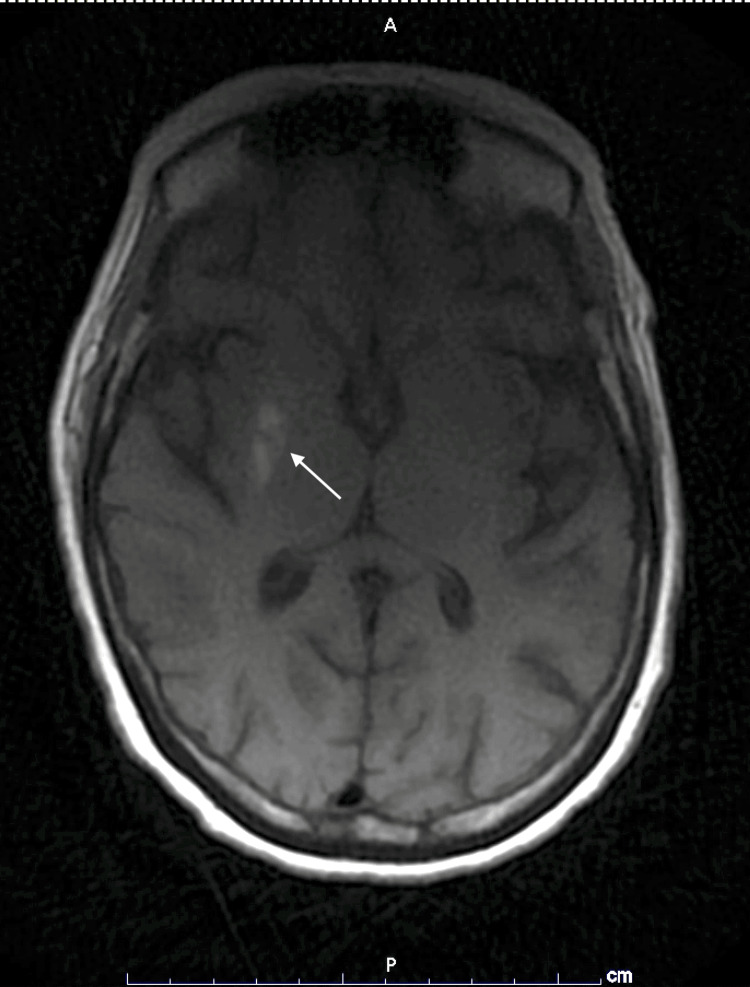 Figure 1
Peer Reviews
No public reviews on file for this paper yet. If you reviewed it on a platform where reviews are public (OpenReview, ICLR, NeurIPS, ICML), you can paste yours below so the community can read it here.
Videos
No videos yet. Explain this paper in a talk, walkthrough, or lecture? Add one.
Taxonomy
TopicsNeurological and metabolic disorders · Autoimmune Neurological Disorders and Treatments · Glycogen Storage Diseases and Myoclonus