CXCR5+TIM-3-PD-1+ stem-like cytotoxic CD8+ T cells: elevated in chronic rhinosinusitis and associated with disease severity
Zhichen Liu, Zixuan Zhao, Huanxia Xie, Ning Lu, Jisheng Liu, Qingqing Jiao

TL;DR
This study finds that specific T cells are elevated in chronic rhinosinusitis and linked to disease severity, suggesting a potential new immunotherapy target.
Contribution
The novel contribution is identifying elevated CXCR5+TIM-3-PD-1+ stem-like cytotoxic CD8+ T cells in CRS nasal tissues and their association with disease severity.
Findings
CXCR5 and PD-1 expression on T cells is significantly increased in nasal tissues of CRS patients.
CXCR5+TIM-3-PD-1+ CD8+ T cell levels in nasal polyps are negatively correlated with Lund-Mackay scores.
These T cells are more abundant in nasal tissues than in peripheral blood of CRS patients.
Abstract
Chronic rhinosinusitis (CRS) is a chronic inflammatory disease with an autoimmune background. Altered expression levels of T cell immunoglobulin and mucin-domain containing-3 (TIM-3), C-X-C chemokine receptor type 5 (CXCR5), and programmed cell death protein 1 (PD-1) are implicated in the progression of inflammatory and autoimmune diseases. Moreover, CXCR5+TIM-3-PD-1+ stem-like cytotoxic T cells function as memory stem cells during chronic disease processes and retain cytotoxicity-related gene networks. To explore the expressions of CXCR5, TIM-3, and PD-1 on T cells and their correlation with clinical parameters in CRS. Flow cytometry was used to assess the expressions and co-expressions of CXCR5, TIM-3, and PD-1 on T cells in the tissues of the paranasal sinus and peripheral blood of patients with CRS as well as healthy controls. Immunofluorescence was used to assess the…
Genes, proteins, chemicals, diseases, species, mutations and cell lines named across the full text — each resolved to its canonical identifier and authoritative record.
Click any figure to enlarge with its caption.
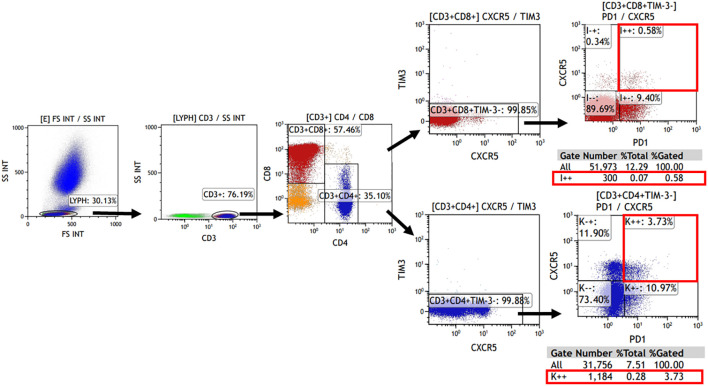 Figure 1
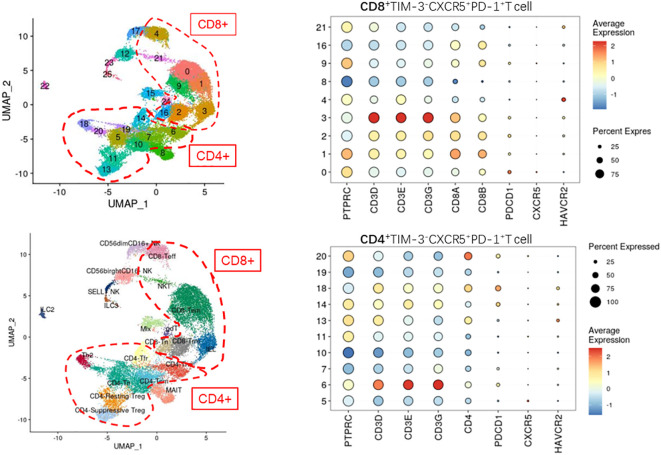 Figure 2
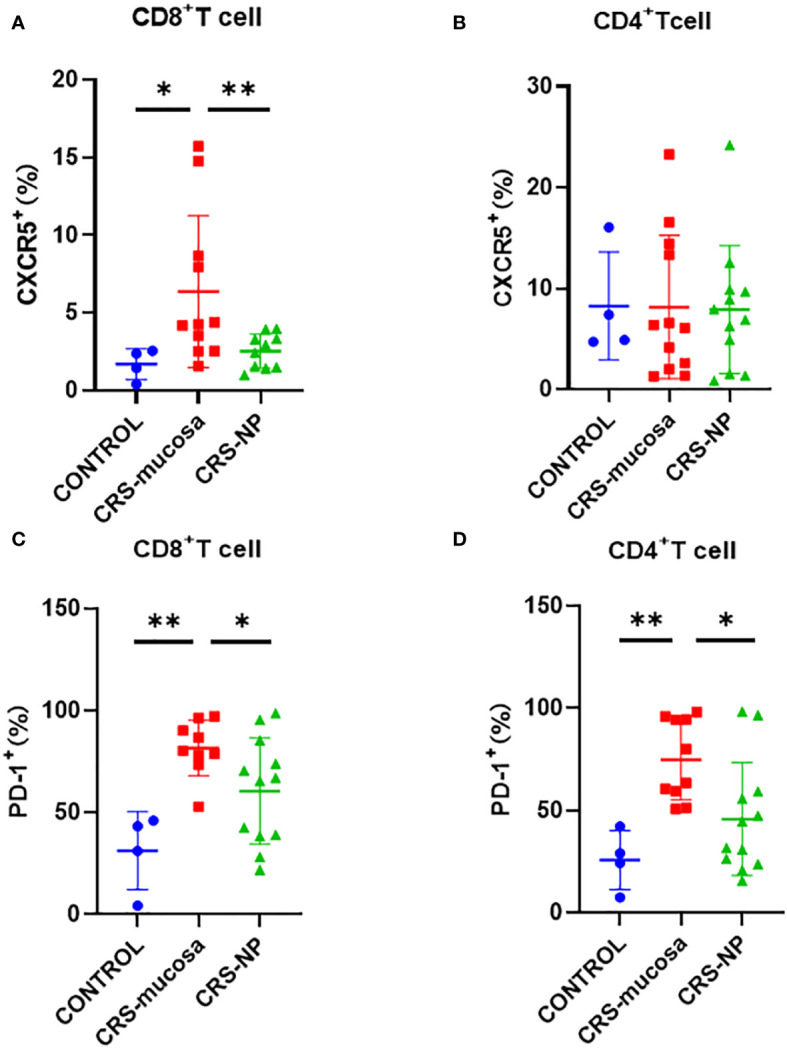 Figure 3
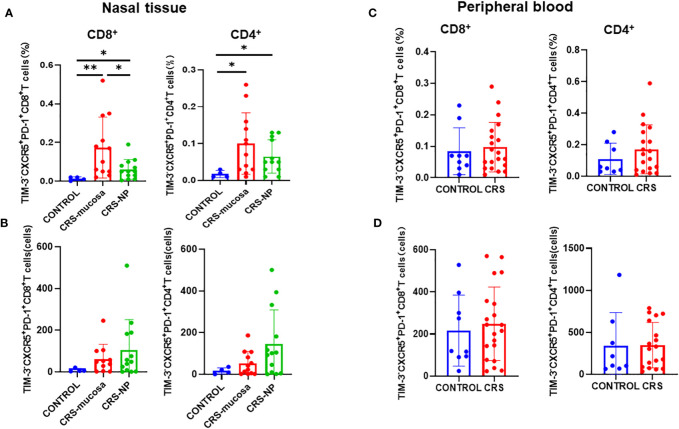 Figure 4
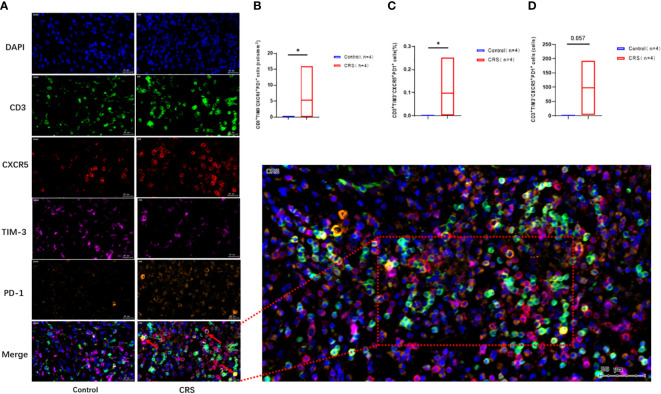 Figure 5
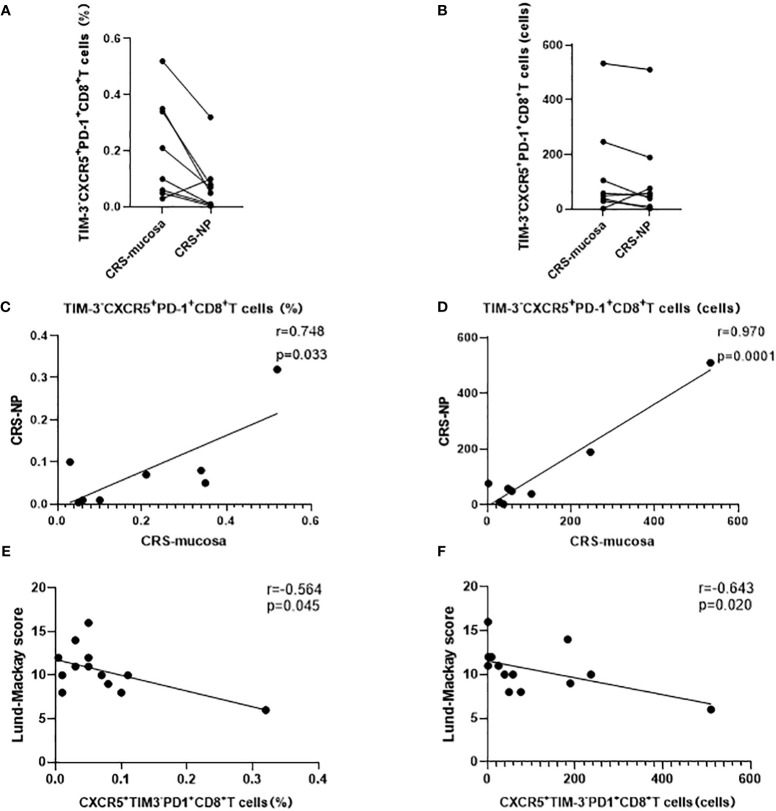 Figure 6
Peer Reviews
No public reviews on file for this paper yet. If you reviewed it on a platform where reviews are public (OpenReview, ICLR, NeurIPS, ICML), you can paste yours below so the community can read it here.
Videos
No videos yet. Explain this paper in a talk, walkthrough, or lecture? Add one.
Taxonomy
TopicsSinusitis and nasal conditions · Mycobacterium research and diagnosis · Infectious Diseases and Mycology