Oscillations in Planar Deficiency-One Mass-Action Systems
Balázs Boros, Josef Hofbauer

TL;DR
This paper explores how certain chemical reaction systems can exhibit oscillations when they have a specific structural property called deficiency-one.
Contribution
The paper introduces new examples of planar deficiency-one mass-action systems that show oscillatory behavior, such as centers or multiple limit cycles.
Findings
Deficiency-one planar mass-action systems can exhibit oscillatory dynamics like centers or multiple limit cycles.
These findings contrast with deficiency-zero systems, which always have globally stable equilibria.
The paper provides concrete examples to illustrate the diverse behaviors of deficiency-one systems.
Abstract
Whereas the positive equilibrium of a planar mass-action system with deficiency zero is always globally stable, for deficiency-one networks there are many different scenarios, mainly involving oscillatory behaviour. We present several examples, with centers or multiple limit cycles.
Genes, proteins, chemicals, diseases, species, mutations and cell lines named across the full text — each resolved to its canonical identifier and authoritative record.
Click any figure to enlarge with its caption.
 Figure 1
 Figure 2
 Figure 3
 Figure 4
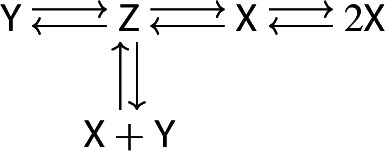 Figure 5
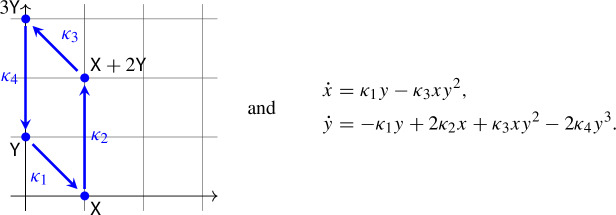 Figure 6
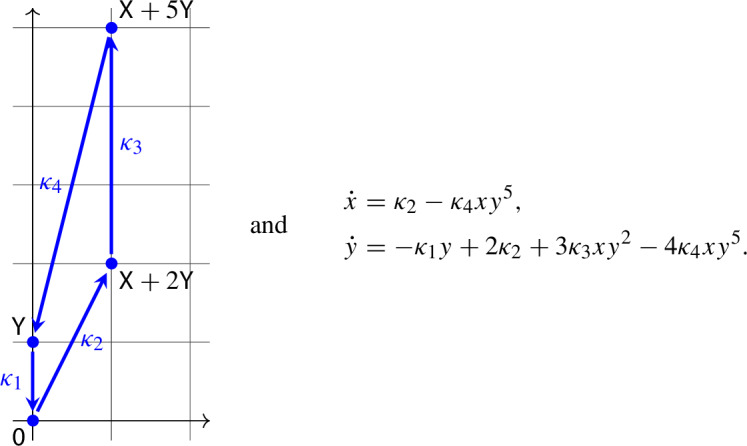 Figure 7
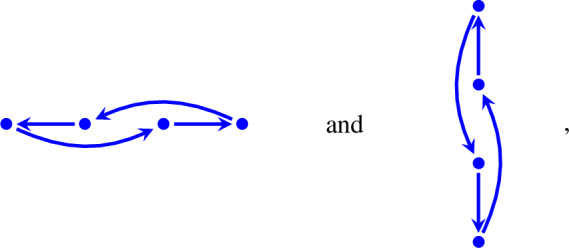 Figure 8
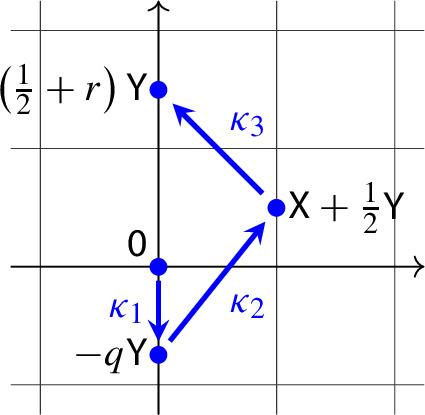 Figure 9
 Figure 10
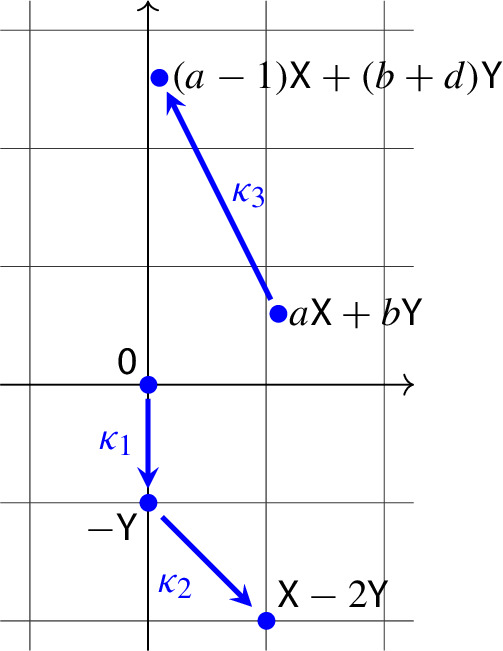 Figure 11
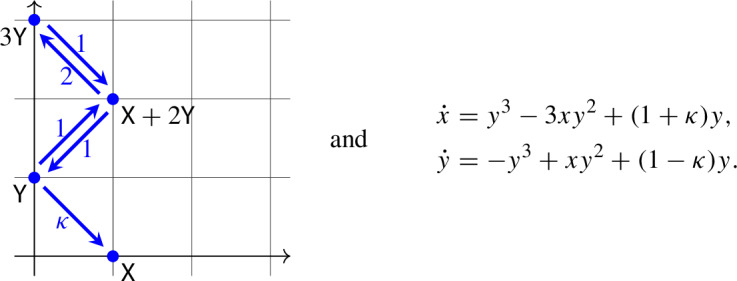 Figure 12
Peer Reviews
No public reviews on file for this paper yet. If you reviewed it on a platform where reviews are public (OpenReview, ICLR, NeurIPS, ICML), you can paste yours below so the community can read it here.
Videos
No videos yet. Explain this paper in a talk, walkthrough, or lecture? Add one.
Taxonomy
TopicsAdvanced Thermodynamics and Statistical Mechanics · Gene Regulatory Network Analysis · Mathematical Biology Tumor Growth