Intra-specific genetic diversity, phylogenetic analysis and ecological preferences of Pentaclethra macrophylla Benth., across Nigeria based on rbcL dataset
Conrad Asotie Omonhinmin, Kristen Oluwafunmilola Alonge

TL;DR
This paper studies the genetic diversity and ecological preferences of the African oil bean tree in Nigeria using the rbcL gene.
Contribution
The study provides new insights into the genetic structure and distribution of P. macrophylla across Nigeria.
Findings
The rbcL dataset reveals distinct genetic diversity patterns among P. macrophylla accessions.
Phylogenetic analysis shows relationships between accessions from different agro-ecological zones.
Ecological preferences are linked to the distribution of P. macrophylla in Nigeria.
Abstract
Pentaclethra macrophylla Benth., commonly referred to as “African oil bean”; is a leguminous tree species that belongs to the subfamily Caesalpinioideae of the family Fabaceae and it is native to the dry tropical rainforest forest of West to Central Africa. It is widely used as a resource for food, medicine, firewood, construction, arts, and craft and particularly of socio-economic and cultural value to indigenous people of southern, Nigeria. Despite its significant potential, it is considered underutilized in the aspect of research attention and global trade. The dataset highlights the distribution pattern, genetic diversity, phylogenetic relationship, and ecological preferences of P. macrophylla accessions collected across the various agro-ecological zones in Nigeria where it is distributed, using the Ribulose 1,5 Bisphosphate Carboxylase/Oxygenase (rbcL) gene.
Genes, proteins, chemicals, diseases, species, mutations and cell lines named across the full text — each resolved to its canonical identifier and authoritative record.
Click any figure to enlarge with its caption.
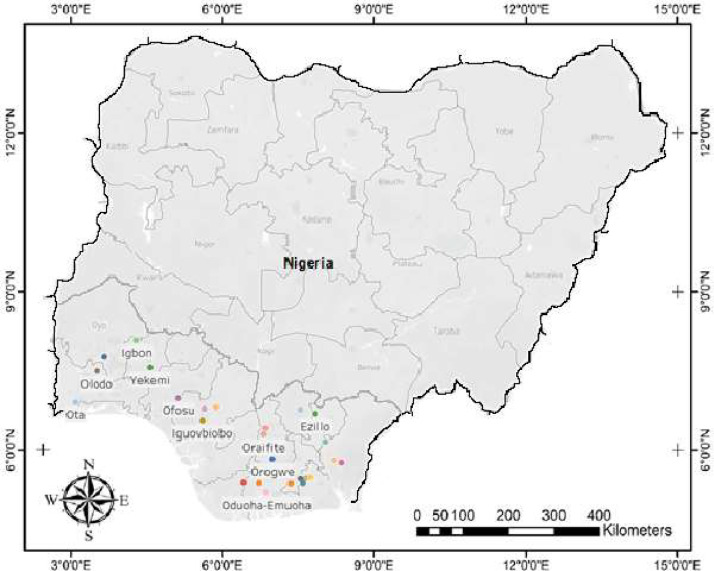 Figure 1
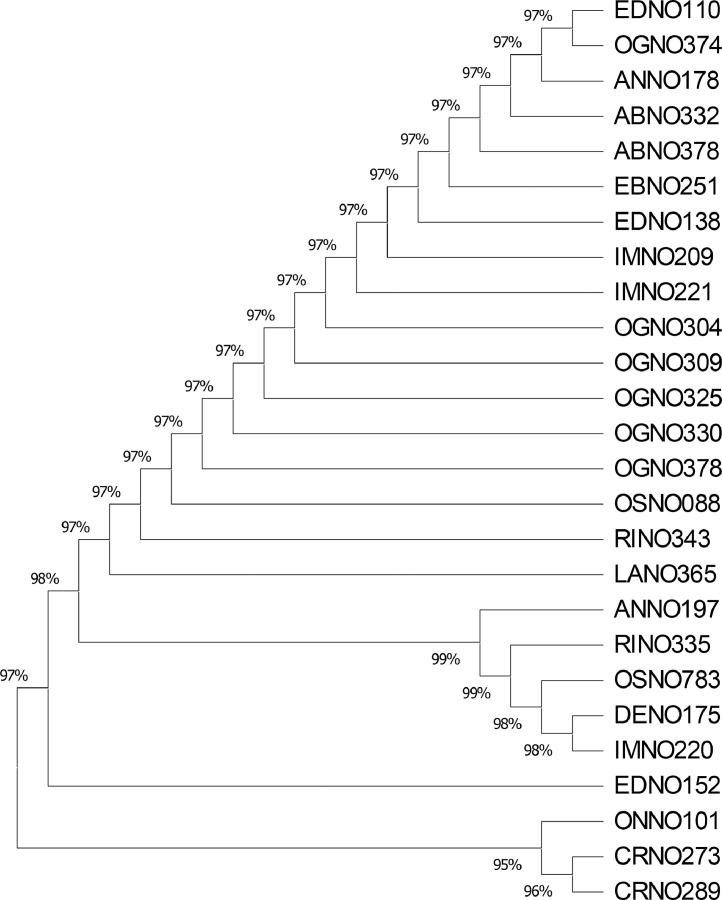 Figure 2
Peer Reviews
No public reviews on file for this paper yet. If you reviewed it on a platform where reviews are public (OpenReview, ICLR, NeurIPS, ICML), you can paste yours below so the community can read it here.
Videos
No videos yet. Explain this paper in a talk, walkthrough, or lecture? Add one.
Taxonomy
TopicsGenetic diversity and population structure · Genomics and Phylogenetic Studies · Seed and Plant Biochemistry
Specifications TableSubjectBiological SciencesSpecific subject areaAgricultural, Genetic diversity, Molecular Phylogenetics, Evolution, Environment conditionsData formatRaw, AnalysedType of dataTables, Figures, Repository dataData collectionTwenty-six (26) leaf samples of P. macrophylla were collected across Nigeria, Silica gel dried, and preserved under -80°C (Table 1). All accessions were evaluated using rbcL primers. Sequences obtained were edited with Geneious prime, and genetic diversity was determined using state-wise genetic distance on DNA SP. The phylogenetic tree was constructed with MEGA X, codon bias usage, amino acid profiling, and %GC content was determined using DNA SP.Data source locationThe data locations are summarised in Table 1, Figure 1 and GenBank Repository.Data accessibilityThe sequence data of the accessions have been deposited in NCBI GenBank database sequence and has the following accession numbers;OR340863, OR340864, OR340865, OR340866, OR340867, OR340868, OR340869, OR340870, OR340871, OR340872, OR340873, OR340874, OR340875, OR340876, OR340877, OR340878, OR340879, OR340880, OR744875, OR744876, OR744877, OR744878, OR744879, OR744880, OR744881, OR744882.Popset 1https://www.ncbi.nlm.nih.gov/popset/2557508192[1].Popset 2https://www.ncbi.nlm.nih.gov/popset/2616679232[2].
Value of the Data
1
- •The data provides information on the distribution and genetic diversity of P. macrophylla across Nigeria using information from partial rbcL gene sequences, nucleotide polymorphism and amino acid composition.
- •This data provides information on the amino acid composition and codon usage bias and the %GC composition of the P. macrophylla rbcL sequences.
- •The data identifies areas of high genetic similarity of P. macrophylla, which can be adopted for the improvement of the species, germplasm bank for species conservation and employed for further studies on species.
- •The rbcL gene sequences can be employed by plant molecular systematists to trace the molecular phylogeny, evolution and possible sub-speciation of P. macrophylla.
Background
2
The objectives of the dataset are to determine distribution pattern, genetic diversity, phylogenetic relationship, and ecological preferences Pentaclethra macrophylla (African Oil bean) in Nigeria.
Data Description
3
The data presents the nucleotide sequences of rbcL gene for the 26 P. macrophylla accessions deposited on NBCI GenBank. Fig. 1; presents the map of the collection sites across the study area [3]. Table 1; list the accessions studied (26), site collection details and NCBI GenBank accession numbers. Table 2; shows the state-wise (within-species) genetic diversity of P. macrophylla. Table 3; highlights the nucleotide frequency (TCAG) of the P. macrophylla accessions. Table 4; records the amino acid composition of nucleotides of P. macrophylla accessions. Table 5; presents the codon bias usage of the P. macrophylla accessions as well as their relative synonymous codon usage. Fig 2; presents the phylogenetic tree of P. macrophylla accessions.Fig. 1. Map showing P. macrohylla sample collection areas across the dry rain forest zone of southern Nigeria.Fig 1. Table 1Collection Information and geographical co-ordinates of the 26 P. macrophylla accessions.Table 1SNGenBank Accession NoLatitude (^o^N)Longitude (^o^E)Altitude (m)Collection SiteLGAState1OR3408635.13887.52681NlaguObingwaAbia2OR3408644.90057.181619UzuakuUkwa WestAbia3OR3408656.07396.819262ObaIdemili SouthAnambra4OR7448756.21977.0105140Enugwu-AgidiNjikokaAnambra5OR7448765.95168.029521Agbara-Ekureku IIAbiCross River6OR7448775.51938.1808126Betem townBiaseCross River7OR7448786.36746.4032207Idumuja-ugbokoAniocha NorthDelta8OR3408726.29976.3773223IgbodoIka North-EastDelta9OR3408666.43627.810163EzilloIshieluEbonyi10OR3408676.38348.012181IshiekeIvoEbonyi11OR3408686.43715.7824136OrokosaUmagbae-SouthEdo12OR7448796.57245.9091135EruaUhunmwodeEdo13OR3408806.47587.5509148Old Emene JunctionEnugu EastEnugu14OR3408696.08077.4701232AwguAwguImo15OR7448805.54436.976381OrogweOwerri WestImo16OR3408705.43126.5736134AmiriOtu-EastImo17OR3408715.73966.883868MgbidiOtuImo18OR3408737.27513.5821169OlodoOdedaOgun19OR3408757.05373.1358127MosanOke-MosanOgun20OR3408766.41012.58022OwodeAdo-OdoOgun21OR3408746.74894.9083108OreOdigboOndo22OR3408777.00595.7058180Ikaro/ElegbekaOseOndo23OR3408787.47024.363224GbonganAiyedaadeOsun24OR7448827.33364.5248298Erin OkeOriadeOsun25OR7448814.53056.552713AlakahiaObio-AkporRivers26OR3408794.88376.861612Oduoha-EmuohaEmohuaRiversTable 2Bteween-state genetic distances of P. macrophylla accessions.Table 2. AbiaAnambraEbonyiEdoImoLagosOgunOndoOsunRiversAbia0.000Anambra0.0000Ebonyi0.00000.0000Edo0.00000.00000.0000Imo0.00000.00000.00000.0000Lagos0.00370.00370.00370.00370.0037Ogun0.00120.00120.00120.00120.00120.0049Ondo0.01650.01650.01650.01650.01650.01650.0177Osun0.00000.00000.00000.00000.00000.00370.00120.0165Rivers0.00000.00000.00000.00000.00000.00370.00120.01650.00000.0000Table 3Nucleotide Frequencies of P. macrophylla accessions.Table 3. AccessionT (%)C (%)A (%)G (%)%GCOR34086329.422.026.122.644.2OR34086429.422.026.122.644.5OR34086529.422.026.122.644.8OR34086629.422.026.122.644.5OR34086729.422.026.122.645.1OR34086829.422.026.122.644.7OR34086929.422.026.122.644.9OR34087029.422.026.122.644.4OR34087129.222.026.222.644.4OR34087229.422.026.122.644.8OR34087329.422.026.122.645.0OR34087429.422.026.122.644.3OR34087529.422.026.122.644.8OR34087629.422.026.122.644.5OR34087729.421.726.622.447.7OR34087829.422.026.122.644.6OR34087929.422.026.122.644.4OR34088029.021.426.523.245.1OR74487529.321.526.622.644.0OR74487629.520.827.122.643.7OR74487729.520.827.122.643.4OR74487829.321.826.522.444.2OR74487929.921.326.122.443.7OR74488029.321.826.522.444.2OR74488129.321.526.922.344.0OR74488229.321.526.922.343.8AVERAGE29.421.826.322.544.5Table 4Amino acid composition of P. macrophylla nucleotides.Table 4. AccessionAlaCysAspGluPheGlyHisIleLysLeuMetAsnProGlnArgSerThrValTrpTyrTotalOR3408638.31.75.56.63.99.41.13.95.59.40.62.87.22.25.53.98.36.11.17.2181.0OR3408648.31.75.56.63.99.41.13.95.59.40.62.87.22.25.53.98.36.11.17.2181.0OR3408658.31.75.56.63.99.41.13.95.59.40.62.87.22.25.53.98.36.11.17.2181.0OR3408668.31.75.56.63.99.41.13.95.59.40.62.87.22.25.53.98.36.11.17.2181.0OR3408678.31.75.56.63.99.41.13.95.59.40.62.87.22.25.53.98.36.11.17.2181.0OR3408688.31.75.56.63.99.41.13.95.59.40.62.87.22.25.53.98.36.11.17.2181.0OR3408698.31.75.56.63.99.41.13.95.59.40.62.87.22.25.53.98.36.11.17.2181.0OR3408708.31.75.56.63.99.41.13.95.59.40.62.87.22.25.53.98.36.11.17.2181.0OR3408718.31.75.56.63.99.41.13.95.59.40.62.87.22.25.53.98.36.11.17.2181.0OR3408728.31.75.56.63.99.41.13.95.59.40.62.87.22.25.53.98.36.11.17.2181.0OR3408738.31.75.56.63.99.41.13.95.59.40.62.87.22.25.53.98.36.11.17.2181.0OR3408748.31.75.56.63.99.41.13.95.59.40.62.87.22.25.53.98.36.11.17.2181.0OR3408758.31.75.56.63.99.41.13.95.59.40.62.87.22.25.53.98.36.11.17.2181.0OR3408768.31.75.56.63.99.41.13.95.59.40.62.87.22.25.53.98.36.11.17.2181.0OR3408777.71.75.56.63.99.41.13.95.59.40.62.86.62.25.55.57.76.11.17.2181.0OR3408788.31.75.56.63.99.41.13.95.59.40.62.87.22.25.53.98.36.11.17.2181.0OR3408798.31.75.56.63.99.41.13.95.59.40.62.87.22.25.53.98.36.11.17.2181.0OR3408807.71.65.56.63.811.01.13.86.09.30.52.77.12.24.93.88.25.51.17.1182.0OR7488758.31.75.56.63.99.41.13.95.59.40.62.87.22.25.53.98.36.11.17.2181.0OR7488768.31.75.56.63.99.41.13.95.59.40.62.87.22.25.53.98.36.11.17.2181.0OR7488788.31.75.56.63.99.41.13.95.59.40.62.87.22.25.53.98.36.11.17.2181.0OR7488797.71.75.56.63.99.41.13.95.59.40.62.86.62.25.55.57.76.11.17.2181.0OR7488808.31.75.56.63.99.41.13.95.59.40.62.87.22.25.53.98.36.11.17.2181.0OR7488817.71.65.56.63.811.01.13.86.09.30.52.77.12.24.93.88.25.51.17.1182.0OR7488828.31.75.56.63.99.41.13.95.59.40.62.87.22.25.53.98.36.11.17.2181.0Average8.21.75.56.63.99.51.13.95.69.40.62.87.12.25.54.08.36.01.17.2****181.1Table 5. Codon Bias Usage of the 26 P. macrophylla accessions.Table 5. CodonCountRSCUCodonCountRSCUCodonCountRSCUCodonCountRSCUUUU(F)40.99UCU(S)41.05UAU(Y)30.51UGU(C)51.03UUC(F)41.01UCC(S)61.59UAC(Y)8.81.49UGC(C)4.80.97UUA(L)94.15UCA(S)2.90.77UAA()7.81.23UGA()101.59UUG(L)00.00UCG(S)10.26UAG(*)10.18UGG(W)6.31.00CUU(L)20.92CCU(P)31.10CAU(H)3.92.00CGU(R)10.28CUC(L)00.00CCC(P)1.90.69CAC(H)00.00CGC(R)30.86CUA(L)20.92CCA(P)31.10CAA(Q)41.61CGA(R)20.58CUG(L)00.00CCG(P)31.10CAG(Q)10.39CGG(R)3.61.04AUU(I)62.00ACU(T)10.80AAU(N)1.00.40AGU(S)3.91.02AUC(I)20.67ACC(T)21.60AAC(N)41.60AGC(S)4.91.30AUA(I)10.33ACA(T)00.00AAA(K)1.42.00AGA(R)7.32.09AUG(M)41.00ACG(T)21.60AAG(K)0.00.00AGG(R)41.15GUU(V)32.35GCU(A)10.68GAU(D)0.10.07GGU(G)1.10.54GUC(V)00.09GCC(A)2.91.97GAC(D)31.93GGC(G)20.99GUA(V)10.78GCA(A)00.00GAA(E)21.33GGA(G)1.90.95GUG(V)10.78GCG(A)21.34GAG(E)10.67GGG(G)31.53Average# codons=181Fig. 2Phylogenetic tree (using Maximum Parsimony method) generated using the rbcL sequence data of the 26 P. macrophylla accessions.Fig 2
Experimental Design, Materials and Methods
4
Plant material
4.1
Twenty-six P. macrophylla accessions were collected during a nationwide expedition across 12 states in 2016-2017 (Fig. 1) [3], [4], [5], [6]. The fresh leaf samples of the accessions were silica gel dried, packed in labelled air-tight bags and held at −80°C prior to molecular analysis at the Molecular biology laboratory of the National Institute of Medical Research (NIMR), Lagos, Nigeria.
Genomic DNA extraction
4.2
Genomic DNA was extracted using the CTAB protocol [7], and quality and quantity were authenticated using the ThermoFischer^Ⓡ^ Nanodrop spectrophotometer ND-8000-GL
Primer design and synthesis
4.3
P. macrophylla compatible rbcL primers; rbcLa_F 5’-ATGTCACCACAAACAGAGACTAAAGC-3’ Forward and rbcLa_R 5’- GTAAAATCAAGTCCACCRCG-3’ Reverse; were designed and synthesized for the study.
Gene amplification and DNA sequencing
4.4
The PCR amplicons were sequenced at Inqaba Biotec West Africa, Ibadan, Nigeria. Using the rbcL primers to amplify a portion of the species chloroplast ribulose 1, 5-bisphosphate carboxylase (rbcL) gene.
25 µL PCR cocktail mix was generated for each sample with the following 2.5 µL of 10x PCR buffer, 1.0 µL of 50 mM MgCl_2_, 1.5 µL of 5 pMol forward primer, 1.5 µL of 5 pMol reverse primer, 1.0 µL of DMSO (Dimethyl sulfoxide), 2.0 µL of 25 mM dNTPs, 0.06 µL of NEB OneTaq^Ⓡ^, 2.0 µL of 100 ng/µL DNA (extract), and 13.44 µL of H_2_0.
PCR amplification of the DNA samples was performed on GeneAmp™ PCR System 9700 thermocycler; with initial denaturation at 94°C, 180 sec, 10 cycles; denaturation at 94°C, 15 sec; annealing at 65°C, 30 sec; extension at 72°C, 90 sec, 10 cycles; denaturation at 93°C, 15 sec; annealing at 55°C, 30 sec; extension at 72°C for 90 sec, 30 cycles; and final extension at 72°C, 300 sec. Amplicons were held at 10°C until use [8].
Visualisation of amplicons
4.5
Amplified products were loaded on 1.5% w/v agarose gel with 1kbplus GeneRuler DNA Ladders (Thermo Fisher Scientific^Ⓡ^). Gel components ran at 100 volts for 1 hr. The resultant bands were visualised under a UV light trans-illuminator.
Editing and evaluation of DNA sequences and submission
4.6
Sequences were cleaned to trim off segments of the sequence that contained stop codons, the best display frames were selected for protein translation. Multiple sequence alignment was performed to generate consensus sequences using the Geneious alignment tool (GENEIOUS Prime 2023.1). The NCBI database reference rbcL nucleotide sequence (Popset: 2557508192, 2616679232) was trimmed using the sequencing primers before mapping the sequencing reads to the guide. Using the Geneious alignment tool, generated sequences were individually aligned with the reference rbcL sequence after assembly to check for sequencing errors that might result in translation errors. Cleaned lines were then submitted to GenBank using Bankit [9].
Data analysis
4.7
Generated P. macrophylla accession sequences were aligned to generate consensus sequences using Geneious prime [10]. The default settings were employed for the consensus alignment to obtain the % GC and sequence lengths. The rbcL sequences for P. macrophylla ranged from 545-908 bp for the accessions. Genetic diversity indices were assessed using DnaSP 4.5 [11], involving the state wise genetic distance. The phylogenetic tree was constructed using MEGA X with the aid of Maximum Parsimony method. The codon usage frequency, amino acid and nucleotide compositions of each P. macrophylla accessions sequences were determined using DnaSP 4.5.
Limitations
The current collection is restricted to Nigeria though the species spread across the dry rainforest of West-Central Africa.
Ethics Statement
The authors have read and followed the ethical requirements for publication in Data in Brief and confirms that the current work does not involve human subjects, animal experiments, or any data collected from social media platforms.
CRediT Author Statement
Conrad Asotie Omonhinmin: Secure Funding, Conceptualization, Methodology, Supervision; draft review and editing. Kristen, Alonge: Experimentation, sequences submission on GenBank, article draft preparation.
The reference list from the paper itself. Each links out to its DOI / PubMed record.
- 1C.A. Omonhinmin, K. Alonge, Diversity of Pentaclethra macrophylla accessions in Nigeria (2023). https://www.ncbi.nlm.nih.gov/nuccore/2557508192.
- 2C.A. Omonhinmin, K. Alonge, Pentaclethra macrophylla chloroplast sequence. (2023). https://www.ncbi.nlm.nih.gov/popset/2616679232.
- 3Omonhinmin C.A.Popoola J.O.Ejoh S.A.Mordi R.Sustainability and genetic diversity of under-exploited African plants: a collection expedition in Nigeria - facts, challenges and prospects IOP Conf. Ser.: Earth Environ. Sci.665202101207010.1088/1755-1315/665/1/012070 · doi ↗
- 4Ogueke C.C.Nwosu J.N.Owuamanam C.I.Iwouno J.N.Ugba, the Fermented African oilbean seeds; its production, chemical composition, preservation, safety and health benefits Pak. J. Biol. Sci.13201048949610.3923/pjbs.2010.489.49621848073 · doi ↗ · pubmed ↗
- 5Olasupo N.A.Okorie C.P.Oguntoyinbo F.A.The biotechnology of ugba, a Nigerian traditional fermented food condiment Front. Microbiol.72016115310.3389/fmicb.2016.0115327540371 PMC 4972822 · doi ↗ · pubmed ↗
- 6Olotu I.Enujiugha V.Obadina A.Owolabi K.Fatty acid profile of gamma-irradiated and cooked African oil bean seed (Pentaclethra macrophylla Benth)Food Sci. Nutr.26201478679110.1002/fsn 3.17625493197 PMC 4256584 · doi ↗ · pubmed ↗
- 7Muhammad I.Zhang T.Wang Y.Zhang C.Qing M.Zhang L.Lin F.Modification of CTAB protocol for maize Res. J. Biotech.8120134145 https://www.researchgate.net/publication/233988847_Modification_of_CTAB_protocol_for_maize_genomic_DNA_extraction
- 8Omonhinmin C.A.Piwuna P.P.Aderanti M.O.Bolade A.O.rbc L-based dataset on intra-specific diversity and conservation of Adansonia digitata L. (Malvaceae) in the savannah belt of Nigeria Data Brief 481202310912910.1016/j.dib.2023.109129 PMC 1016034237153122 · doi ↗ · pubmed ↗