Retrograde Flow Into the Internal Jugular Vein in a Hemodialysis Patient Mimicking Dural Arteriovenous Fistula: A Case Report
Eri Shiozaki, Yoichi Morofuji, Tsuyoshi Izumo, Takayuki Matsuo

TL;DR
A hemodialysis patient showed imaging signs of a brain blood vessel issue, but it was actually due to a dialysis shunt causing reversed blood flow.
Contribution
This case highlights how hemodialysis shunts can mimic dural arteriovenous fistulas on imaging, avoiding misdiagnosis.
Findings
Retrograde flow from a radial shunt caused high signal intensity on ASL and TOF MRA, mimicking DAVF.
Digital subtraction angiography confirmed no DAVF but identified retrograde flow into the internal jugular vein.
High-flow shunts in hemodialysis patients may lead to intracranial hypertension and require careful monitoring.
Abstract
Arterial spin labeling (ASL) and three-dimensional (3D) time-of-flight (TOF) magnetic resonance angiography (MRA) are sensitive tools to detect dural arteriovenous fistula (DAVF), but hyperintensity in these images is also caused by jugular venous reflux. We present a case of a patient with renal failure on hemodialysis with retrograde flow into the internal jugular vein (IJV) mimicking DAVF. A 74-year-old man with a radial arteriovenous fistula for hemodialysis experienced transient dizziness. The TOF MRA and ASL revealed high signal intensity, suggesting the presence of a DAVF in the left transverse and sigmoid sinuses and the IJV. Digital subtraction angiography (DSA) revealed no evidence of a DAVF but showed retrograde flow into the IJV via his radial shunt. In hemodialysis patients, a high-flow shunt can cause fast retrograde flow into the dural sinuses and might lead to…
Genes, proteins, chemicals, diseases, species, mutations and cell lines named across the full text — each resolved to its canonical identifier and authoritative record.
Click any figure to enlarge with its caption.
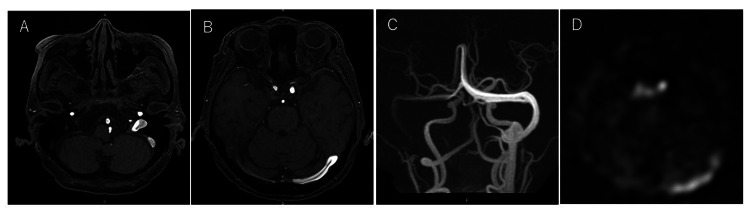 Figure 1
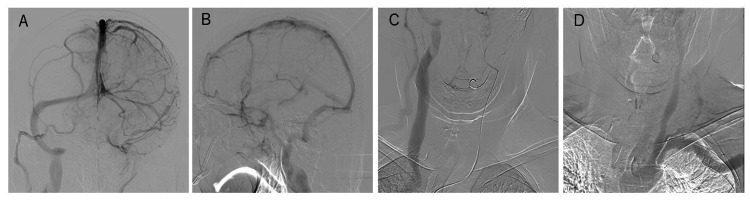 Figure 2
Peer Reviews
No public reviews on file for this paper yet. If you reviewed it on a platform where reviews are public (OpenReview, ICLR, NeurIPS, ICML), you can paste yours below so the community can read it here.
Videos
No videos yet. Explain this paper in a talk, walkthrough, or lecture? Add one.
Taxonomy
TopicsVascular Malformations Diagnosis and Treatment · Cerebral Venous Sinus Thrombosis · Intracranial Aneurysms: Treatment and Complications