The effect of glycosylated hemoglobin levels on the response to intravitreal dexamethasone implant for treating diabetic macular edema
Hyuk Jun Lee, Kunho Bae, Chang Ki Yoon, Un Chul Park, Kyu Hyung Park, Eun Kyoung Lee

TL;DR
This study found that HbA1c levels do not significantly affect the response to dexamethasone implants in treating diabetic macular edema.
Contribution
The study reveals that baseline HbA1c levels or their changes over time do not influence treatment outcomes with dexamethasone implants for DME.
Findings
No significant difference in central subfield thickness reduction between HbA1c ≤ 7% and > 7% groups at 2 months.
The 'improved' HbA1c subgroup showed a more pronounced CST reduction at 2 months, but outcomes converged by 12 months.
DEX implant outcomes for DME are not influenced by baseline HbA1c levels or their changes over time.
Abstract
This study investigates the impact of glycosylated hemoglobin (HbA1c) on the efficacy of intravitreal dexamethasone (DEX) implants in patients with diabetic macular edema (DME) over a 12-month period. We retrospectively reviewed 90 DME patients treated with DEX implants, categorizing them based on baseline HbA1c levels (≤ 7% and > 7%) and 12-month changes in HbA1c ("improved", "stable", "worsened"). At the 2-month mark, the mean central subfield thickness (CST) reduction in the HbA1c ≤ 7% group was − 147.22 ± 113.79 µm compared to -130.41 ± 124.50 µm in the > 7% group (p = 0.506). Notably, 12-month outcomes between these groups showed no significant difference. The "improved" HbA1c subgroup experienced a more pronounced CST reduction at 2 months (p = 0.042), with outcomes leveling off with other groups by 12 months. Conclusively, DEX implant outcomes in DME were not influenced by either…
Genes, proteins, chemicals, diseases, species, mutations and cell lines named across the full text — each resolved to its canonical identifier and authoritative record.
Click any figure to enlarge with its caption.
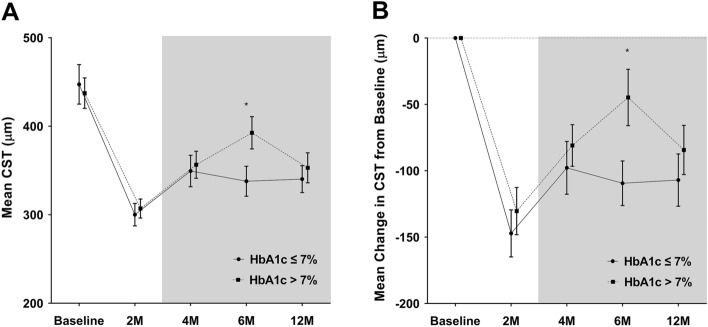 Figure 1
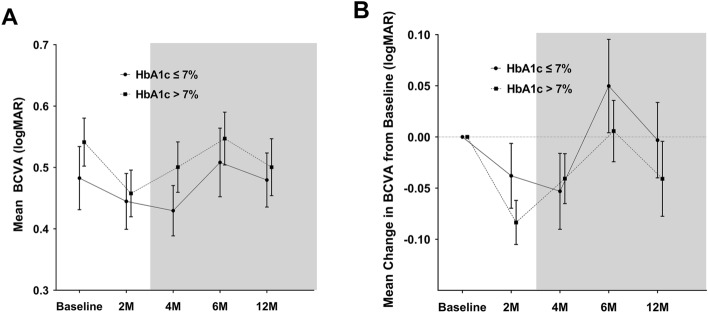 Figure 2
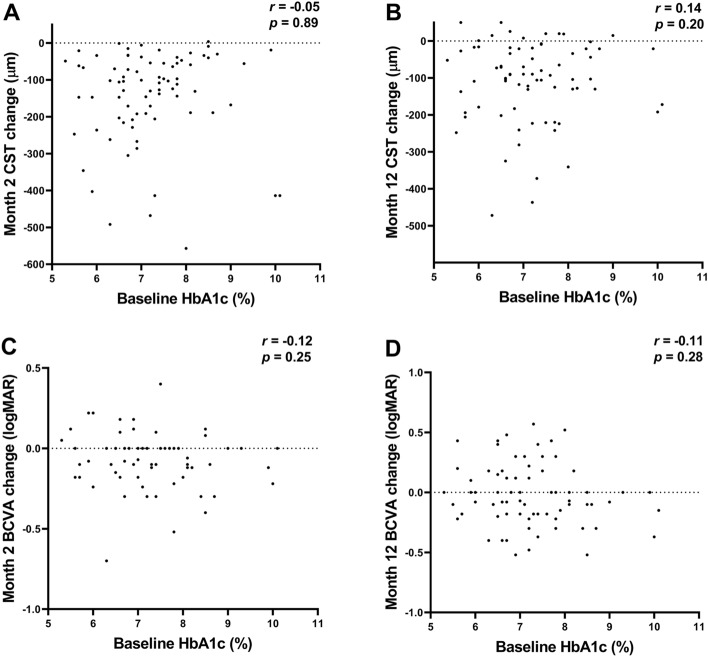 Figure 3
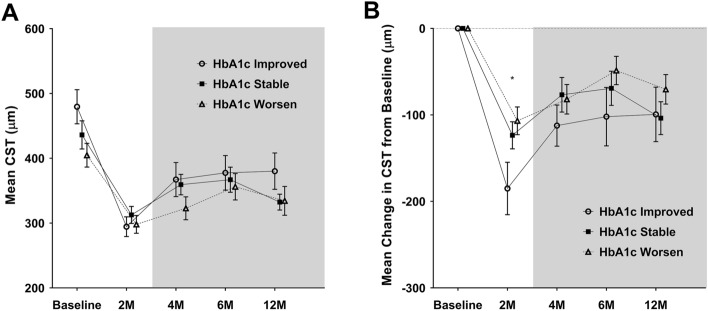 Figure 4
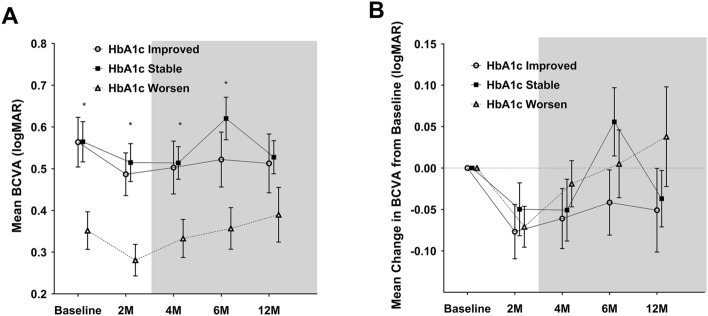 Figure 5
 Figure 6
Peer Reviews
No public reviews on file for this paper yet. If you reviewed it on a platform where reviews are public (OpenReview, ICLR, NeurIPS, ICML), you can paste yours below so the community can read it here.
Videos
No videos yet. Explain this paper in a talk, walkthrough, or lecture? Add one.
Taxonomy
TopicsRetinal Diseases and Treatments · Retinal Imaging and Analysis · Neonatal Health and Biochemistry