Large-scale screening of clinical assessments to distinguish between states in the Integrated HD Progression Model (IHDPM)
Zhaonan Sun, Jennifer Ware, Sanjoy Dey, Elif Eyigoz, Swati Sathe, Cristina Sampaio, Jianying Hu

TL;DR
This study identifies which clinical assessments best distinguish different stages of Huntington's disease, helping to improve trial design and endpoint selection.
Contribution
The paper provides ranked effect sizes for 2,472 clinical measures across nine Huntington's disease states, highlighting their discriminative power.
Findings
UHDRS Motor items, especially TMS, best distinguish early disease states and post-transition states.
Cognitive assessments show strong discrimination except between the first two disease states.
Non-UHDRS assessments like SF-12 are effective for specific disease phases.
Abstract
Understanding the sensitivity and utility of clinical assessments across different HD stages is important for study/trial endpoint selection and clinical assessment development. The Integrated HD Progression Model (IHDPM) characterizes the complex symptom progression of HD and separates the disease into nine ordered disease states. To generate a temporal map of discriminatory clinical measures across the IHDPM states. We applied the IHDPM to all HD individuals in an integrated longitudinal HD dataset derived from four observational studies, obtaining disease state assignment for each study visit. Using large-scale screening, we estimated Cohen’s effect sizes to rank the discriminative power of 2,472 clinical measures for separating observations in disease state pairs. Individual trajectories through IHDPM states were examined. Discriminative analyses were limited to individuals with…
Genes, proteins, chemicals, diseases, species, mutations and cell lines named across the full text — each resolved to its canonical identifier and authoritative record.
Click any figure to enlarge with its caption.
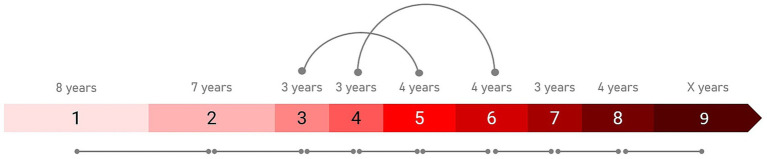 Figure 1
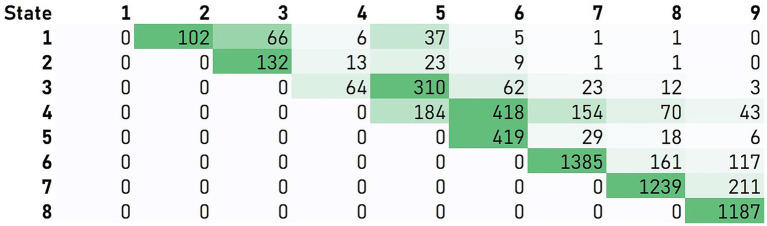 Figure 2
Peer Reviews
No public reviews on file for this paper yet. If you reviewed it on a platform where reviews are public (OpenReview, ICLR, NeurIPS, ICML), you can paste yours below so the community can read it here.
Videos
No videos yet. Explain this paper in a talk, walkthrough, or lecture? Add one.
Taxonomy
TopicsGenetic Neurodegenerative Diseases · Genetic Associations and Epidemiology · Parkinson's Disease Mechanisms and Treatments