A Novel Splicing Mutation Leading to Wiskott-Aldrich Syndrome from a Family
Lingyu Wang, Jie Zhang, Linna Lu, Juan Ren, Yaofang Zhang, Lidong Zhao, Wukang Shen, Xucheng Hu, Shuai Fang, Xiaomei Lu, Gang Wang, Linhua Yang

TL;DR
A new mutation in the WAS gene causes a mild form of Wiskott-Aldrich syndrome by altering splicing and reducing WASP protein levels.
Contribution
A novel splicing mutation (c.931 + 5G > C) in the WAS gene is identified and shown to cause X-linked thrombocytopenia with mild symptoms.
Findings
The mutation (c.931 + 5G > C) affects splicing, producing three abnormal mRNA transcripts.
Abnormal mRNA leads to a truncated WASP protein, causing reduced but not absent WASP levels.
This mutation results in mild clinical manifestations consistent with X-linked thrombocytopenia.
Abstract
Wiskott-Aldrich syndrome (WAS) is a rare X-linked recessive genetic disease characterized by clinical symptoms such as eczema, thrombocytopenia with small platelets, immune deficiency, prone to autoimmune diseases, and malignant tumors. This disease is caused by mutations of the WAS gene encoding WASprotein (WASP). The locus and type of mutations of the WAS gene and the expression quantity of WASP were strongly correlated with the clinical manifestations of patients. We found a novel mutation in the WAS gene (c.931 + 5G > C), which affected splicing to produce three abnormal mRNA, resulting in an abnormally truncated WASP. This mutation led to a reduction but not the elimination of the normal WASP population, resulting in causes X-linked thrombocytopenia (XLT) with mild clinical manifestations. Our findings revealed the pathogenic mechanism of this mutation.
Genes, proteins, chemicals, diseases, species, mutations and cell lines named across the full text — each resolved to its canonical identifier and authoritative record.
Click any figure to enlarge with its caption.
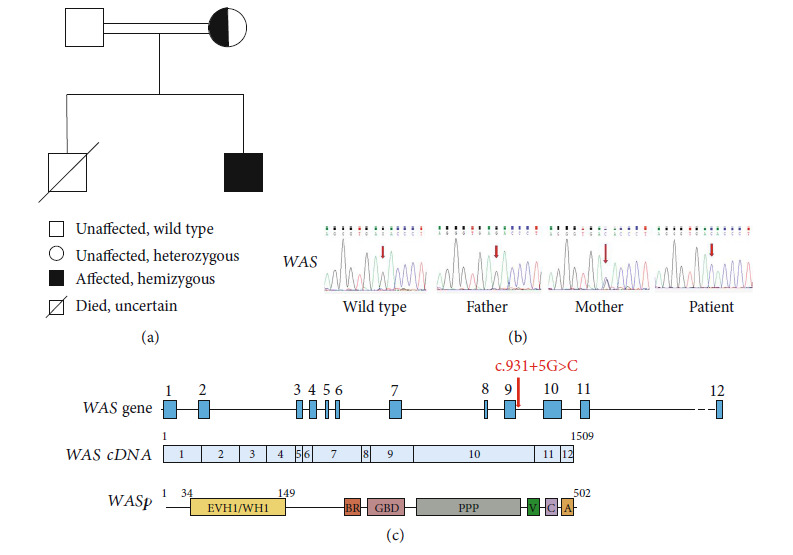 Figure 1
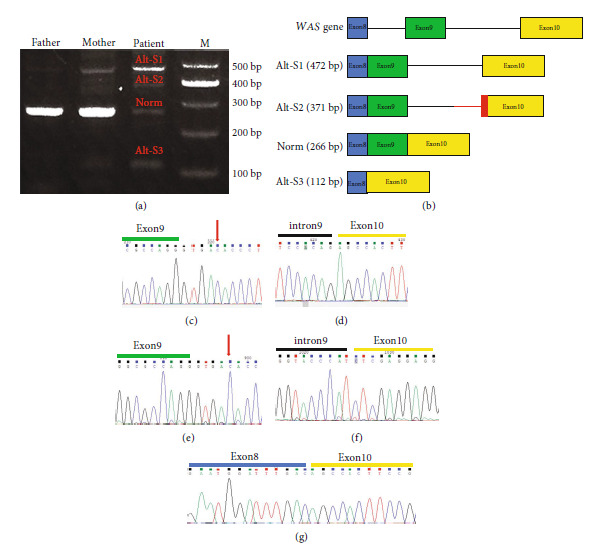 Figure 2
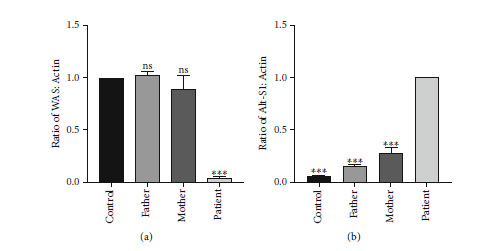 Figure 3
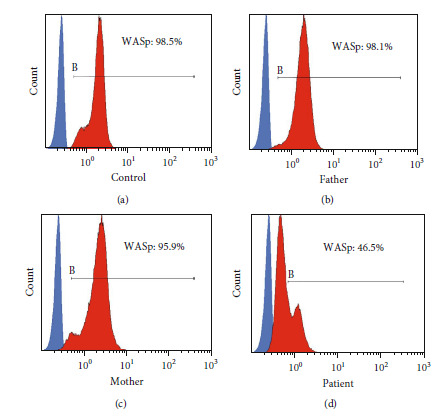 Figure 4
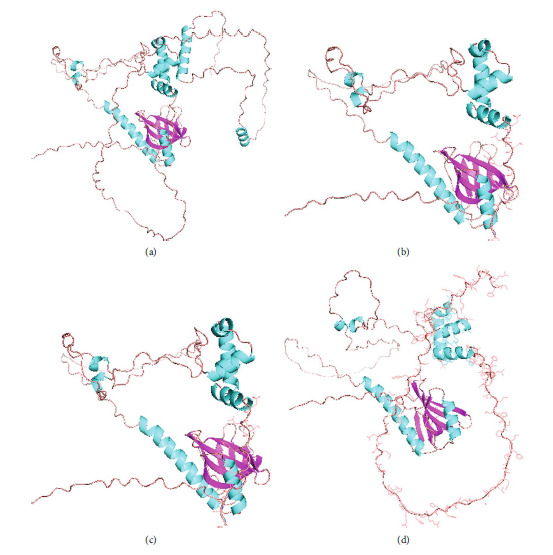 Figure 5
Peer Reviews
No public reviews on file for this paper yet. If you reviewed it on a platform where reviews are public (OpenReview, ICLR, NeurIPS, ICML), you can paste yours below so the community can read it here.
Videos
No videos yet. Explain this paper in a talk, walkthrough, or lecture? Add one.
Taxonomy
TopicsCellular Mechanics and Interactions · RNA Research and Splicing · Cell Adhesion Molecules Research