Prevalence of Candida albicans and non-albicans isolates from vaginal secretions: comparative evaluation of colonization, vaginal candidiasis and recurrent vaginal candidiasis in diabetic and non-diabetic women
Luciene Setsuko Akimoto Gunther, Helen Priscila Rodrigues Martins, Fabrícia Gimenes, André Luelsdorf Pimenta de Abreu, Marcia Edilaine Lopes Consolaro, Terezinha Inez Estivalet Svidzinski

TL;DR
This study found that women with type 2 diabetes are more likely to have vaginal yeast infections and colonization compared to non-diabetic women, with similar Candida species and good fluconazole treatment outcomes.
Contribution
The study provides new insights into the association between type 2 diabetes and vaginal Candida infections in Brazilian women.
Findings
Diabetic women had higher rates of yeast colonization and infections compared to non-diabetic women.
Fluconazole showed good cure rates in both diabetic and non-diabetic groups.
Candida albicans and non-albicans species were isolated at similar rates in diabetic women.
Abstract
Vulvovaginal candidiasis (VVC) is caused by abnormal growth of yeast-like fungi on the female genital tract mucosa. Patients with diabetes mellitus (DM) are more susceptible to fungal infections, including those caused by species of Candida. The present study investigated the frequency of total isolation of vaginal Candida spp., and its different clinical profiles - colonization, VVC and recurrent VVC (RVVC) - in women with DM type 2, compared with non-diabetic women. The cure rate using fluconazole treatment was also evaluated. Cross-sectional study conducted in the public healthcare system of Maringá, Paraná, Brazil. The study involved 717 women aged 17-74 years, of whom 48 (6.7%) had DM type 2 (mean age: 53.7 years), regardless of signs and symptoms of VVC. The yeasts were isolated and identified using classical phenotypic methods. In the non-diabetic group (controls), total…
Genes, proteins, chemicals, diseases, species, mutations and cell lines named across the full text — each resolved to its canonical identifier and authoritative record.
Click any figure to enlarge with its caption.
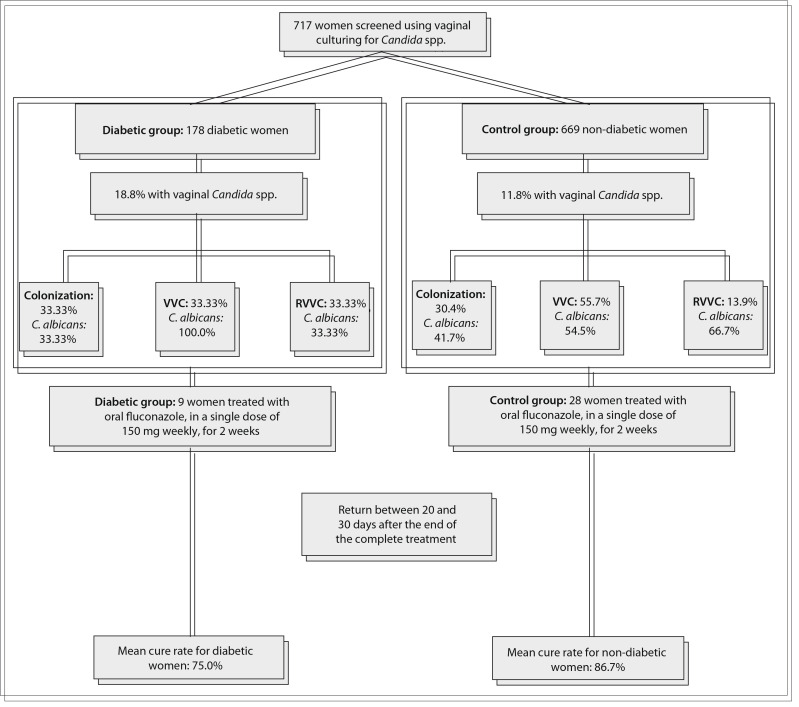 Figure 1
Peer Reviews
No public reviews on file for this paper yet. If you reviewed it on a platform where reviews are public (OpenReview, ICLR, NeurIPS, ICML), you can paste yours below so the community can read it here.
Videos
No videos yet. Explain this paper in a talk, walkthrough, or lecture? Add one.
Taxonomy
TopicsHealthcare Systems and Practices