Improving genetic risk modeling of dementia from real-world data in underrepresented populations
Timothy Chang, Mingzhou Fu, Leopoldo Valiente-Banuet, Satpal Wadhwa, Bogdan Pasaniuc, Keith Vossel

TL;DR
This study improves dementia risk prediction in underrepresented populations by using machine learning and functional genomic data to create a more accurate genetic risk model.
Contribution
The novel contribution is the development of an Elastic Net model that integrates functional genomic data and multiple neurodegenerative diseases for improved dementia risk prediction in diverse populations.
Findings
The Elastic Net model outperformed APOE and polygenic risk score models by 21-61% in precision-recall and 10-21% in ROC-AUC across multiple ancestries.
Shared and ancestry-specific risk genes and pathways were identified, expanding current understanding of dementia genetics.
The study demonstrates the value of combining functional mapping, multi-disease data, and machine learning for precision medicine in dementia.
Abstract
Genetic risk modeling for dementia offers significant benefits, but studies based on real-world data, particularly for underrepresented populations, are limited. We employed an Elastic Net model for dementia risk prediction using single-nucleotide polymorphisms prioritized by functional genomic data from multiple neurodegenerative disease genome-wide association studies. We compared this model with APOE and polygenic risk score models across genetic ancestry groups, using electronic health records from UCLA Health for discovery and All of Us cohort for validation. Our model significantly outperforms other models across multiple ancestries, improving the area-under-precision-recall curve by 21-61% and the area-under-the-receiver-operating characteristic by 10-21% compared to the APOEand the polygenic risk score models. We identified shared and ancestry-specific risk genes and…
Genes, proteins, chemicals, diseases, species, mutations and cell lines named across the full text — each resolved to its canonical identifier and authoritative record.
Click any figure to enlarge with its caption.
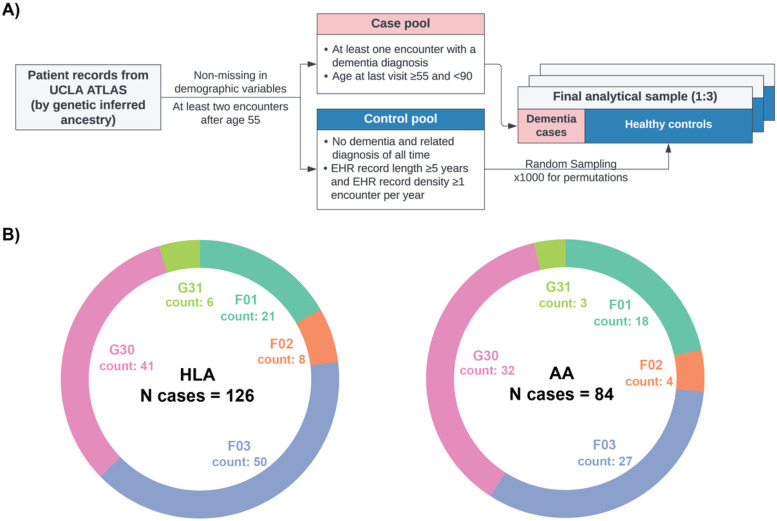 Figure 1
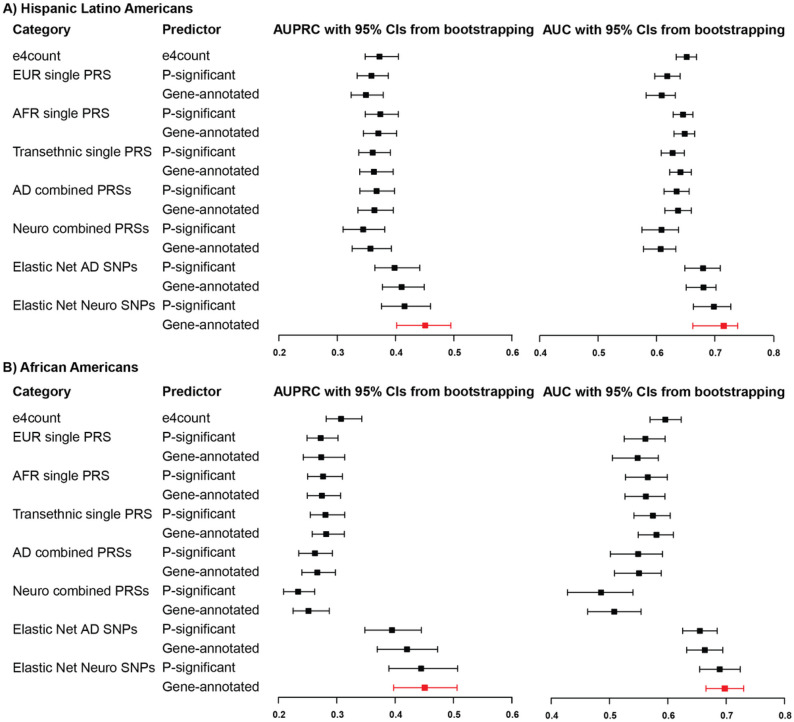 Figure 2
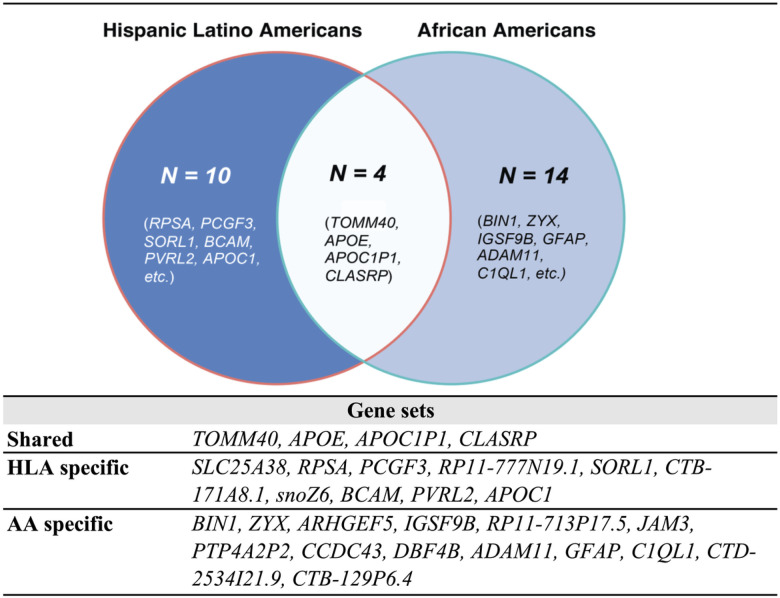 Figure 3
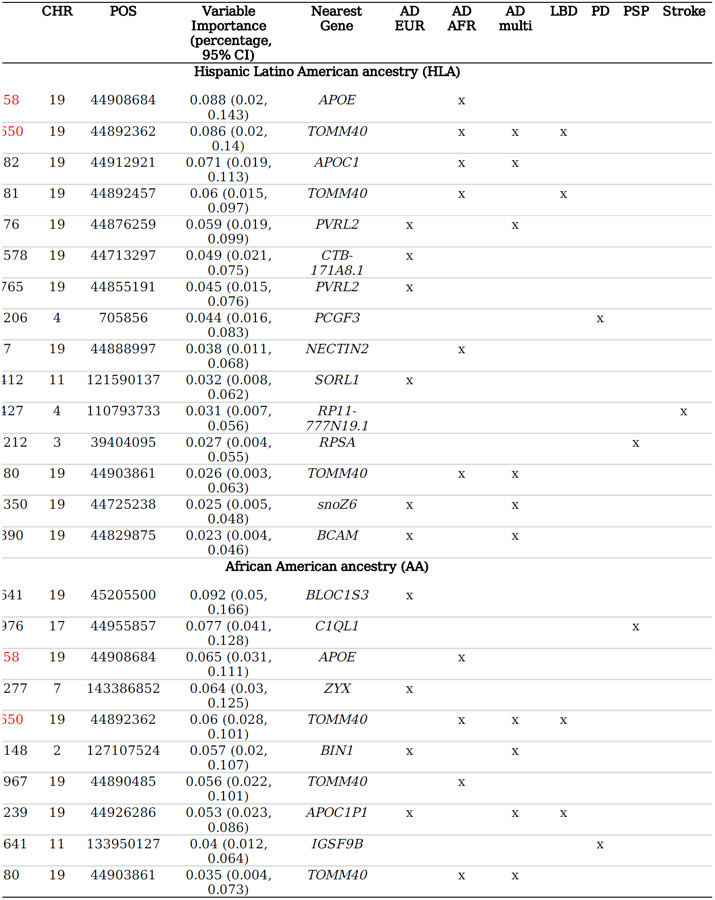 Figure 4
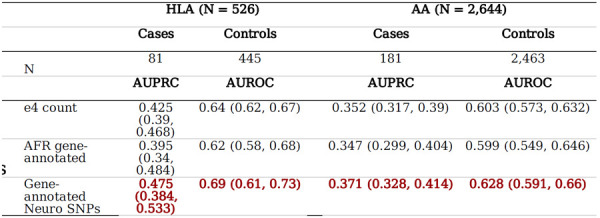 Figure 5
Peer Reviews
No public reviews on file for this paper yet. If you reviewed it on a platform where reviews are public (OpenReview, ICLR, NeurIPS, ICML), you can paste yours below so the community can read it here.
Videos
No videos yet. Explain this paper in a talk, walkthrough, or lecture? Add one.
Taxonomy
TopicsGenetic Associations and Epidemiology · Dementia and Cognitive Impairment Research · Epigenetics and DNA Methylation