Distributed Medical Education (DME) in psychiatry: perspectives on facilitators, obstacles, and factors affecting psychiatrists' willingness to engage in teaching activities
Raquel da Luz Dias, Lara Hazelton, Mandy Esliger, Peggy Alexiadis Brown, Philip G. Tibbo, Nachiketa Sinha, Anthony Njoku, Satyanarayana Satyendra, Sanjay Siddhartha, Faisal Rahman, Hugh Maguire, Gerald Gray, Mark Bosma, Deborah Parker, Owen Connolly, Adewale Raji

TL;DR
This study explores factors influencing psychiatrists' willingness to teach in decentralized medical education settings, highlighting the importance of protected time and formal training.
Contribution
The study identifies specific predictors of psychiatrists' engagement in teaching activities within DME sites, emphasizing the role of formal training and protected time.
Findings
Lack of protected time is the main barrier to psychiatrists' teaching activities, despite most not considering lack of formal training as a barrier.
Psychiatrists with access to Competency by Design training are significantly more willing to engage in various teaching activities.
A strong willingness to engage in teaching was observed, with an average positive response rate of 81.98%.
Abstract
Distributed Medical Education (DME), a decentralized model focused on smaller cities and communities, has been implemented worldwide to bridge the gap in psychiatric education. Faculty engagement in teaching activities such as clinical teaching, supervision, and examinations is a crucial aspect of DME sites. Implementing or expanding DME sites requires careful consideration to identify enablers that contribute to success and barriers that need to be addressed. This study aims to examine enablers, barriers, and factors influencing psychiatrists' willingness to start or continue participating in teaching activities within Dalhousie University's Faculty of Medicine DME sites in two provinces in Atlantic Canada. This cross-sectional study was conducted as part of an environmental scan of Dalhousie Faculty of Medicine’s DME programs in Nova Scotia (NS) and New Brunswick (NB), Canada. In…
Genes, proteins, chemicals, diseases, species, mutations and cell lines named across the full text — each resolved to its canonical identifier and authoritative record.
Click any figure to enlarge with its caption.
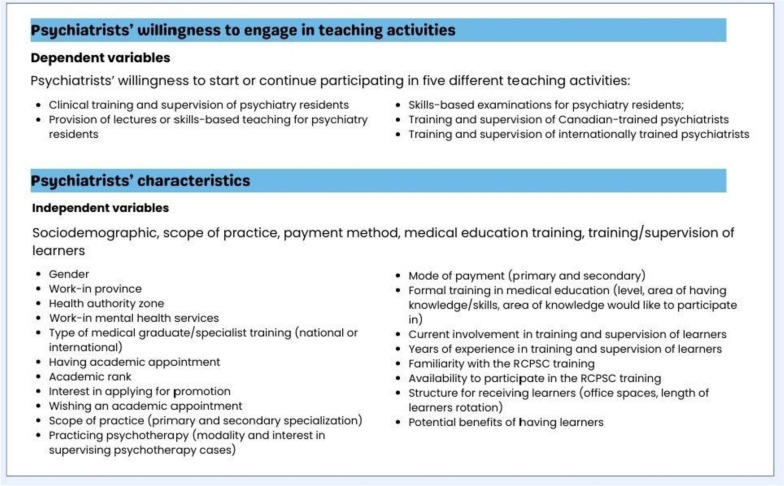 Figure 1
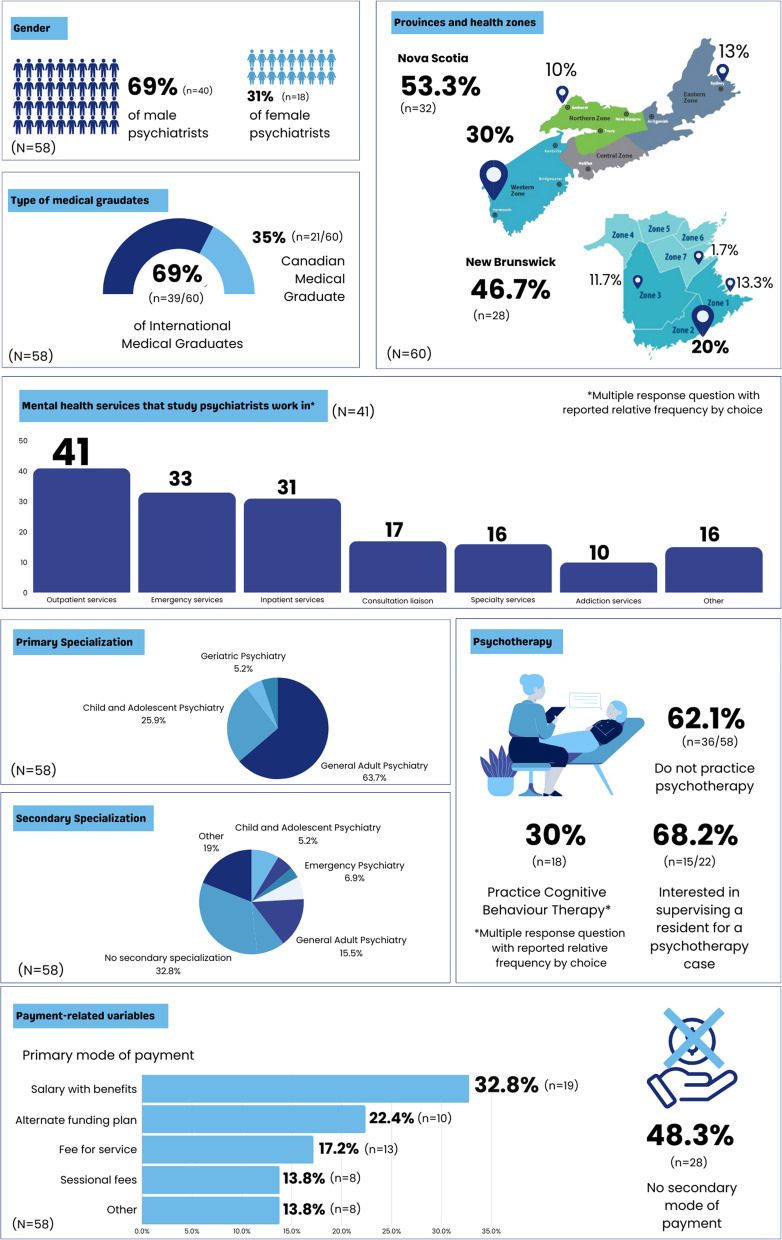 Figure 2
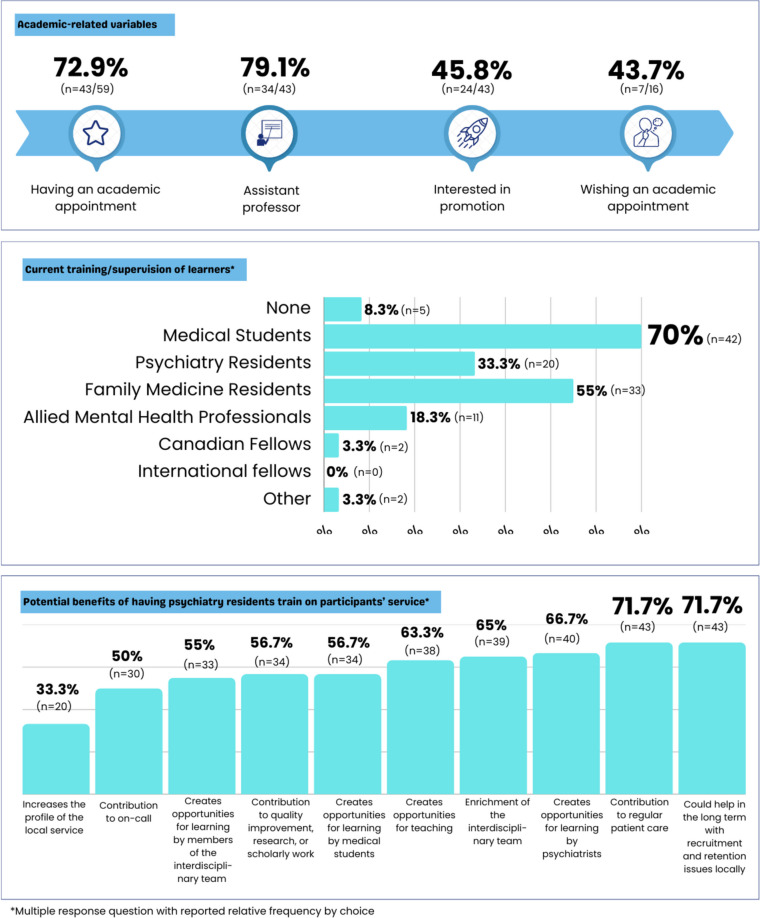 Figure 3
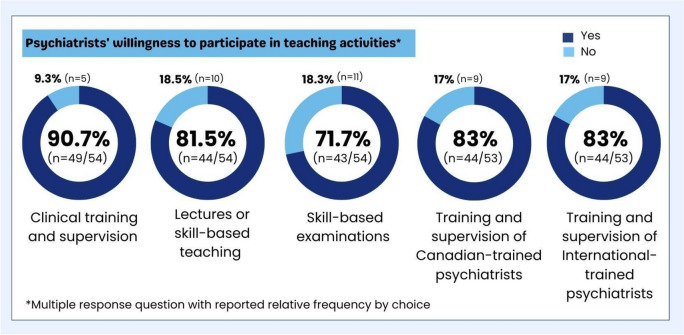 Figure 4
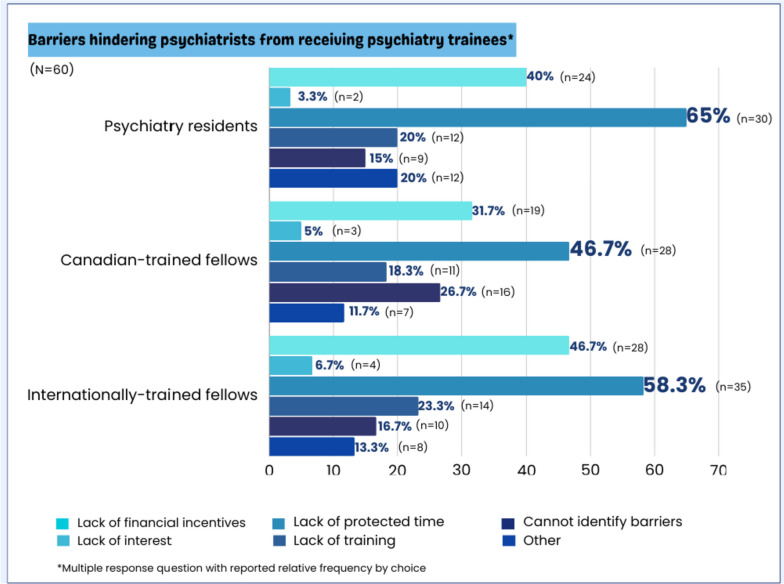 Figure 5
Peer Reviews
No public reviews on file for this paper yet. If you reviewed it on a platform where reviews are public (OpenReview, ICLR, NeurIPS, ICML), you can paste yours below so the community can read it here.
Videos
No videos yet. Explain this paper in a talk, walkthrough, or lecture? Add one.
Taxonomy
TopicsInnovations in Medical Education · Global Health Workforce Issues · Primary Care and Health Outcomes