The abundance of the short GATA1 isoform affects megakaryocyte differentiation and leukemic predisposition in mice
Daishi Ishihara, Atsushi Hasegawa, Ikuo Hirano, James Douglas Engel, Masayuki Yamamoto, Ritsuko Shimizu

TL;DR
This study shows that the amount of a specific GATA1 protein variant in mice affects their risk of developing leukemia by influencing megakaryocyte cell maturation.
Contribution
The study reveals that moderate levels of GATA1s promote leukemia, while higher levels prevent it by enabling proper cell differentiation.
Findings
Moderate GATA1s expression in mice leads to a higher risk of developing acute megakaryoblastic leukemia.
Higher GATA1s levels prevent leukemia by promoting proper megakaryocyte differentiation.
Low GATA1s levels result in persistent immature cells, increasing the chance of additional genetic mutations.
Abstract
Transcription factor GATA1 controls the delicate balance between proliferation, differentiation and apoptosis in both the erythroid and megakaryocytic lineages. In addition to full-length GATA1, there is an GATA1 isoform, GATA1s, that lacks the amino-terminal transactivation domain. Somatic GATA1 mutations that lead to the exclusive production of GATA1s appear to be necessary and sufficient for the development of a preleukemic condition called transient myeloproliferative disorder (TMD) in Down syndrome newborns. Subsequent clonal evolution among latent TMD blasts leads to the development of acute megakaryoblastic leukemia (AMKL). We originally established transgenic mice that express only GATA1s, which exhibit hyperproliferation of immature megakaryocytes, thus mimicking human TMD; however, these mice never developed AMKL. Here, we report that transgenic mice expressing moderate levels…
Genes, proteins, chemicals, diseases, species, mutations and cell lines named across the full text — each resolved to its canonical identifier and authoritative record.
Click any figure to enlarge with its caption.
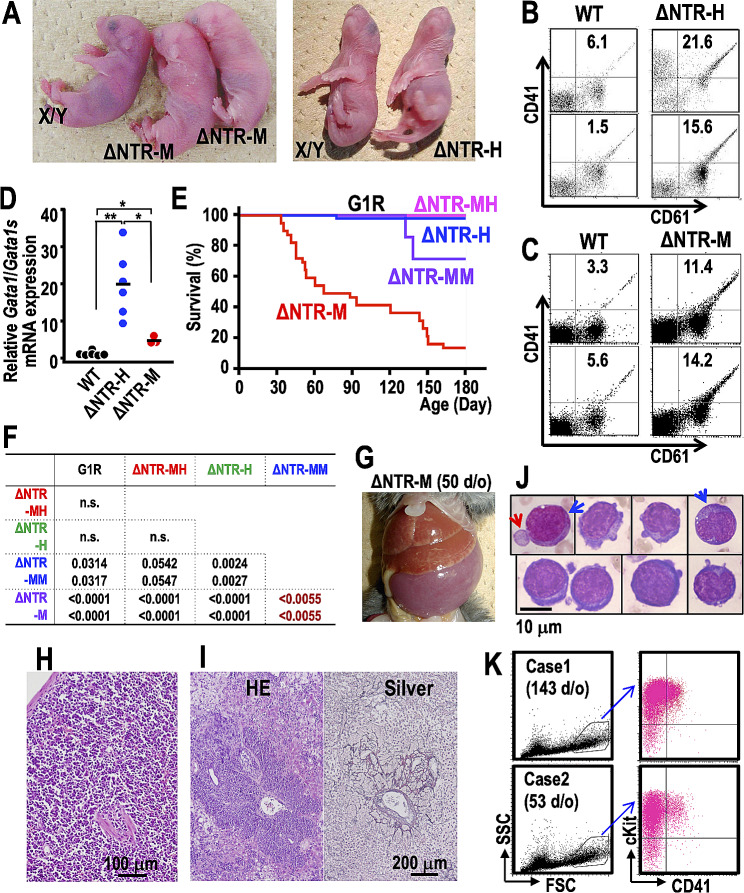 Figure 1
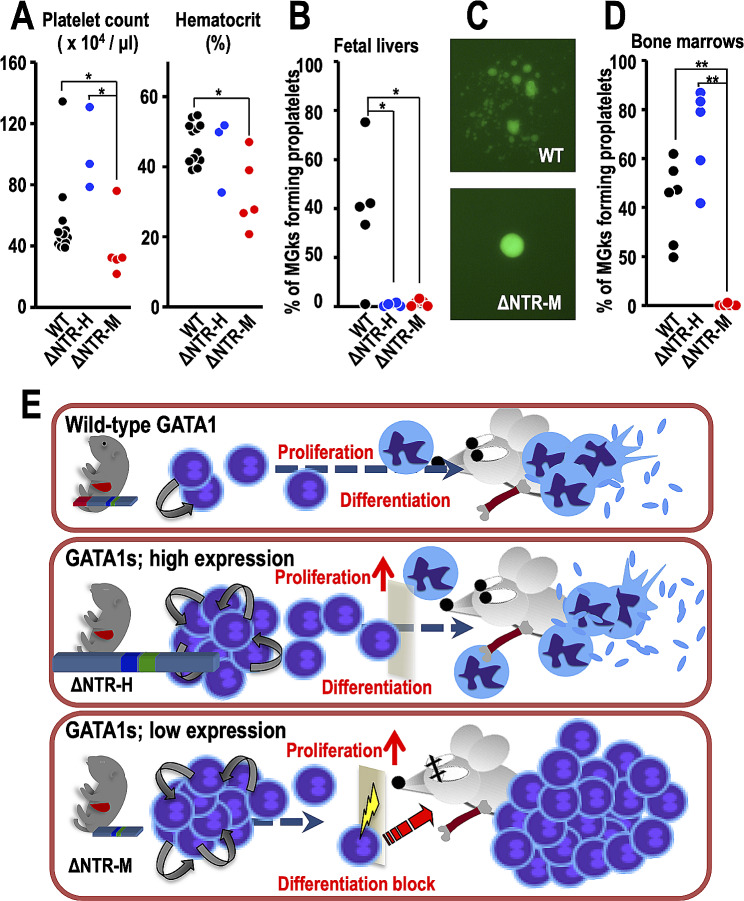 Figure 2
Peer Reviews
No public reviews on file for this paper yet. If you reviewed it on a platform where reviews are public (OpenReview, ICLR, NeurIPS, ICML), you can paste yours below so the community can read it here.
Videos
No videos yet. Explain this paper in a talk, walkthrough, or lecture? Add one.
Taxonomy
TopicsGenomic variations and chromosomal abnormalities · Epigenetics and DNA Methylation · Cholangiocarcinoma and Gallbladder Cancer Studies