ParSCo: celebrating 10 years of a unique parasitology summer course
Filipe Dantas-Torres, Marcos Antonio Bezerra-Santos, Jairo Alfonso Mendoza-Roldan, Riccardo Paolo Lia, Livia Perles, Juan Pedro Barrera, Renata Fagundes-Moreira, Mariaelisa Carbonara, Antonio Varcasia, Emanuele Brianti, Georgiana Deak, Alicia Rojas, Guadalupe Miró, Petr Volf

TL;DR
ParSCo is a 1-week parasitology summer course in Italy celebrating 10 years of training and community building for parasitologists and students.
Contribution
The paper highlights the 10-year anniversary and unique educational value of the ParSCo summer course.
Findings
ParSCo combines theoretical and practical training in parasitology for professionals and students.
The course provides hands-on experience in diagnosing parasitic diseases in Mediterranean wildlife and livestock.
ParSCo fosters community and knowledge exchange in a unique southern Italian setting.
Abstract
ParSCo (Parasitology Summer Course) is an intense, 1-week-long summer course organized by the Parasitology Unit of the Department of Veterinary Medicine, University of Bari, Italy, with the support of the World Association for the Advancement of Veterinary Parasitology (WAAVP), the European Veterinary Parasitology College (EVPC) and Parasites and Vectors. The course, which is conducted in southern Italy, is planned for parasitologists and post-graduate students working in the field of parasitology. The course consists of theoretical and practical lessons, which include the collection, identification and diagnosis of parasites of pets, livestock and wildlife. The participants in ParSCo are afforded the opportunity to be involved in clinical examination and sample collection for the diagnosis of parasitic diseases (e.g. leishmaniosis, thelaziosis and many tick-borne diseases) present in…
Genes, proteins, chemicals, diseases, species, mutations and cell lines named across the full text — each resolved to its canonical identifier and authoritative record.
Click any figure to enlarge with its caption.
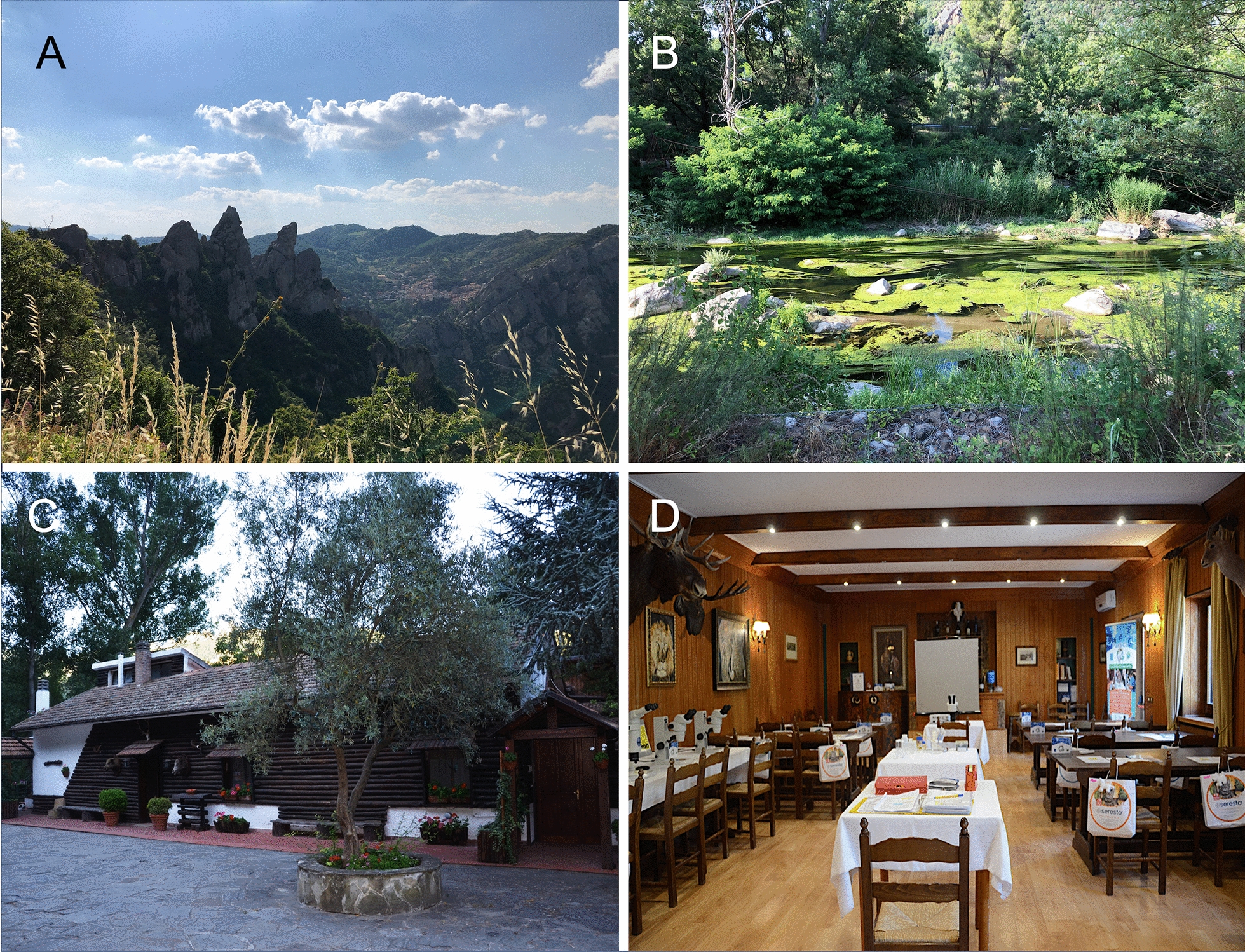 Figure 1
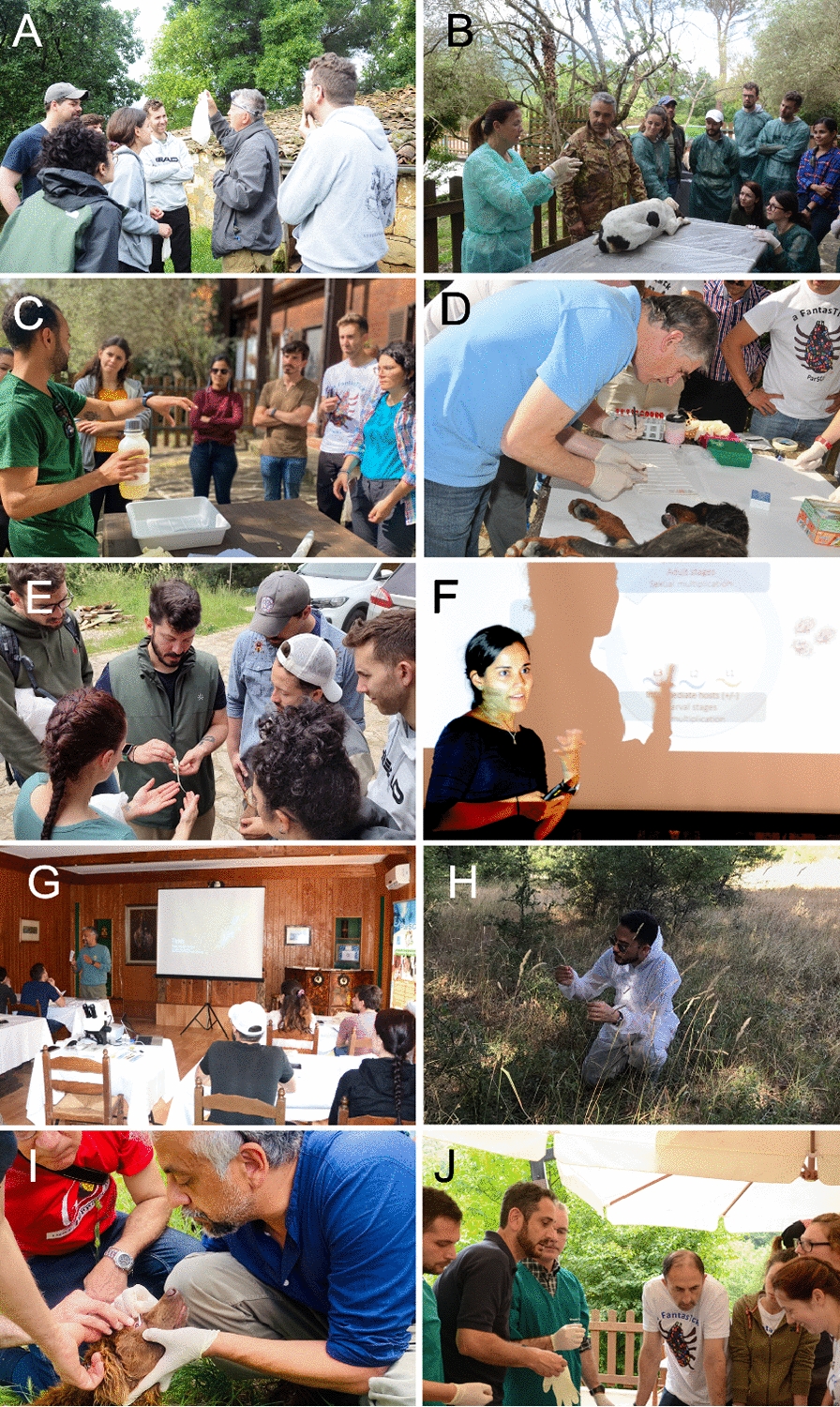 Figure 2
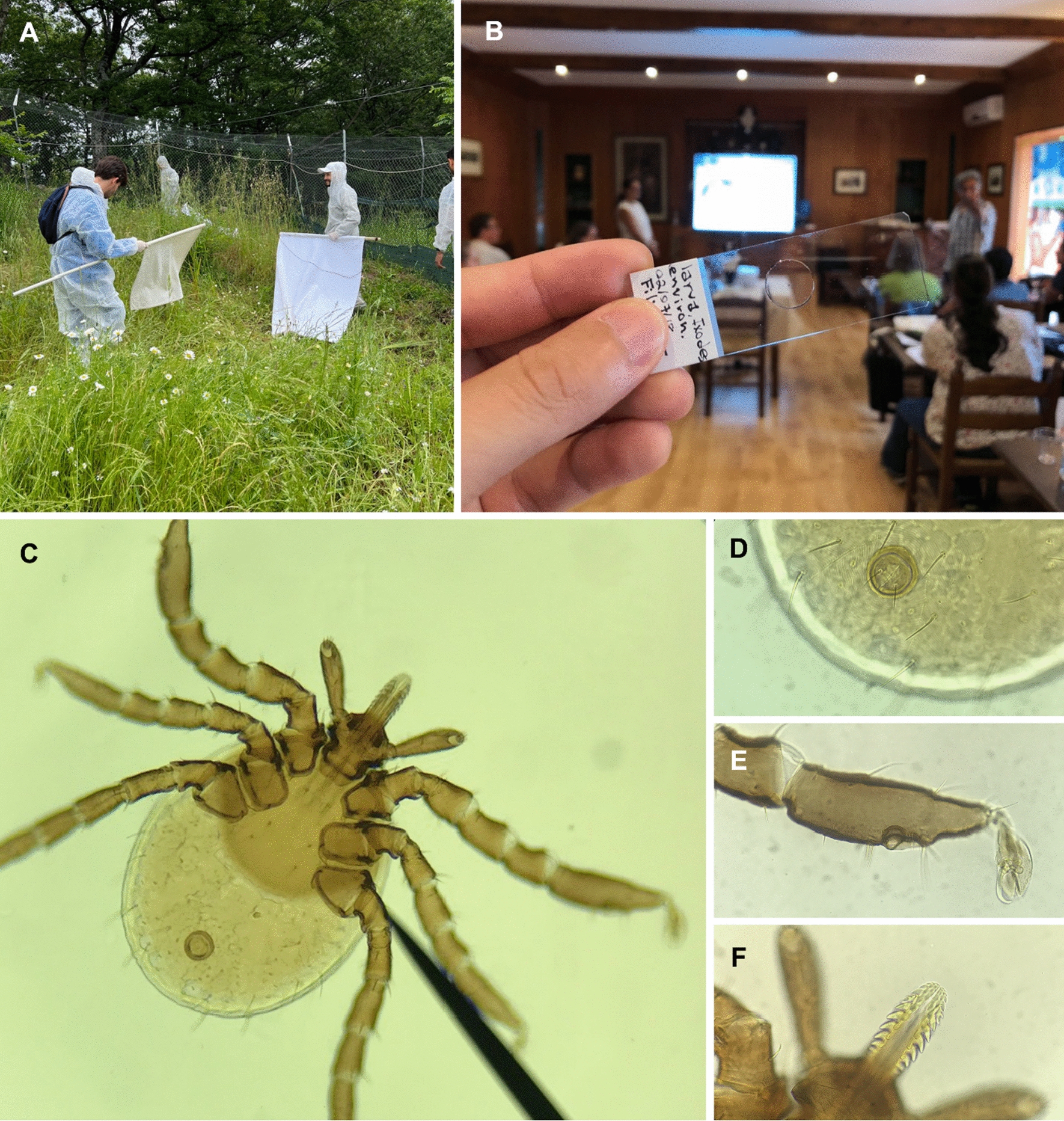 Figure 3
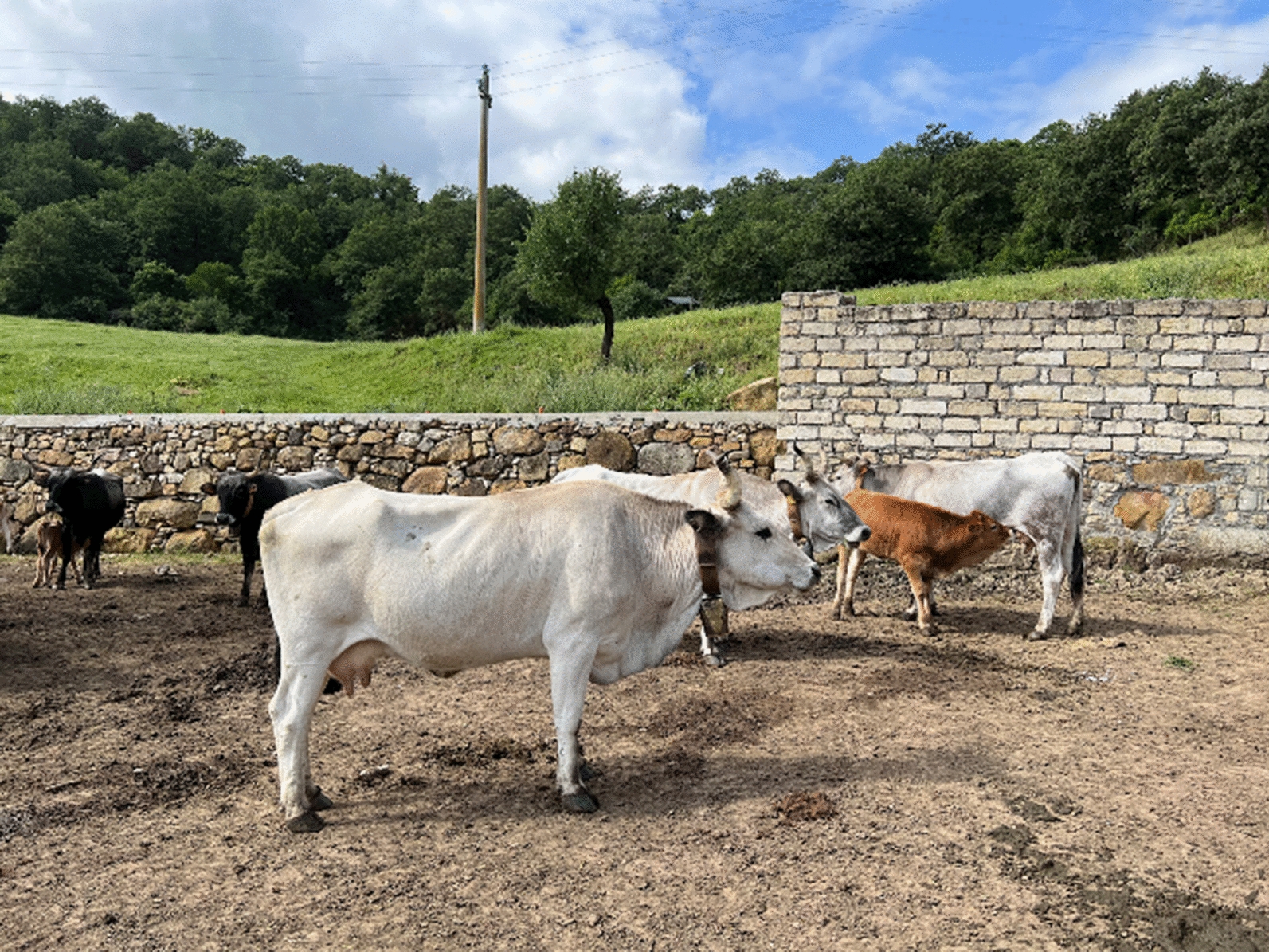 Figure 4
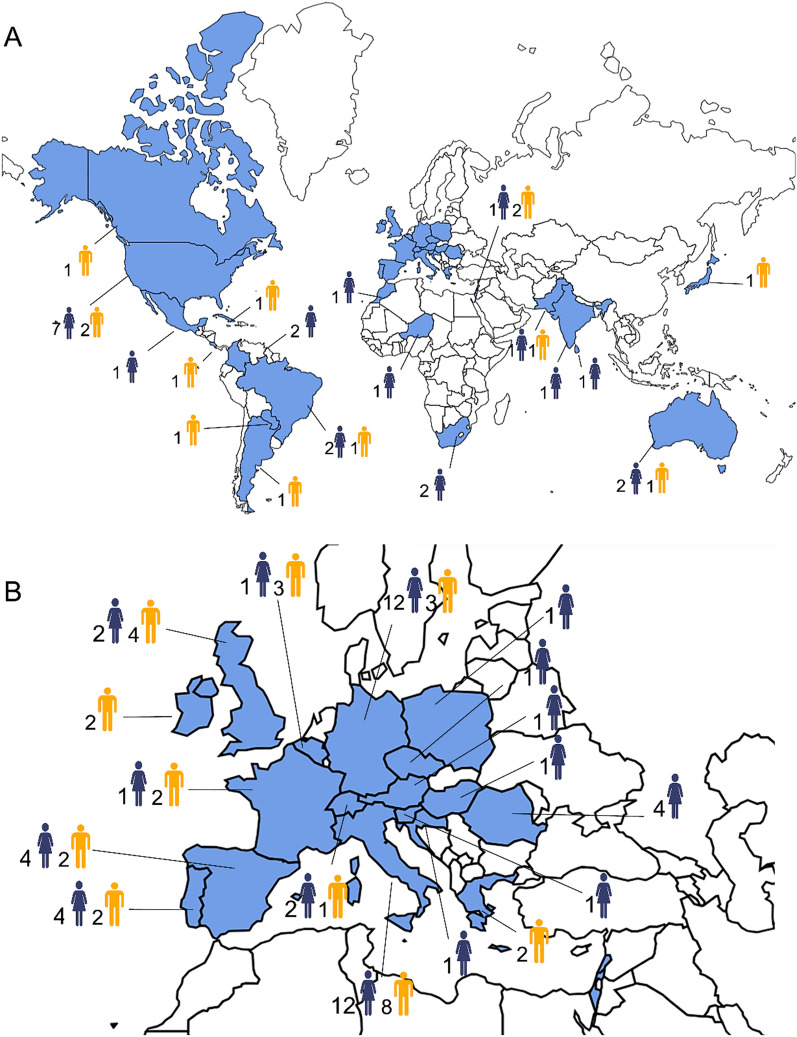 Figure 5
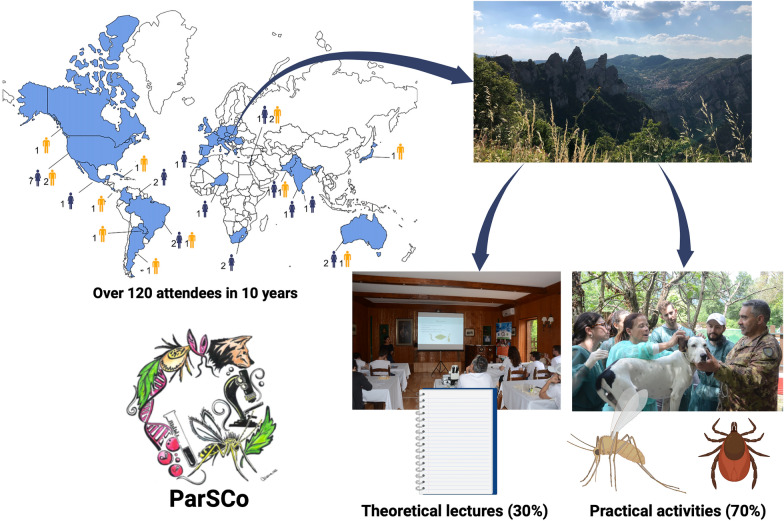 Figure 6
Peer Reviews
No public reviews on file for this paper yet. If you reviewed it on a platform where reviews are public (OpenReview, ICLR, NeurIPS, ICML), you can paste yours below so the community can read it here.
Videos
No videos yet. Explain this paper in a talk, walkthrough, or lecture? Add one.
Taxonomy
TopicsVector-borne infectious diseases · Vector-Borne Animal Diseases · Helminth infection and control