Exercise-Induced miR-210 Promotes Cardiomyocyte Proliferation and Survival and Mediates Exercise-Induced Cardiac Protection against Ischemia/Reperfusion Injury
Yihua Bei, Hongyun Wang, Yang Liu, Zhuhua Su, Xinpeng Li, Yujiao Zhu, Ziyi Zhang, Mingming Yin, Chen Chen, Lin Li, Meng Wei, Xiangmin Meng, Xuchun Liang, Zhenzhen Huang, Richard Yang Cao, Lei Wang, Guoping Li, Dragos Cretoiu, Junjie Xiao

TL;DR
Exercise increases miR-210 levels, which helps heart cells grow and survive, offering protection against heart injury.
Contribution
miR-210 promotes cardiomyocyte proliferation and mediates exercise-induced cardioprotection against I/R injury.
Findings
miR-210 levels increase in heart and blood after exercise in rodents and humans.
miR-210 promotes cardiomyocyte proliferation and survival in human and rodent cells.
miR-210 is essential for exercise-induced protection against I/R injury.
Abstract
Exercise can stimulate physiological cardiac growth and provide cardioprotection effect in ischemia/reperfusion (I/R) injury. MiR-210 is regulated in the adaptation process induced by exercise; however, its impact on exercise-induced physiological cardiac growth and its contribution to exercise-driven cardioprotection remain unclear. We investigated the role and mechanism of miR-210 in exercise-induced physiological cardiac growth and explored whether miR-210 contributes to exercise-induced protection in alleviating I/R injury. Here, we first observed that regular swimming exercise can markedly increase miR-210 levels in the heart and blood samples of rats and mice. Circulating miR-210 levels were also elevated after a programmed cardiac rehabilitation in patients that were diagnosed of coronary heart diseases. In 8-week swimming model in wild-type (WT) and miR-210 knockout (KO) rats,…
Genes, proteins, chemicals, diseases, species, mutations and cell lines named across the full text — each resolved to its canonical identifier and authoritative record.
Click any figure to enlarge with its caption.
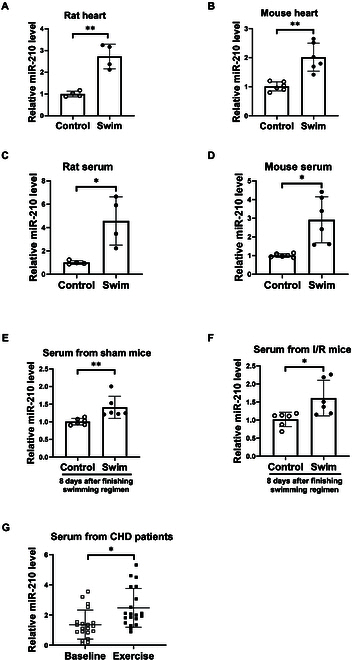 Figure 1
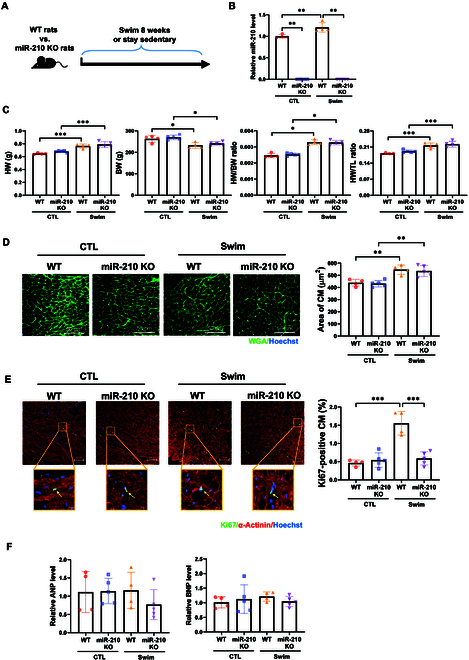 Figure 2
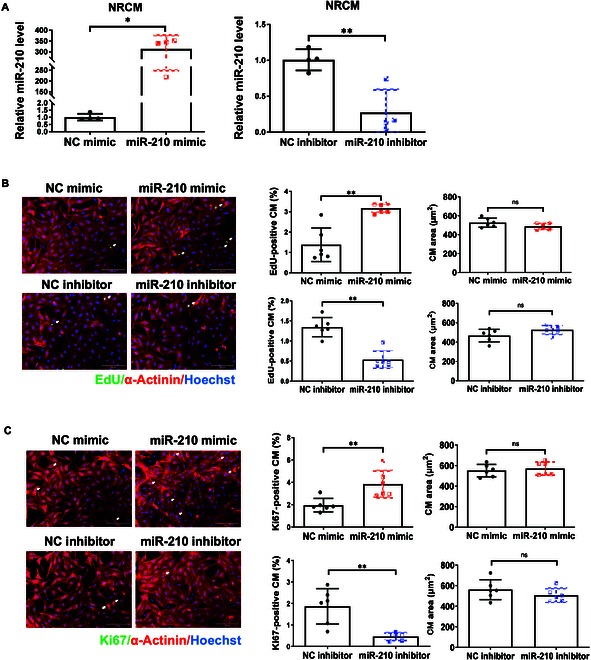 Figure 3
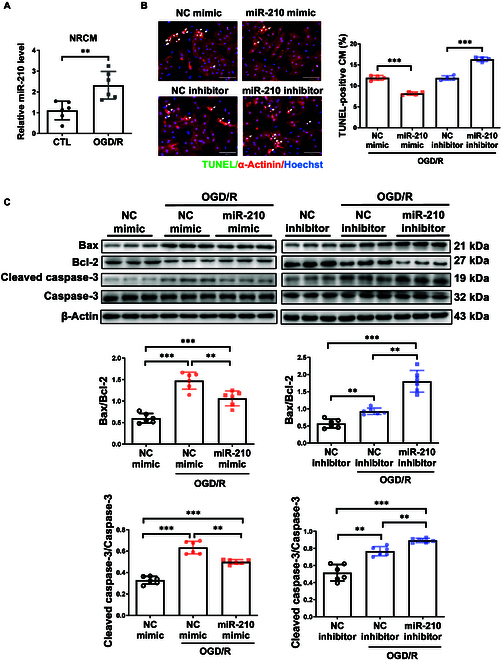 Figure 4
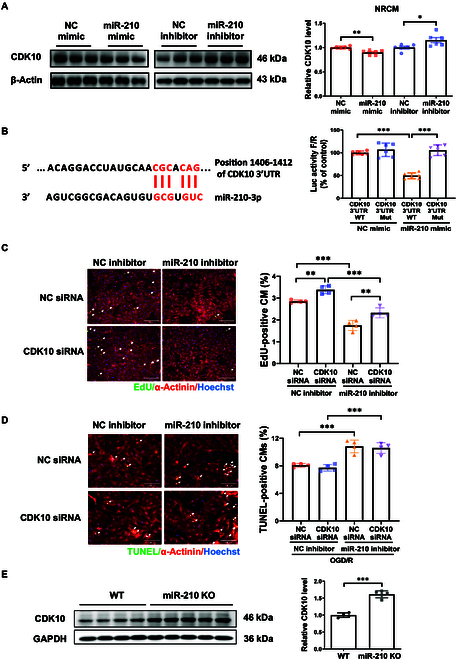 Figure 5
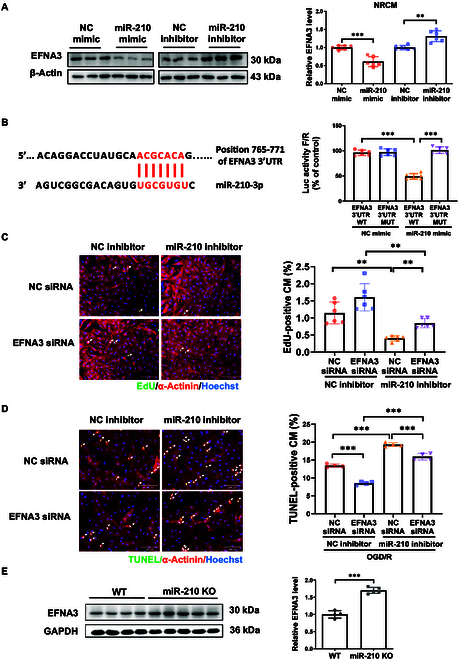 Figure 6
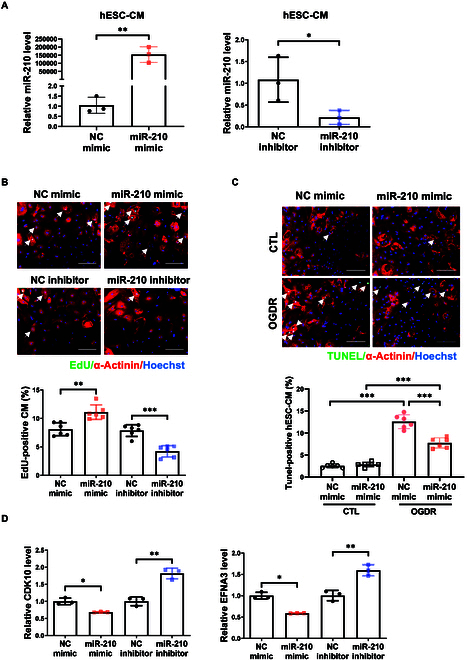 Figure 7
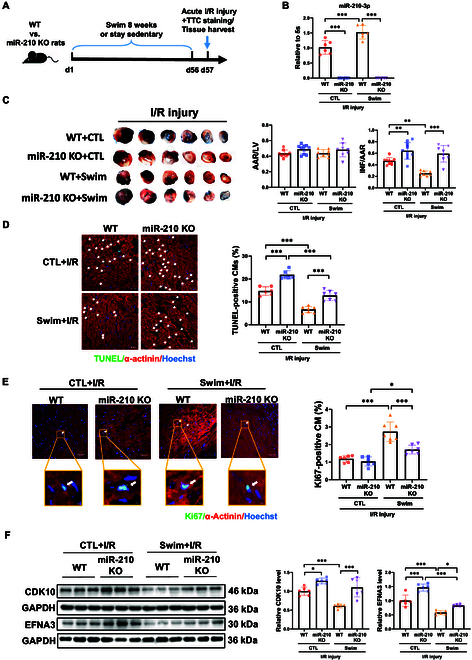 Figure 8
Peer Reviews
No public reviews on file for this paper yet. If you reviewed it on a platform where reviews are public (OpenReview, ICLR, NeurIPS, ICML), you can paste yours below so the community can read it here.
Videos
No videos yet. Explain this paper in a talk, walkthrough, or lecture? Add one.
Taxonomy
TopicsMicroRNA in disease regulation · Angiogenesis and VEGF in Cancer · Exercise and Physiological Responses