Non-exercise Activity Thermogenesis Correlated With Clinical Parameters in Patients With or At-Risk for Chronic Obstructive Pulmonary Disease (COPD): A Pilot Study
Sanehiro Yogi, Toru Shirahata, Hideaki Sato, Yuki Nishida, Kaiji Inoue, Mamoru Niitsu, Tomoe Akagami, Kenji Masaki, Makoto Nagata, Shigeho Tanaka, Fuminori Katsukawa, Hidetoshi Nakamura

TL;DR
This pilot study shows that non-exercise activity thermogenesis (NEAT) is linked to clinical indicators in COPD patients and those at risk, suggesting it could be a useful health assessment tool.
Contribution
The study introduces NEAT as a novel, questionnaire-based indicator for evaluating clinical parameters in COPD patients.
Findings
NEAT scores correlated with COPD severity and airway wall thickness measured by CT.
NEAT scores were associated with dyspnea symptoms and inspiratory muscle strength.
The NEAT questionnaire reflects multiple clinical traits in COPD patients.
Abstract
Background: Attention to physical activity has grown in patients with chronic obstructive pulmonary disease (COPD), as it serves as a robust indicator for mortality associated with COPD. Non-exercise activity thermogenesis (NEAT) is the energy expenditure due to physical activities besides active sports-like exercises and resistance training in daily life, and decreased NEAT may be related to physical inactivity in patients with COPD. We examined whether NEAT assessed using a questionnaire reflects clinical parameters in patients with or at risk for COPD. Methods: The study participants consisted of 36 male patients (COPD=28; stage1=6, stage2=14, stage3/4=8, and at-risk for COPD=8) older than 50 years of age. The participants underwent anthropometric measurements, lung function testing, a six-minute walk test, muscle strength testing, and questionnaires, e.g., the COPD assessment test…
Genes, proteins, chemicals, diseases, species, mutations and cell lines named across the full text — each resolved to its canonical identifier and authoritative record.
Click any figure to enlarge with its caption.
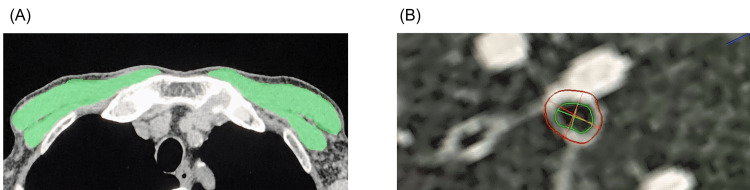 Figure 1
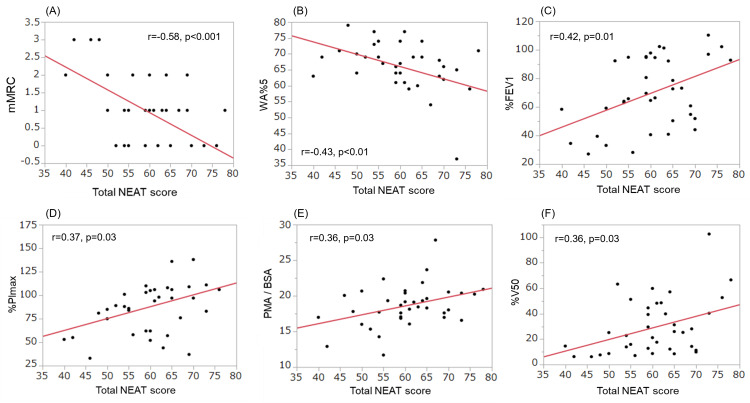 Figure 2
Peer Reviews
No public reviews on file for this paper yet. If you reviewed it on a platform where reviews are public (OpenReview, ICLR, NeurIPS, ICML), you can paste yours below so the community can read it here.
Videos
No videos yet. Explain this paper in a talk, walkthrough, or lecture? Add one.
Taxonomy
TopicsChronic Obstructive Pulmonary Disease (COPD) Research · Cardiovascular and exercise physiology · Respiratory Support and Mechanisms