Preferential transduction of parvalbumin-expressing cortical neurons by AAV-mDLX5/6 vectors
Padideh Yazdan-Shahmorad, Shane Gibson, Joanne C. Lee, Gregory D. Horwitz

TL;DR
This study shows that AAV vectors with a specific enhancer target parvalbumin-expressing neurons in the brain, offering a tool for precise neural research.
Contribution
The study identifies a novel AAV vector enhancer that preferentially targets parvalbumin-expressing cortical neurons in primates and rodents.
Findings
AAV-mDLX5/6 vectors efficiently transduced parvalbumin-expressing neurons in multiple cortical regions of primates and rats.
Calretinin-expressing neurons were not transduced by the AAV-mDLX5/6 vectors.
The enhancer's specificity may stem from differential activity in neurons of different developmental lineages.
Abstract
A major goal of modern neuroscience is to understand the functions of the varied neuronal types that comprise the mammalian brain. Toward this end, some types of neurons can be targeted and manipulated with enhancer-bearing AAV vectors. These vectors hold great promise to advance basic and translational neuroscience, but to realize this potential, their selectivity must be characterized. In this study, we investigated the selectivity of AAV vectors carrying an enhancer of the murine Dlx5 and Dlx6 genes. Vectors were injected into the visual cortex of two macaque monkeys, the frontal cortex of two others, and the somatosensory/motor cortex of three rats. Post-mortem immunostaining revealed that parvalbumin-expressing neurons were transduced efficiently in all cases but calretinin-expressing neurons were not. We speculate that this specificity is a consequence of differential activity of…
Genes, proteins, chemicals, diseases, species, mutations and cell lines named across the full text — each resolved to its canonical identifier and authoritative record.
Click any figure to enlarge with its caption.
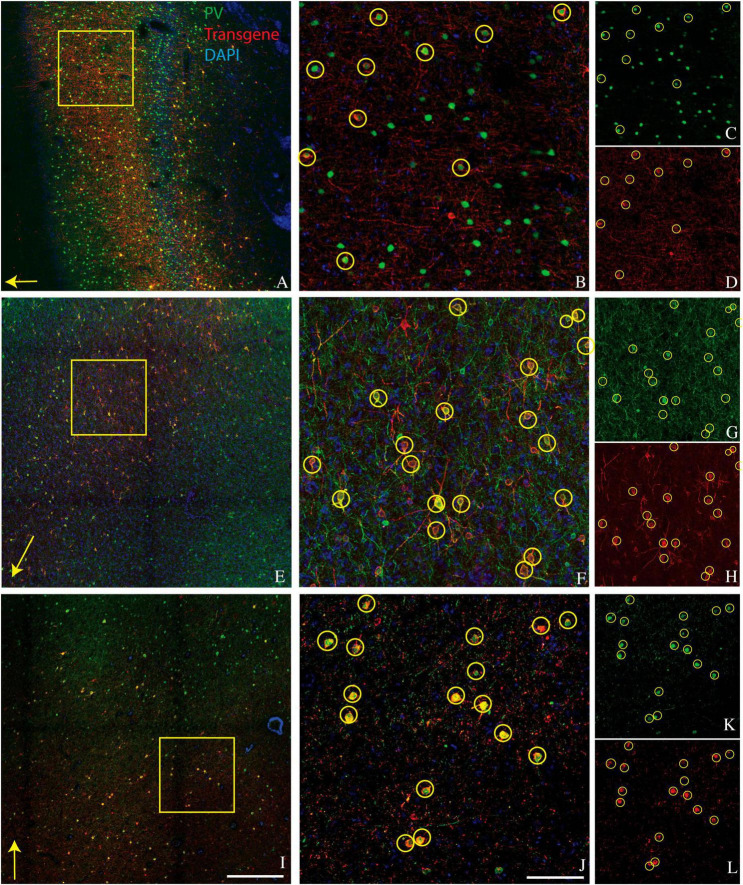 Figure 1
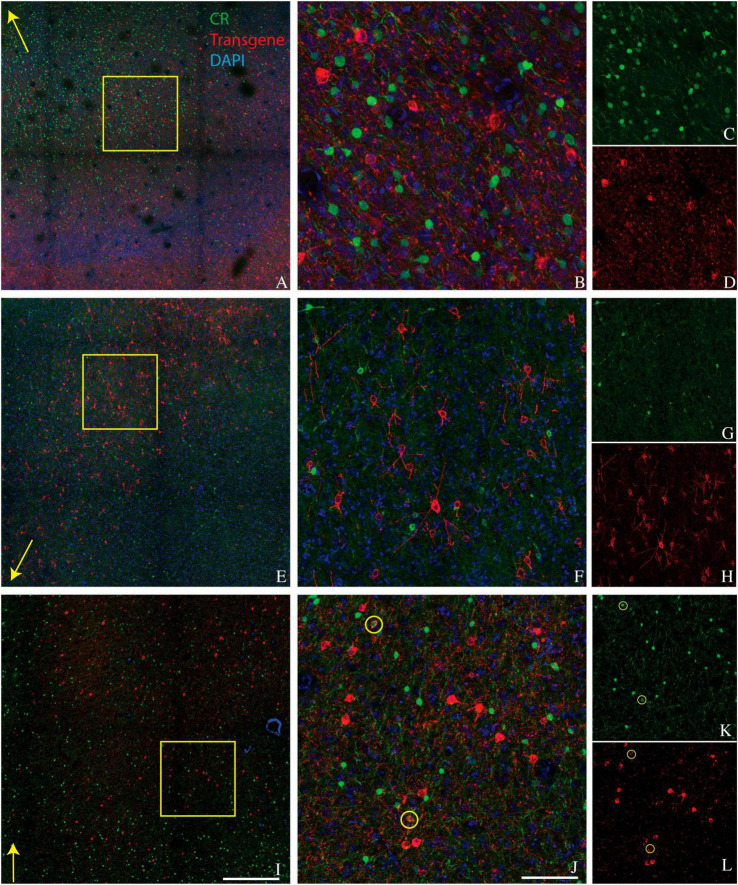 Figure 2
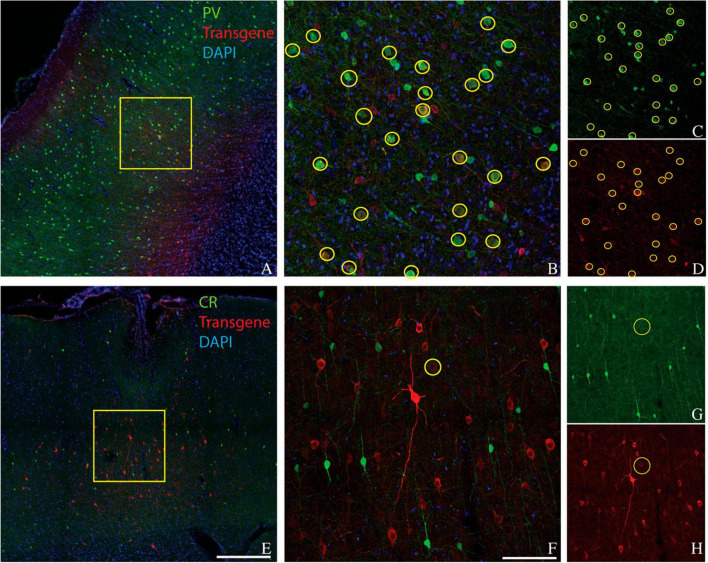 Figure 3
Peer Reviews
No public reviews on file for this paper yet. If you reviewed it on a platform where reviews are public (OpenReview, ICLR, NeurIPS, ICML), you can paste yours below so the community can read it here.
Videos
No videos yet. Explain this paper in a talk, walkthrough, or lecture? Add one.
Taxonomy
TopicsRetinal Development and Disorders · Neuroscience and Neuropharmacology Research · Neuroscience and Neural Engineering