Optimized reamer geometry for controlled reaming of the proximal femur
Markus Heinecke, Frank Layher, Georg Matziolis

TL;DR
This study evaluates reamer designs and rotation directions to optimize bone preparation in hip surgeries, aiming to reduce torsional forces and improve control.
Contribution
The study identifies optimal reamer rotation and cutting direction combinations to enhance controllability and safety during femoral reaming.
Findings
Reamers rotating in the same direction as their cutting direction had significantly higher feed rates.
Torque remained consistent across all tested reamer configurations.
Using reamers in opposite rotation to their cutting direction improves controllability in fragile bone structures.
Abstract
Preparation of the femoral proximal medullary cavity by reaming is essential for intramedullary nail osteosynthesis and hip revision arthroplasty. The use of reamers sometimes exerts high torsional forces on the bone. Design and direction of rotation of the reamer are potential influencing factors. The aim of this biomechanical study is to evaluate the best combination of a right- or left-cutting reamer with a clockwise- or counterclockwise-rotating insert in terms of preparation and safety. Right- and left-cutting reamers with conical design were each introduced into five synthetic femurs in both clockwise and counterclockwise rotation with constant feed force. A specially constructed test system was used for this series of tests, with which the respective intramedullary channel were reamed step by step. This was then used to determine the required torque. In addition, the feed rate…
Genes, proteins, chemicals, diseases, species, mutations and cell lines named across the full text — each resolved to its canonical identifier and authoritative record.
Click any figure to enlarge with its caption.
 Figure 1
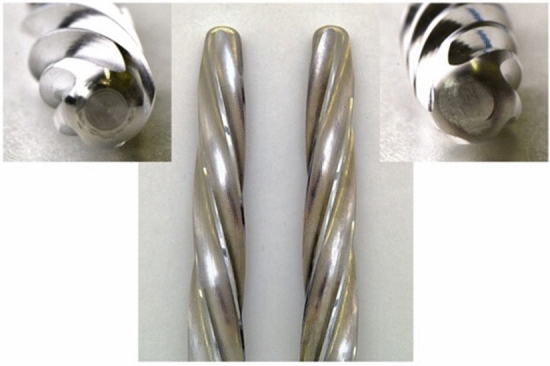 Figure 2
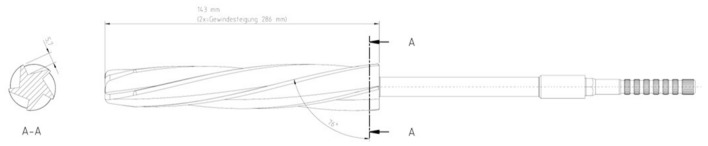 Figure 3
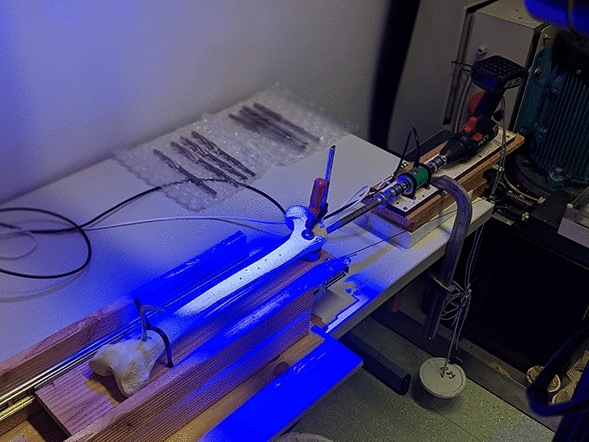 Figure 4
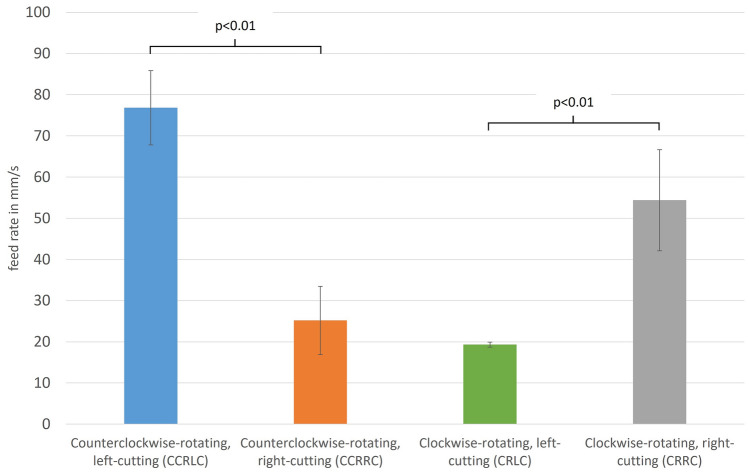 Figure 5
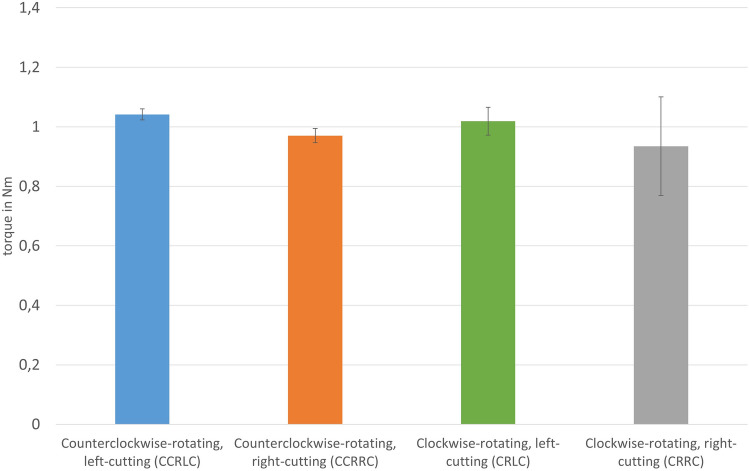 Figure 6
Peer Reviews
No public reviews on file for this paper yet. If you reviewed it on a platform where reviews are public (OpenReview, ICLR, NeurIPS, ICML), you can paste yours below so the community can read it here.
Videos
No videos yet. Explain this paper in a talk, walkthrough, or lecture? Add one.
Taxonomy
TopicsOrthopaedic implants and arthroplasty · Hip disorders and treatments · Hip and Femur Fractures