Vestigial singlet pairing in a fluctuating magnetic triplet superconductor and its implications for graphene superlattices
Prathyush P. Poduval, Mathias S. Scheurer

TL;DR
Researchers explore a new type of superconducting state in graphene systems that could explain recent experimental observations.
Contribution
They identify a unique superconducting state with three electrons and one hole, which may explain properties seen in graphene moiré systems.
Findings
The model exhibits vestigial phases like charge-4e superconductivity and broken time-reversal symmetry.
A phase with finite d ⋅ N shows BCS-like symmetries and metastable supercurrents but different spectral properties.
The electronic density of states suppression resembles both fully gapped and nodal superconductors.
Abstract
Stacking and twisting graphene layers allows to create and control a two-dimensional electron liquid with strong correlations. Experiments indicate that these systems exhibit strong tendencies towards both magnetism and triplet superconductivity. Motivated by this phenomenology, we study a 2D model of fluctuating triplet pairing and spin magnetism. Individually, their respective order parameters, d and N, cannot order at finite temperature. Nonetheless, the model exhibits a variety of vestigial phases, including charge-4e superconductivity and broken time-reversal symmetry. Our main focus is on a phase characterized by finite d ⋅ N, which has the same symmetries as the BCS state, a Meissner effect, and metastable supercurrents, yet rather different spectral properties: most notably, the suppression of the electronic density of states at the Fermi level can resemble that of either a…
Genes, proteins, chemicals, diseases, species, mutations and cell lines named across the full text — each resolved to its canonical identifier and authoritative record.
Click any figure to enlarge with its caption.
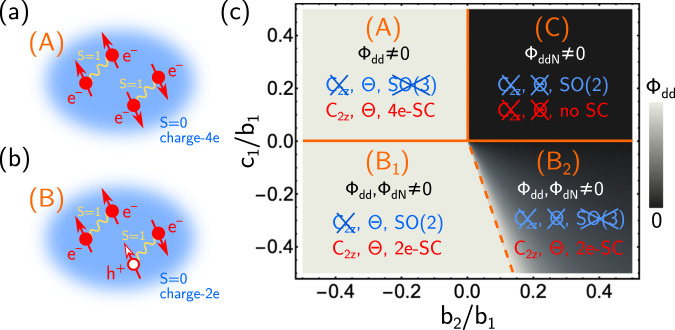 Figure 1
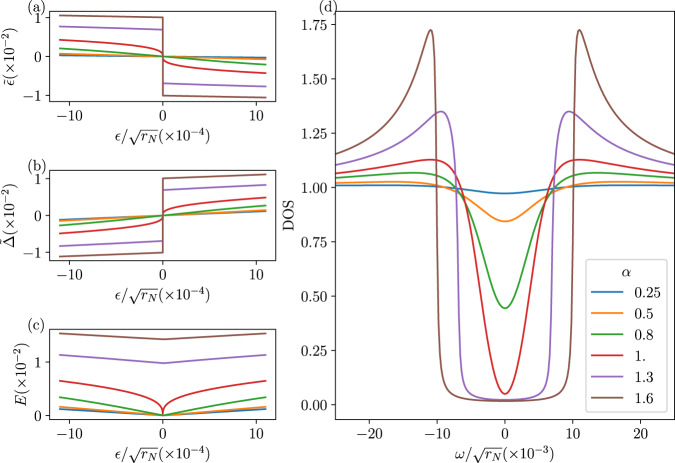 Figure 2
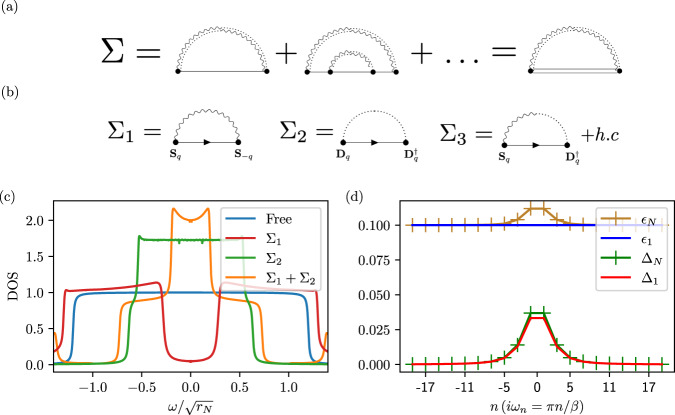 Figure 3
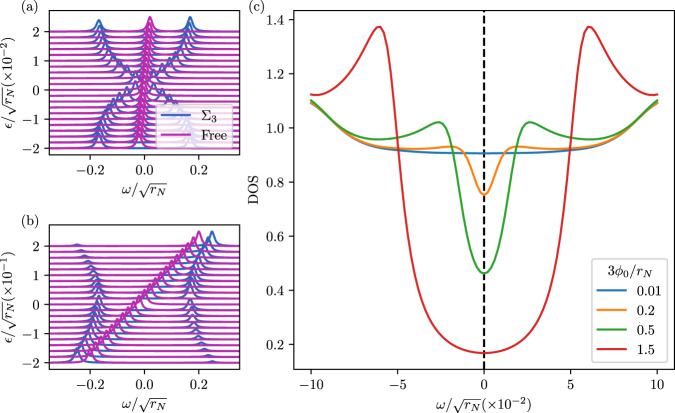 Figure 4
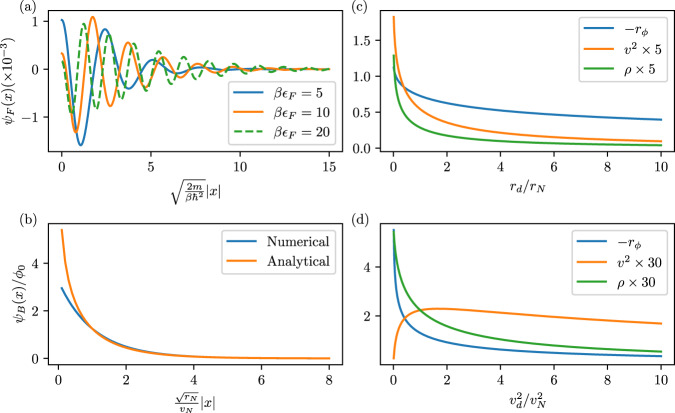 Figure 5
Peer Reviews
No public reviews on file for this paper yet. If you reviewed it on a platform where reviews are public (OpenReview, ICLR, NeurIPS, ICML), you can paste yours below so the community can read it here.
Videos
No videos yet. Explain this paper in a talk, walkthrough, or lecture? Add one.
Taxonomy
TopicsYouth Culture and Social Dynamics