Interference in Macrophage Balance (M1/M2): The Mechanism of Action Responsible for the Anti-Inflammatory Effect of a Fluorophenyl-Substituted Imidazole
Julia Salvan da Rosa, Eduarda Talita Bramorski Mohr, Tainá Larissa Lubschinski, Guilherme Nicácio Vieira, Thais Andreia Rossa, Marcus Mandolesi Sá, Eduardo Monguilhott Dalmarco

TL;DR
This paper shows that a fluorophenyl-imidazole compound reduces inflammation by shifting macrophages from a pro-inflammatory M1 state to an anti-inflammatory M2 state.
Contribution
The study identifies fluorophenyl-imidazole as a novel compound with immunomodulatory effects that repolarize macrophages.
Findings
Fluorophenyl-imidazole reduces M1 macrophage markers like TNF-α, IL-6, and iNOS.
The compound increases M2 macrophage markers such as IL-4, IL-13, and arginase-1.
It induces macrophage repolarization to M2a without requiring LPS stimulation.
Abstract
Traditionally, the treatment of inflammatory conditions has focused on the inhibition of inflammatory mediator production; however, many conditions are refractory to this classical approach. Recently, an alternative has been presented by researchers to solve this problem: The immunomodulation of cells closely related to inflammation. Hence, macrophages, a critical key in both innate and acquired immunity, have been presented as an alternative target for the development of new medicines. In this work, we tested the fluorophenyl-imidazole for its anti-inflammatory activity and possible immunomodulatory effect on RAW 264.7 macrophages. We also evaluated the anti-inflammatory effect of the compound, and the macrophage repolarization to M2 was confirmed by the ability of the compound to reduce the M1 markers TNF-α, IL-6, MCP-1, IL-12p70, IFN-γ, and TLR4, the high levels of p65…
Genes, proteins, chemicals, diseases, species, mutations and cell lines named across the full text — each resolved to its canonical identifier and authoritative record.
Click any figure to enlarge with its caption.
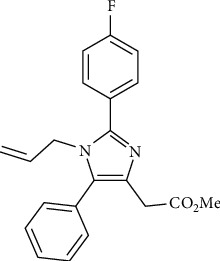 Figure 1
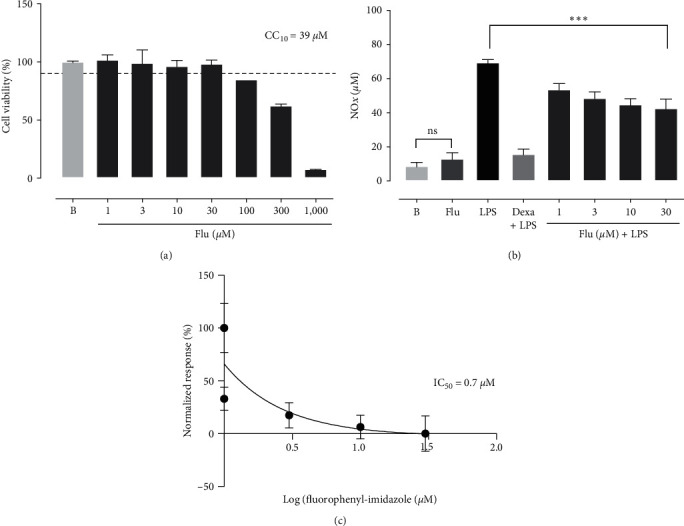 Figure 2
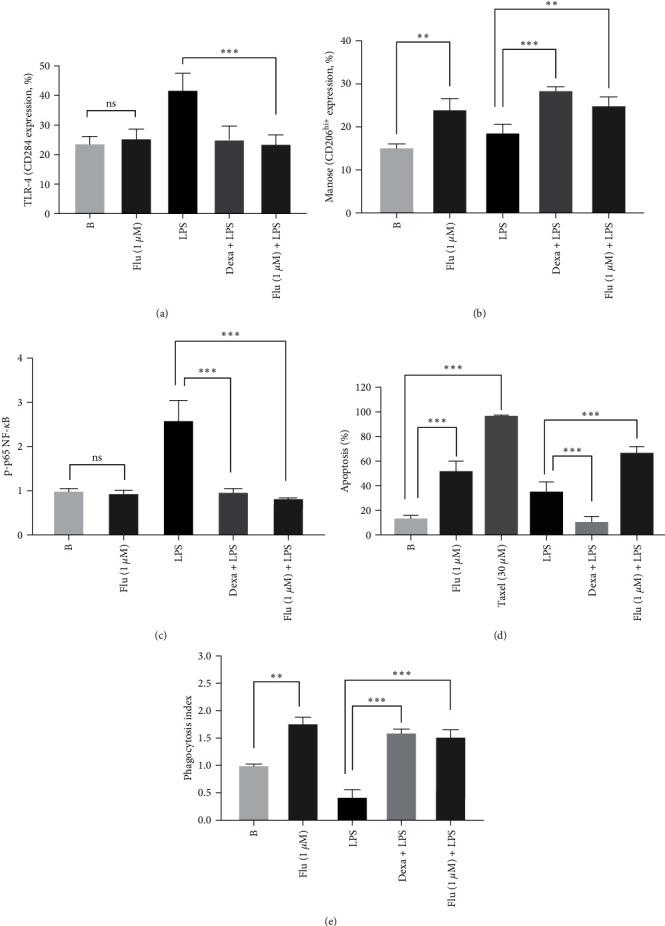 Figure 3
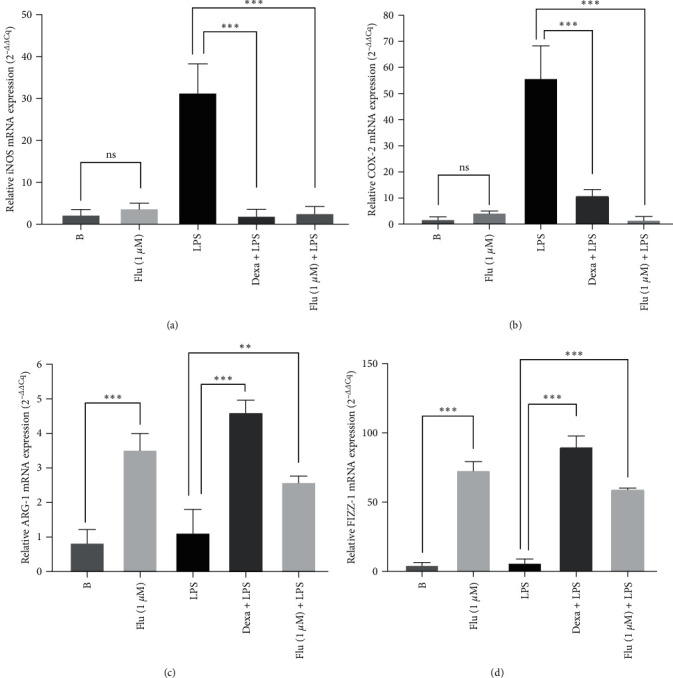 Figure 4
Peer Reviews
No public reviews on file for this paper yet. If you reviewed it on a platform where reviews are public (OpenReview, ICLR, NeurIPS, ICML), you can paste yours below so the community can read it here.
Videos
No videos yet. Explain this paper in a talk, walkthrough, or lecture? Add one.
Taxonomy
TopicsImmune cells in cancer · Immune Response and Inflammation · Immunotoxicology and immune responses