Biomechanical effects of cranial closing wedge osteotomy on joint stability in normal canine stifles: an ex vivo study
Masakazu Shimada, Chenxu Huang, Satoshi Yamakawa, Hiromichi Fujie, Sawako Murakami, Nobuo Kanno, Yasushi Hara

TL;DR
This study examines how a surgical technique called CCWO affects joint stability in dog knees, both with and without a key ligament.
Contribution
The study provides new biomechanical insights into CCWO's effectiveness in stabilizing canine stifle joints under various conditions.
Findings
CCWO reduced compressive displacement but increased drawer and rotational displacement in canine stifle joints.
CCWO combined with CrCL transection worsened joint instability during drawer tests.
CCWO is most effective for stabilization when the cranial cruciate ligament is intact.
Abstract
Cranial closing wedge osteotomy (CCWO) is a functional stabilisation technique for cranial cruciate ligament (CrCL) ruptures. This biomechanical study aimed to evaluate the influence of CCWO on the stability of the stifle joint. Eighteen Beagle stifle joints were divided into two groups: control and CCWO. The stifle joints were analyzed using a six-degree-of-freedom robotic joint biomechanical testing system. The joints were subjected to 30 N in the craniocaudal (CrCd) drawer and proximal compression tests and 1 Nm in the internal–external (IE) rotation test. Each test was performed with an extension position, 135°, and 120° of joint angle. The stifle joints were tested while the CrCLs were intact and then transected. In the drawer test, the CCWO procedure, CrCL transection, and stifle joint flexion increased CrCd displacement. The CCWO procedure and CrCL transection showed an…
Genes, proteins, chemicals, diseases, species, mutations and cell lines named across the full text — each resolved to its canonical identifier and authoritative record.
Click any figure to enlarge with its caption.
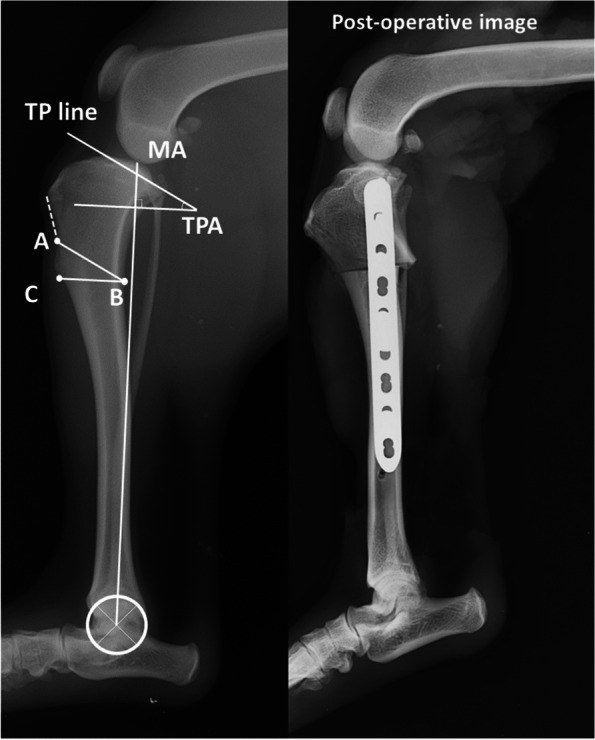 Figure 1
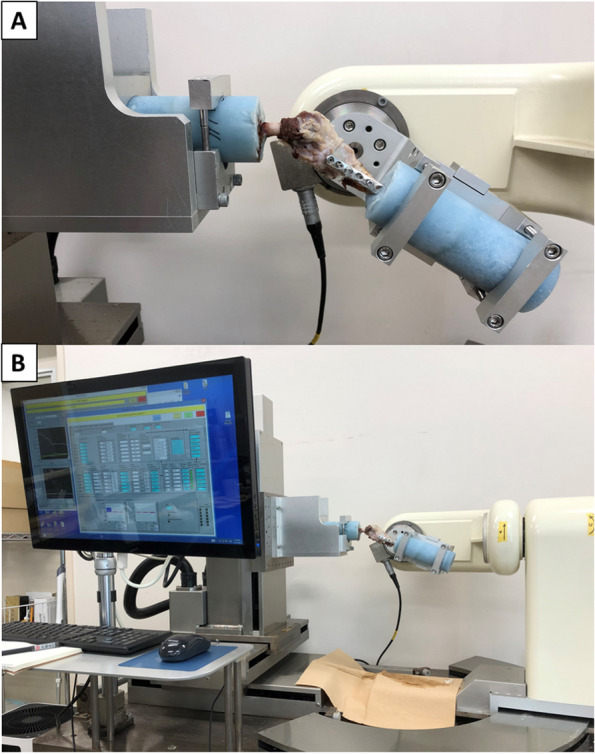 Figure 2
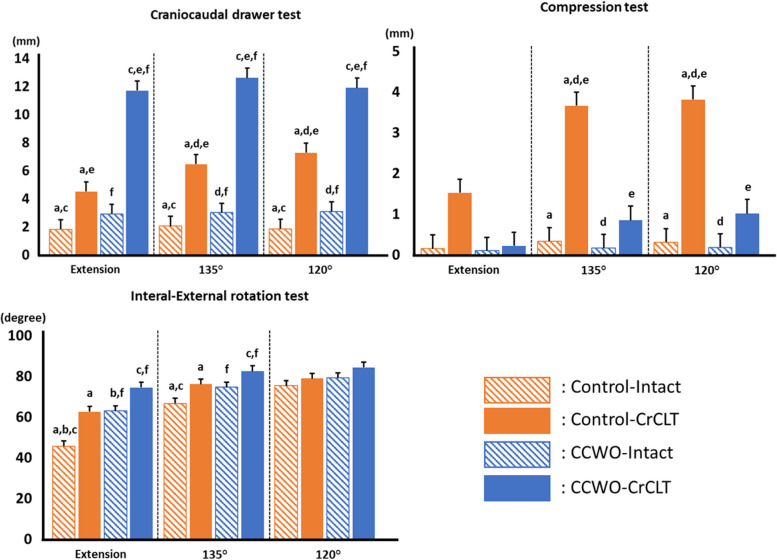 Figure 3
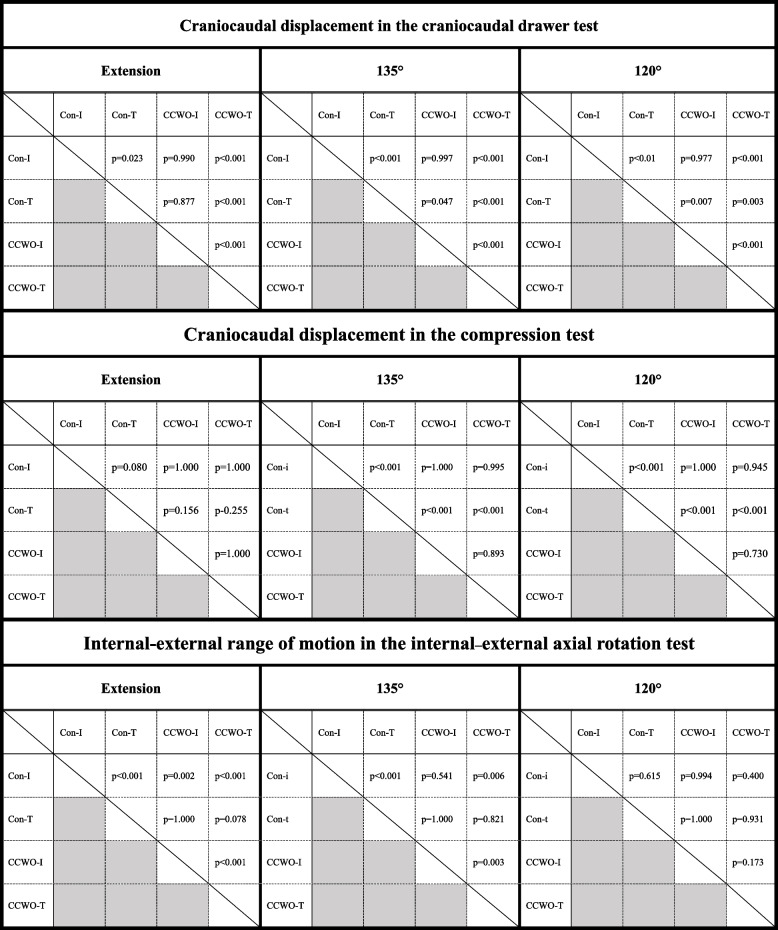 Figure 4
Peer Reviews
No public reviews on file for this paper yet. If you reviewed it on a platform where reviews are public (OpenReview, ICLR, NeurIPS, ICML), you can paste yours below so the community can read it here.
Videos
No videos yet. Explain this paper in a talk, walkthrough, or lecture? Add one.
Taxonomy
TopicsVeterinary Orthopedics and Neurology · dental development and anomalies · Human-Animal Interaction Studies