Regorafenib modulation of the angiopoietin/TIE2 axis in a mouse model of sepsis-induced lung injury
Mohammed Hamzah Ibadi, Sahar Majeed, Fadhaa Abdulameer Ghafil, Najah Rayish Hadi

TL;DR
This study shows that regorafenib reduces lung injury in sepsis by lowering inflammation and affecting specific proteins involved in blood vessel regulation.
Contribution
The study reveals regorafenib's protective effects in sepsis-induced lung injury via modulation of the angiopoietin/TIE2 axis.
Findings
Regorafenib significantly reduced inflammatory markers like TNF-α, IL-1β, and Ang-2 in sepsis-induced lung injury.
Regorafenib increased VE-cadherin mRNA expression in lung tissue, suggesting a protective effect on blood vessels.
Ang-1 levels were elevated in the regorafenib group compared to the sepsis-only group.
Abstract
Sepsis, often resulting from an immune response overreaction to microorganisms and their products, can lead to acute lung injury through inflammation mediated by excessive cytokines. This study aimed to investigate the effects of regorafenib on lung injury in mice following the induction of sepsis. We divided mice into four groups (n=6 each): a sham group (undergoing laparotomy without cecal ligation and puncture [CLP]), a CLP group, a vehicle group, and a regorafenib-treated group (30 mg/kg IP, administered one hour before CLP). TNF-α, IL-1β, VEGF, MPO, caspase-11, and Ang-2 levels were significantly increased (p<0.05) in the CLP group compared to the sham group, while the regorafenib group showed significant reductions in these markers versus the CLP group (p< 0.05). In contrast, Ang-1 levels, which were reduced in the CLP group (p<0.05) compared to the sham group, were elevated in…
Genes, proteins, chemicals, diseases, species, mutations and cell lines named across the full text — each resolved to its canonical identifier and authoritative record.
Click any figure to enlarge with its caption.
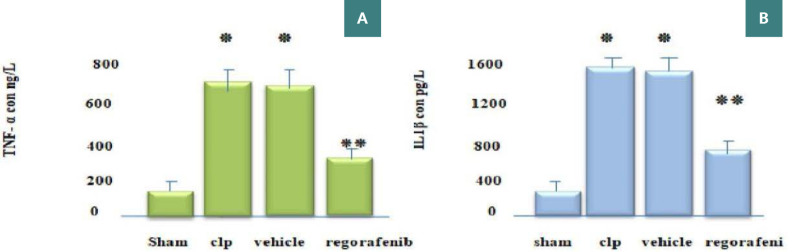 Figure 1
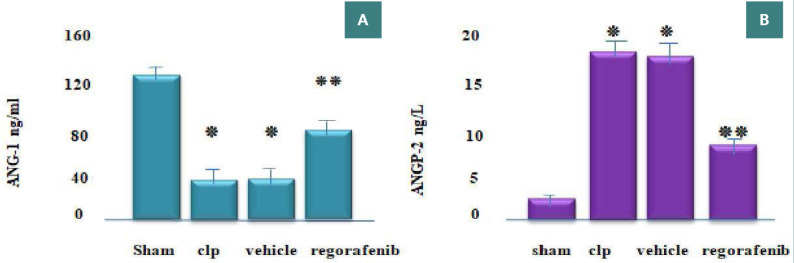 Figure 2
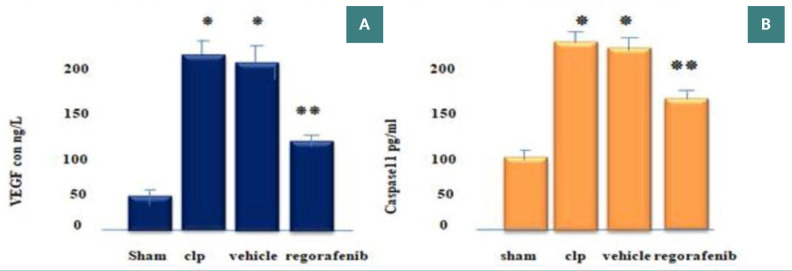 Figure 3
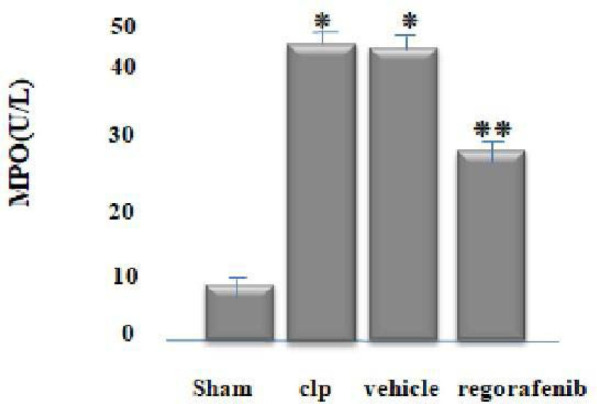 Figure 4
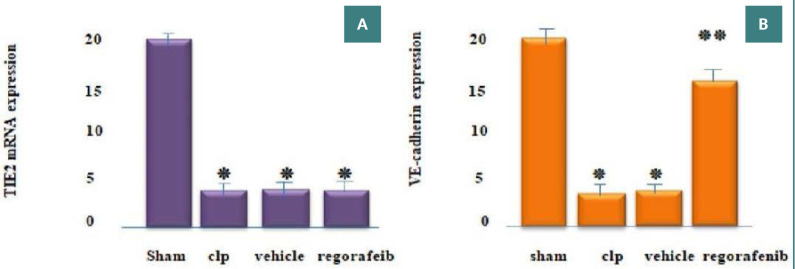 Figure 5
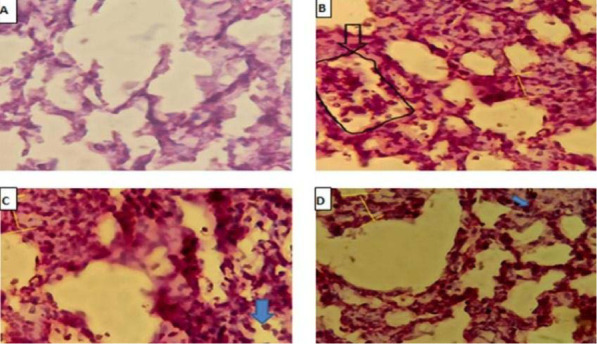 Figure 6
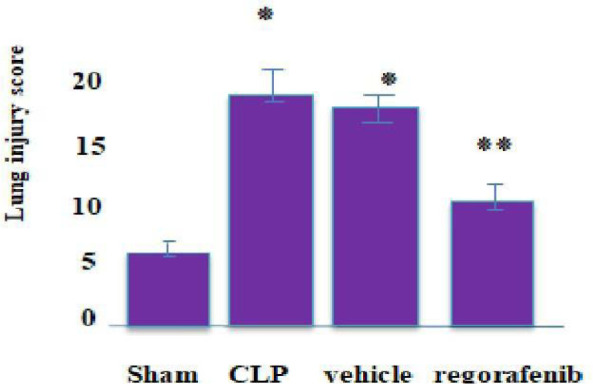 Figure 7
Peer Reviews
No public reviews on file for this paper yet. If you reviewed it on a platform where reviews are public (OpenReview, ICLR, NeurIPS, ICML), you can paste yours below so the community can read it here.
Videos
No videos yet. Explain this paper in a talk, walkthrough, or lecture? Add one.
Taxonomy
TopicsAngiogenesis and VEGF in Cancer · Lipid metabolism and disorders · Cancer, Hypoxia, and Metabolism