MazEF Homologs in Symbiobacterium thermophilum Exhibit Cross-Neutralization with Non-Cognate MazEFs
Yu-Nong Jiang, Hiroko Tamiya-Ishitsuka, Rie Aoi, Takuma Okabe, Akiko Yokota, Naohiro Noda

TL;DR
This study shows that a toxin-antitoxin system in Symbiobacterium thermophilum interacts with similar systems from other bacteria, suggesting a shared evolutionary origin.
Contribution
The study reveals cross-neutralization between MazF-sth and non-cognate MazE-bs, and identifies key residues for MazF-sth activity.
Findings
MazF-sth cleaves RNA at the UACAUA motif, similar to MazF from Gram-positive bacteria.
Arg29 and Thr52 are critical residues for MazF-sth ribonuclease activity.
Cross-neutralization between MazF-sth and MazE-bs suggests horizontal gene transfer.
Abstract
Toxin–antitoxin systems are preserved by nearly every prokaryote. The type II toxin MazF acts as a sequence-specific endoribonuclease, cleaving ribonucleotides at specific sequences that vary from three to seven bases, as has been reported in different host organisms to date. The present study characterized the MazEF module (MazEF-sth) conserved in the Symbiobacterium thermophilum IAM14863 strain, a Gram-negative syntrophic bacterium that can be supported by co-culture with multiple bacteria, including Bacillus subtilis. Based on a method combining massive parallel sequencing and the fluorometric assay, MazF-sth was determined to cleave ribonucleotides at the UACAUA motif, which is markedly similar to the motifs recognized by MazF from B. subtilis (MazF-bs), and by several MazFs from Gram-positive bacteria. MazF-sth, with mutations at conserved amino acid residues Arg29 and Thr52, lost…
Genes, proteins, chemicals, diseases, species, mutations and cell lines named across the full text — each resolved to its canonical identifier and authoritative record.
Click any figure to enlarge with its caption.
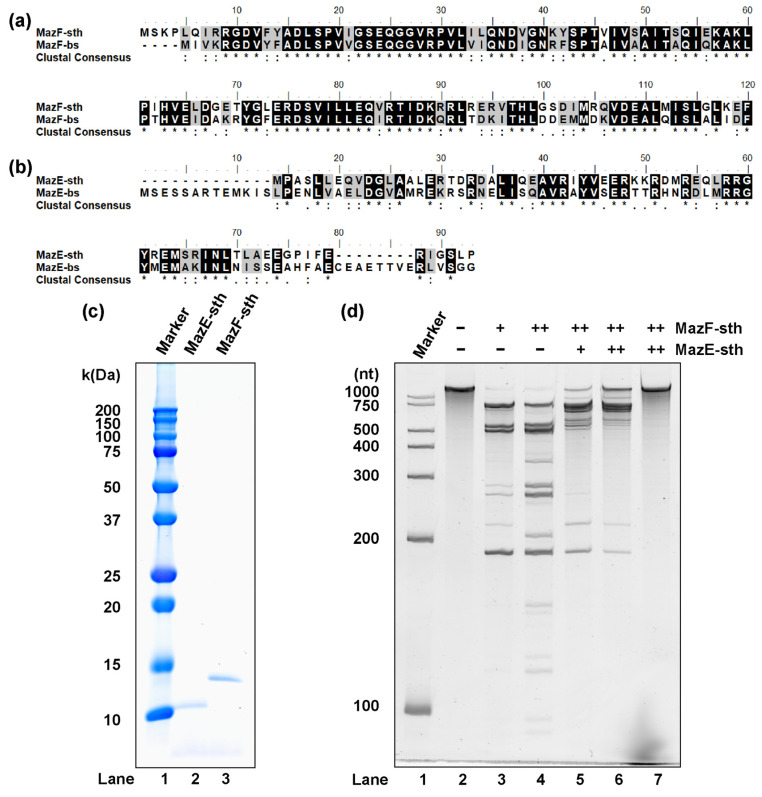 Figure 1
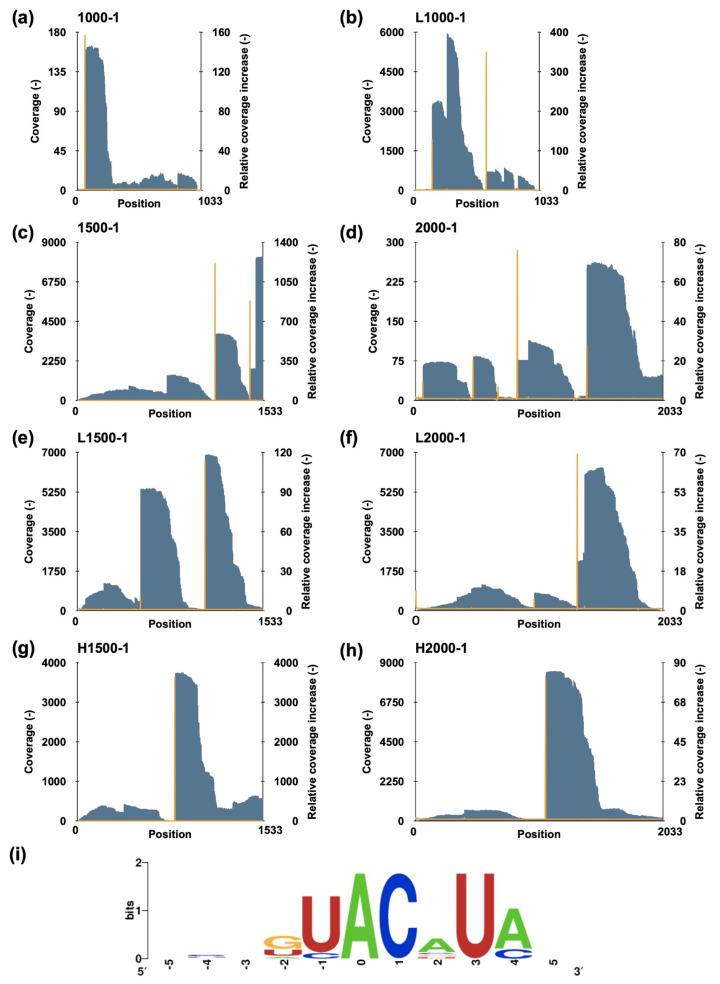 Figure 2
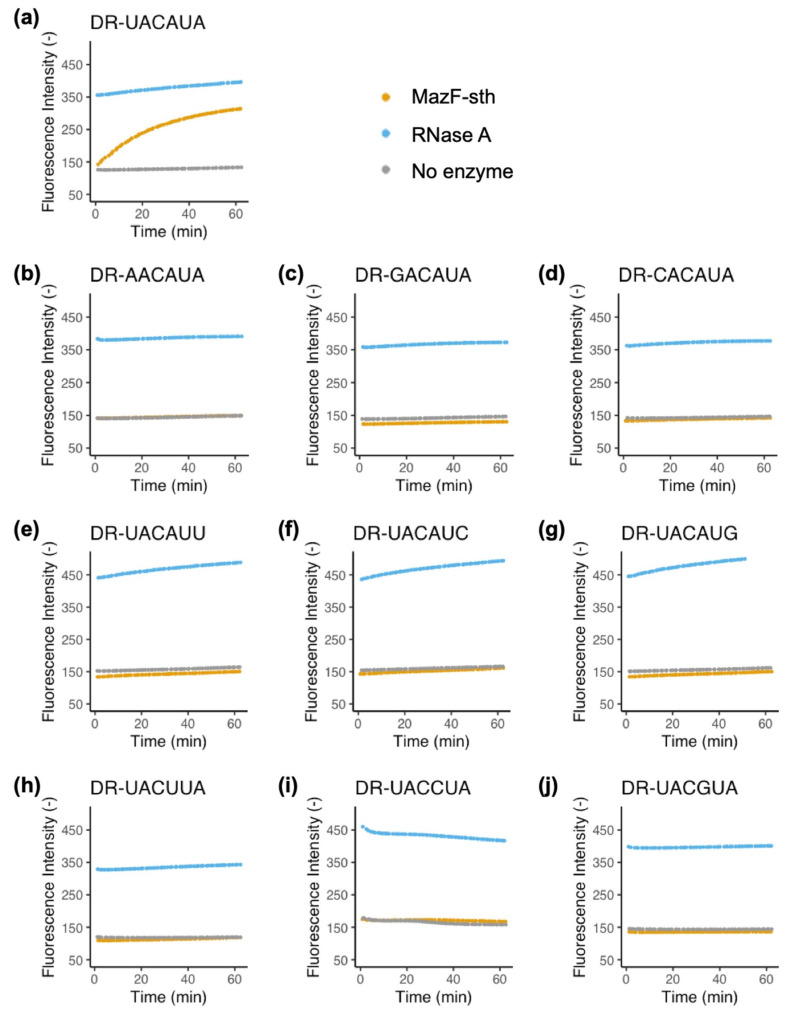 Figure 3
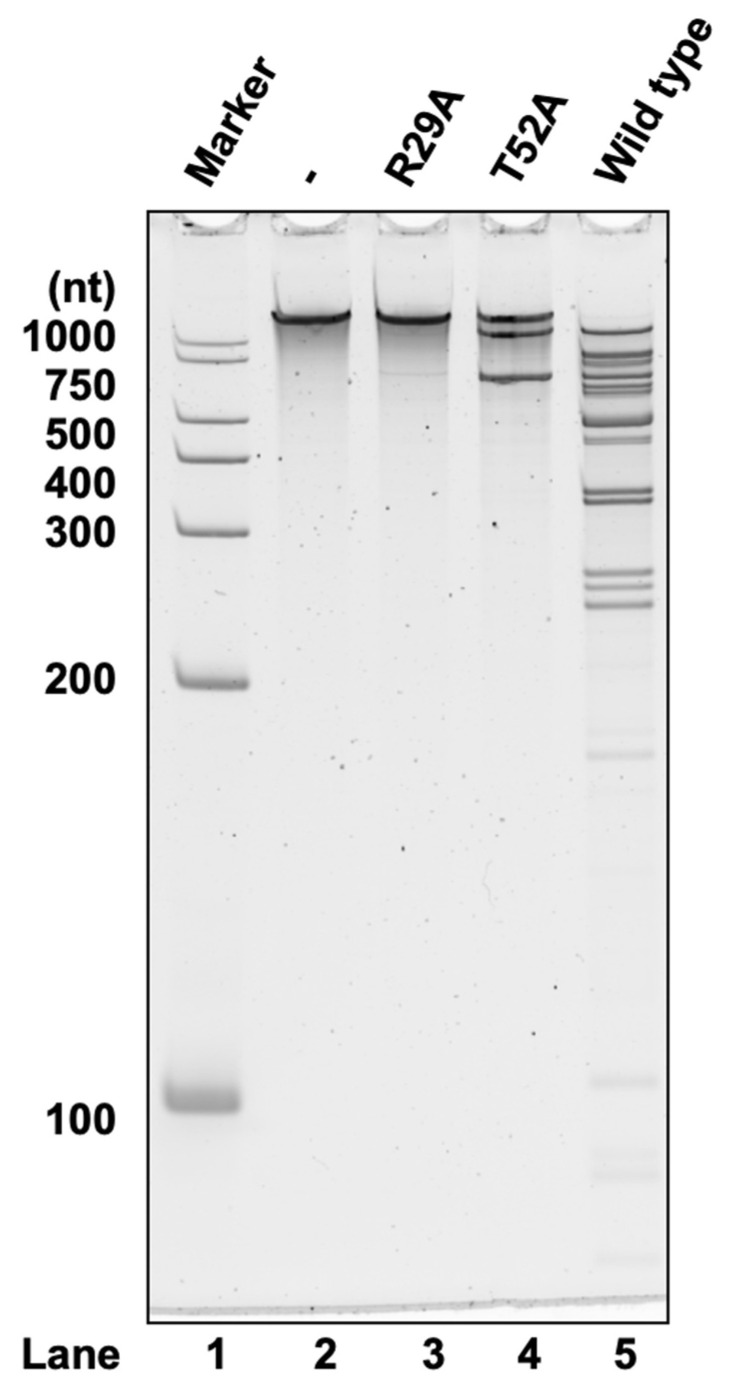 Figure 4
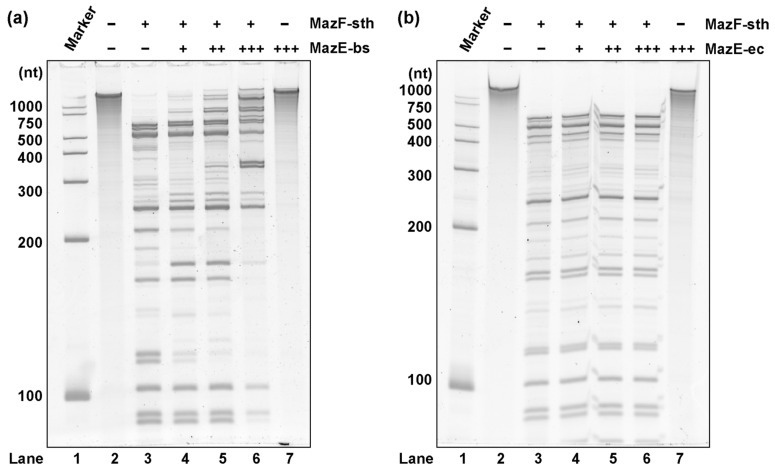 Figure 5
Peer Reviews
No public reviews on file for this paper yet. If you reviewed it on a platform where reviews are public (OpenReview, ICLR, NeurIPS, ICML), you can paste yours below so the community can read it here.
Videos
No videos yet. Explain this paper in a talk, walkthrough, or lecture? Add one.
Taxonomy
TopicsBacterial Genetics and Biotechnology · Bacteriophages and microbial interactions · Insect symbiosis and bacterial influences