Increased reliance on temporal coding when target sound is softer than the background
Nima Alamatsaz, Merri J. Rosen, Antje Ihlefeld

TL;DR
The study shows that when sounds are soft compared to background noise, the brain relies more on timing of neural signals to detect sounds.
Contribution
The paper demonstrates that temporal coding, not spike rate, enables sound detection across varying noise levels.
Findings
Rate-based decoding fails at negative SNRs, while temporal coding remains effective.
Trained gerbils show SNR-invariant tone detection using temporal spike patterns.
Temporal fine structure resolution correlates with dip-listening performance.
Abstract
Everyday environments often contain multiple concurrent sound sources that fluctuate over time. Normally hearing listeners can benefit from high signal-to-noise ratios (SNRs) in energetic dips of temporally fluctuating background sound, a phenomenon called dip-listening. Specialized mechanisms of dip-listening exist across the entire auditory pathway. Both the instantaneous fluctuating and the long-term overall SNR shape dip-listening. An unresolved issue regarding cortical mechanisms of dip-listening is how target perception remains invariant to overall SNR, specifically, across different tone levels with an ongoing fluctuating masker. Equivalent target detection over both positive and negative overall SNRs (SNR invariance) is reliably achieved in highly-trained listeners. Dip-listening is correlated with the ability to resolve temporal fine structure, which involves temporally-varying…
Genes, proteins, chemicals, diseases, species, mutations and cell lines named across the full text — each resolved to its canonical identifier and authoritative record.
Click any figure to enlarge with its caption.
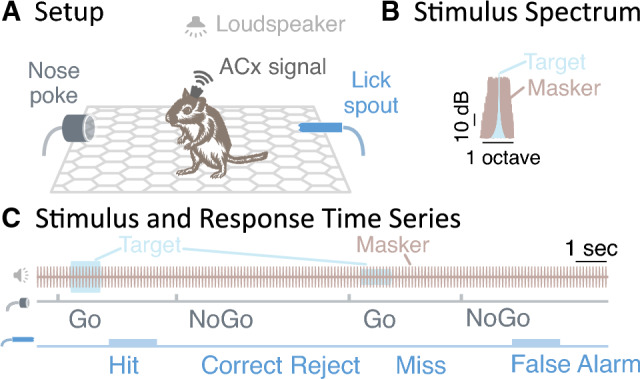 Figure 1
 Figure 2
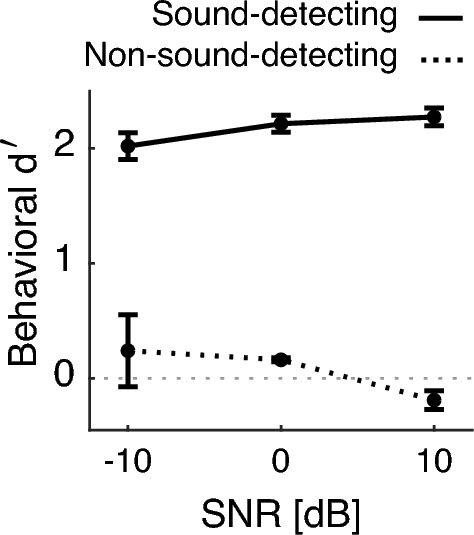 Figure 3
 Figure 4
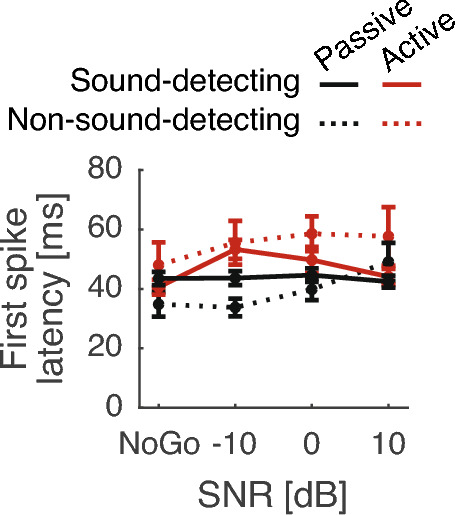 Figure 5
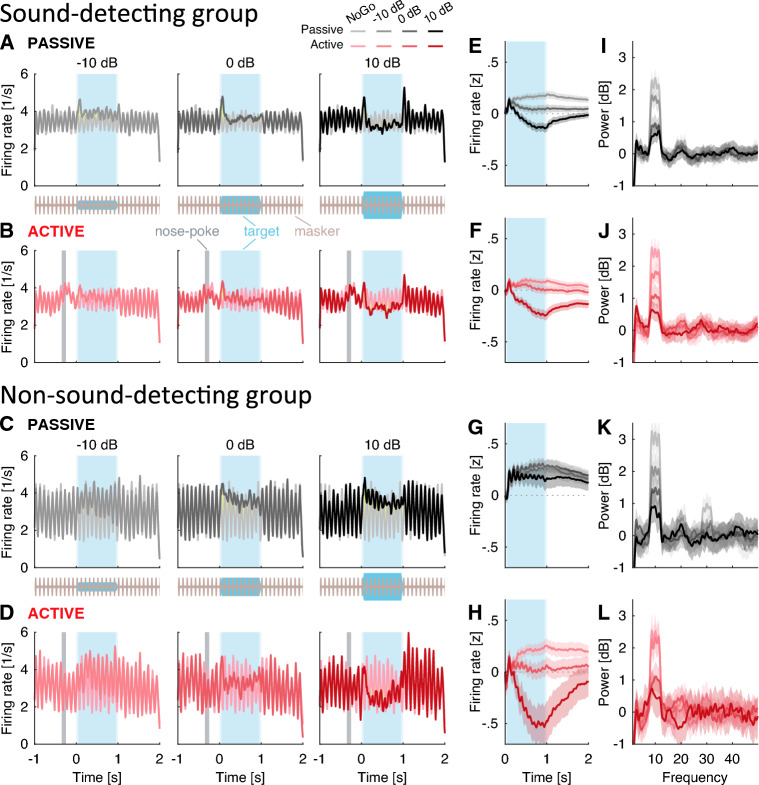 Figure 6
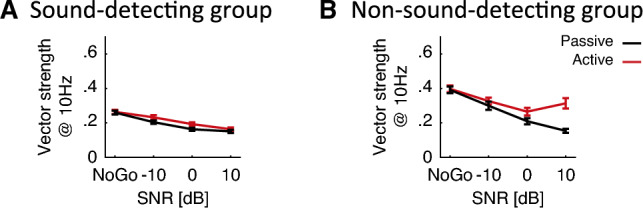 Figure 7
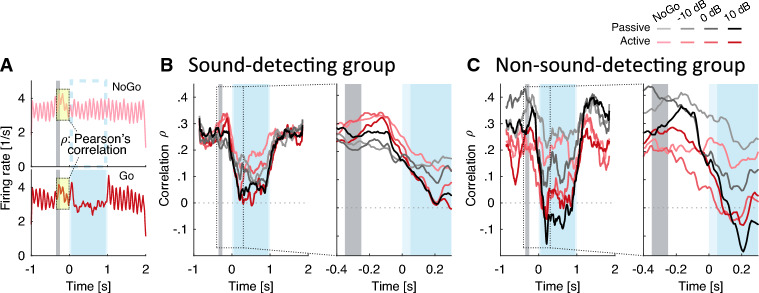 Figure 8
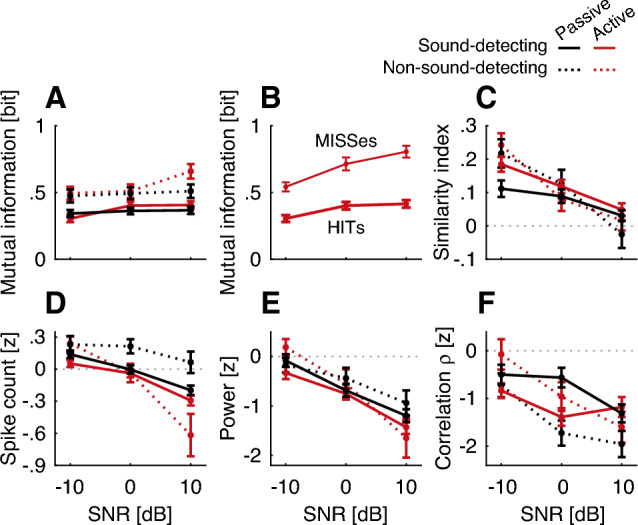 Figure 9
Peer Reviews
No public reviews on file for this paper yet. If you reviewed it on a platform where reviews are public (OpenReview, ICLR, NeurIPS, ICML), you can paste yours below so the community can read it here.
Videos
No videos yet. Explain this paper in a talk, walkthrough, or lecture? Add one.
Taxonomy
TopicsHearing Loss and Rehabilitation · Neuroscience and Music Perception · Neural dynamics and brain function