Prevention of Protease-Induced Degradation of Desmoplakin via Small Molecule Binding
Isabel M. Romov, Roujon A. Nowzari, Clay P. Page, Madeleine R. Benes, Maegen A. Borzok, Nathan T. Wright

TL;DR
Researchers found small molecules that can prevent the degradation of desmoplakin, a protein linked to heart disease, by blocking protease activity.
Contribution
The study identifies drug-like molecules that block protease-induced degradation of desmoplakin without affecting protease function.
Findings
Several small molecules prevent degradation of wildtype and disease-variant desmoplakin in the presence of trypsin and calpain.
Molecular dynamics suggest that long hydrophobic molecules bind in a shallow groove near the cleavage site.
These findings provide a foundation for developing pharmacological treatments for hypersensitive desmoplakin variants.
Abstract
Desmoplakin (DSP) is a large (~260 kDa) protein found in the desmosome, the subcellular structure that links the intermediate filament network of one cell to its neighbor. A mutation “hot-spot” within the NH2-terminal of the DSP protein (residues 299–515) is associated with arrhythmogenic cardiomyopathy. In a subset of DSP variants, disease is linked to calpain hypersensitivity. Previous studies show that calpain hypersensitivity can be corrected in vitro through the addition of a bulky residue neighboring the cleavage site, suggesting that physically blocking calpain accessibility is a viable strategy to restore DSP levels. Here, we aim to find drug-like molecules that also block calpain-dependent degradation of DSP. To do this, we screened ~2500 small molecules to identify compounds that specifically rescue DSP protein levels in the presence of proteases. We find that several…
Genes, proteins, chemicals, diseases, species, mutations and cell lines named across the full text — each resolved to its canonical identifier and authoritative record.
Click any figure to enlarge with its caption.
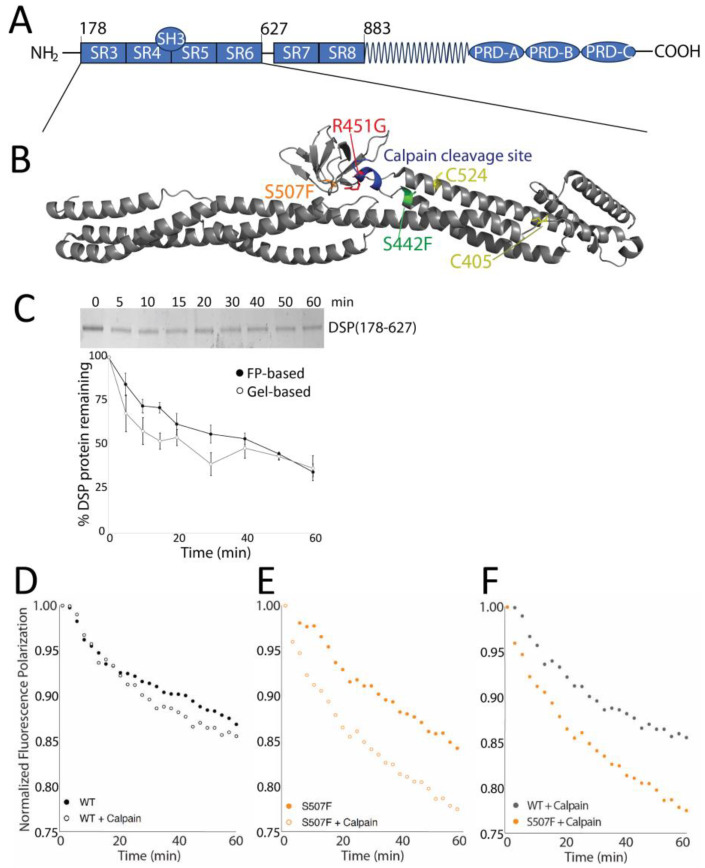 Figure 1
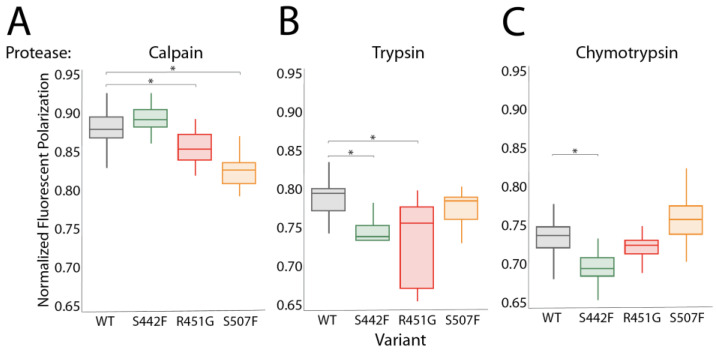 Figure 2
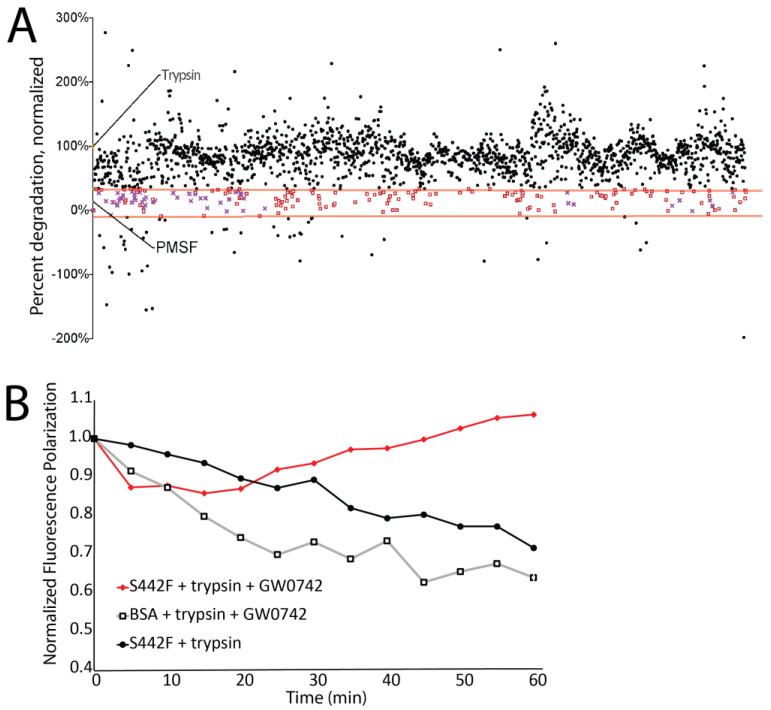 Figure 3
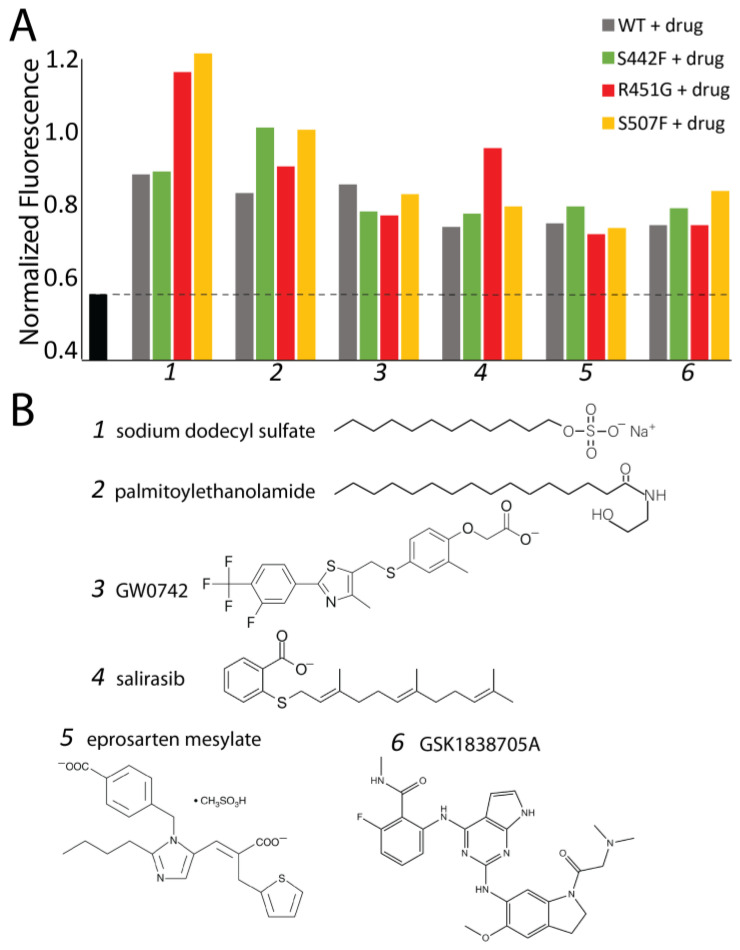 Figure 4
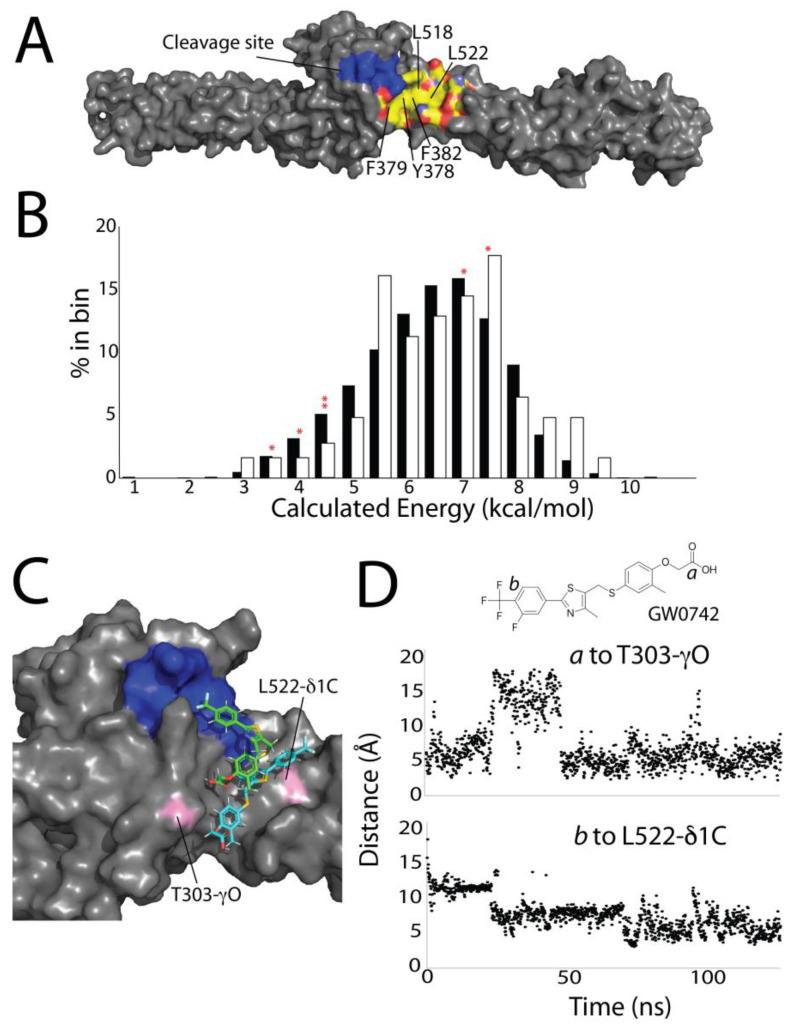 Figure 5
Peer Reviews
No public reviews on file for this paper yet. If you reviewed it on a platform where reviews are public (OpenReview, ICLR, NeurIPS, ICML), you can paste yours below so the community can read it here.
Videos
No videos yet. Explain this paper in a talk, walkthrough, or lecture? Add one.
Taxonomy
TopicsCardiovascular Effects of Exercise · Cardiomyopathy and Myosin Studies · Sports injuries and prevention