Investigation of PACAP38 and PAC1 Receptor Expression in Human Retinoblastoma and the Effect of PACAP38 Administration on Human Y-79 Retinoblastoma Cells
Dénes Tóth, Eszter Fábián, Edina Szabó, Evelin Patkó, Viktória Vicena, Alexandra Váczy, Tamás Atlasz, Tamás Tornóczky, Dóra Reglődi

TL;DR
This study explores the expression of PACAP38 and its receptor in retinoblastoma and tests how PACAP38 affects the survival of retinoblastoma cells.
Contribution
The first description of PACAP38 and PAC1R expression patterns in human retinoblastoma and their potential therapeutic implications.
Findings
Retinoblastoma cells showed perinuclear immunopositivity for PACAP38 and PAC1R regardless of genetic or histopathological factors.
Micromolar concentrations of PACAP38 significantly reduced Y-79 cell viability.
PACAP38 may have therapeutic potential due to its anti-apoptotic and protective effects on ocular tissues.
Abstract
Retinoblastoma represents the most prevalent malignant neoplasm affecting the eyes in childhood. The clear-cut origin of retinoblastoma has not yet been determined; however, based on experiments, it has been suggested that RB1 loss in cone photoreceptors causes retinoblastoma. Pituitary adenylate-cyclase activating polypeptide (PACAP) is a pleiotropic neuropeptide which has been shown to be affected in certain tumorous transformations, such as breast, lung, kidney, pancreatic, colon, and endocrine cancers. This study aimed to investigate potential changes in both PACAP38 and PAC1 receptor (PAC1R) expression in human retinoblastoma and the effect of PACAP38 administration on the survival of a human retinoblastoma cell line (Y-79). We analyzed human enucleation specimens removed because of retinoblastoma for PACAP38 and PAC1R immunostaining and the effect of PACAP38 on the survival of the…
Genes, proteins, chemicals, diseases, species, mutations and cell lines named across the full text — each resolved to its canonical identifier and authoritative record.
Click any figure to enlarge with its caption.
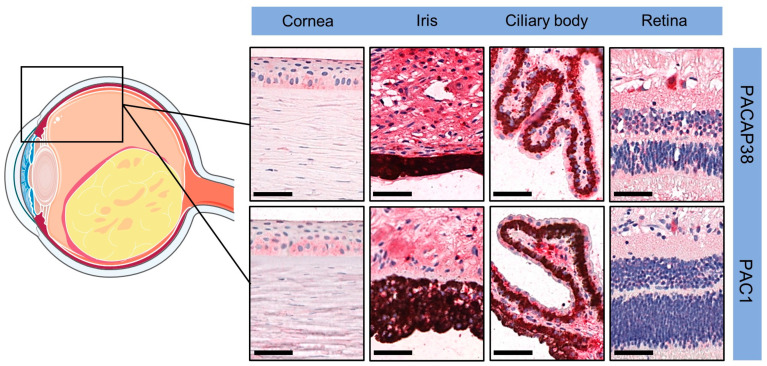 Figure 1
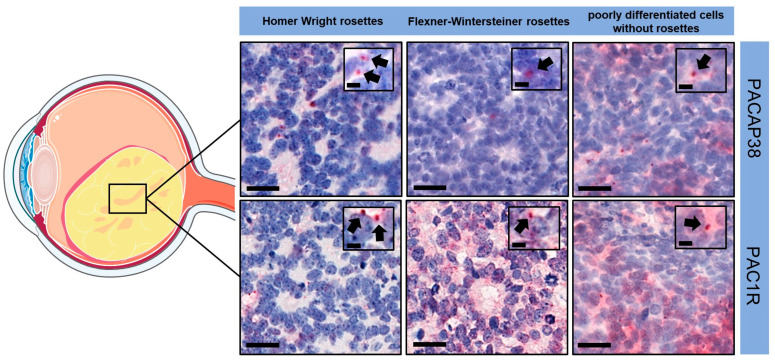 Figure 2
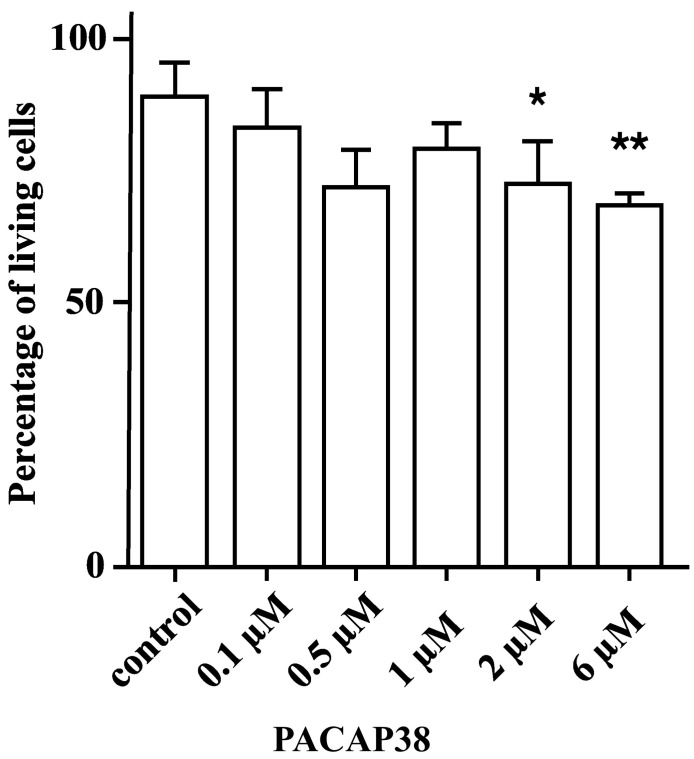 Figure 3
Peer Reviews
No public reviews on file for this paper yet. If you reviewed it on a platform where reviews are public (OpenReview, ICLR, NeurIPS, ICML), you can paste yours below so the community can read it here.
Videos
No videos yet. Explain this paper in a talk, walkthrough, or lecture? Add one.
Taxonomy
TopicsNeuropeptides and Animal Physiology · Receptor Mechanisms and Signaling · Hypothalamic control of reproductive hormones