Characterization of Three Types of Elongases from Different Fungi and Site-Directed Mutagenesis
Yuxin Wang, Lulu Chang, Hao Zhang, Yong Q. Chen, Wei Chen, Haiqin Chen

TL;DR
Researchers studied three fungal enzymes that help make long-chain fatty acids and found ways to improve their function for industrial use.
Contribution
Identified and characterized three fungal elongases with distinct substrate specificities and key residues for activity through mutagenesis and molecular docking.
Findings
McELO preferentially elongates C16 to C18 fatty acids, PrELO targets Δ6 polyunsaturated fatty acids, and PsELO uses long chain saturated fatty acids.
Conserved polar residues are essential for elongase activity, as alanine substitutions caused enzyme inactivation.
McELO and PrELO have higher homology, suggesting potential for enhancing LC-PUFA production in microorganisms.
Abstract
Fatty acid elongases play crucial roles in synthesizing long-chain polyunsaturated fatty acids. Identifying more efficient elongases is essential for enhancing oleaginous microorganisms to produce high yields of target products. We characterized three elongases that were identified with distinct specificities: McELO from Mucor circinelloides, PrELO from Phytophthora ramorum, and PsELO from Phytophthora sojae. Heterologous expression in Saccharomyces cerevisiae showed that McELO preferentially elongates C16 to C18 fatty acids, PrELO targets Δ6 polyunsaturated fatty acids, and PsELO uses long chain saturated fatty acids as substrates. McELO and PrELO exhibited more homology, potentially enabling fatty acid composition remodeling and enhanced LC-PUFAs production in oleaginous microorganisms. Site-directed mutagenesis of conserved amino acids across elongase types identified residues…
Genes, proteins, chemicals, diseases, species, mutations and cell lines named across the full text — each resolved to its canonical identifier and authoritative record.
Click any figure to enlarge with its caption.
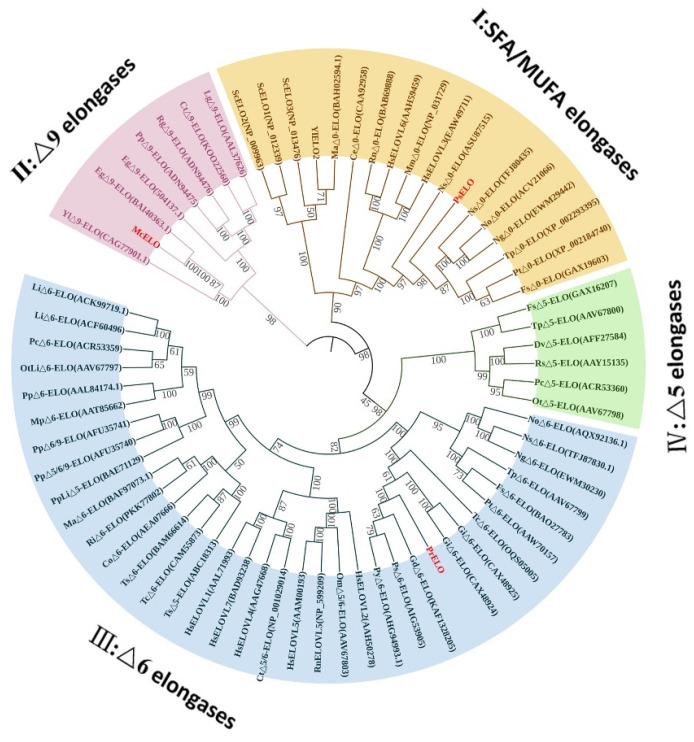 Figure 1
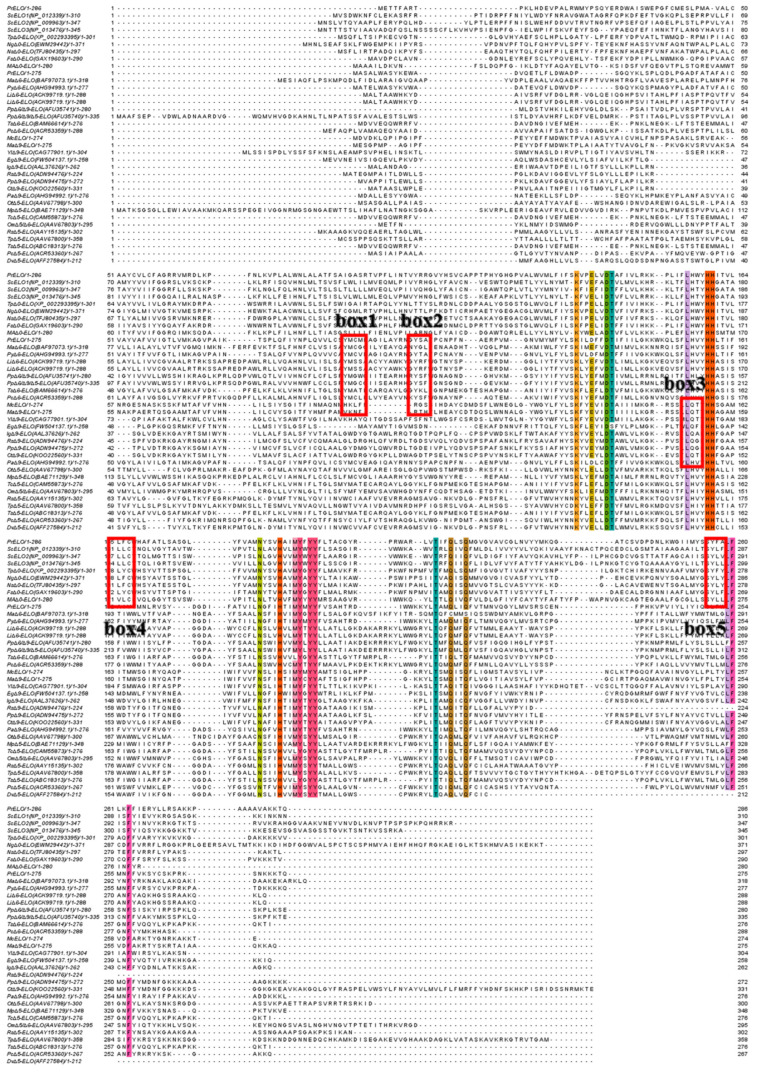 Figure 2
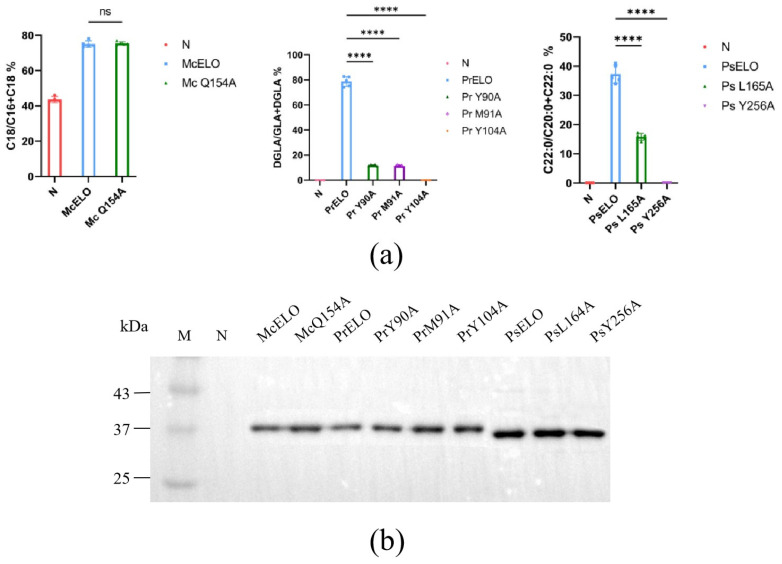 Figure 3
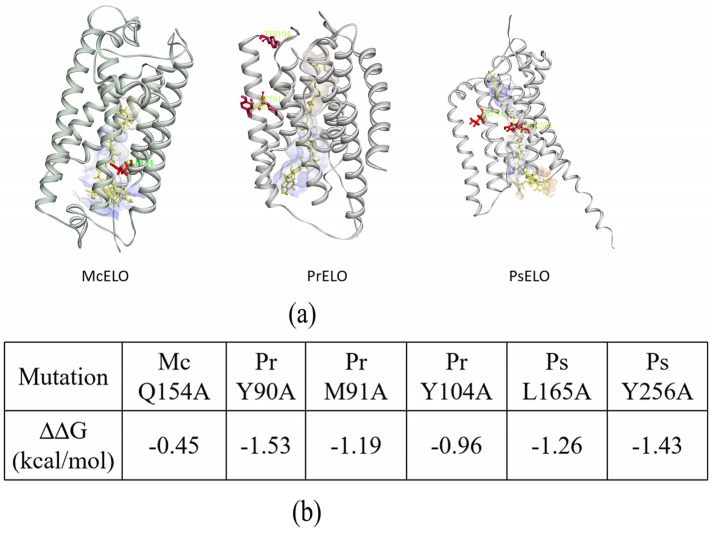 Figure 4
Peer Reviews
No public reviews on file for this paper yet. If you reviewed it on a platform where reviews are public (OpenReview, ICLR, NeurIPS, ICML), you can paste yours below so the community can read it here.
Videos
No videos yet. Explain this paper in a talk, walkthrough, or lecture? Add one.
Taxonomy
TopicsMicrobial Metabolic Engineering and Bioproduction · Lipid metabolism and biosynthesis · Enzyme Catalysis and Immobilization