Exploring the Prevalence of Antimicrobial Resistance in Salmonella and commensal Escherichia coli from Non-Traditional Companion Animals: A Pilot Study
Ana Marco-Fuertes, Santiago Vega, José Villora-Gonzalez, Clara Marin, Laura Montoro-Dasi

TL;DR
This pilot study found high antimicrobial resistance in E. coli from non-traditional small mammals, highlighting a potential public health risk.
Contribution
The study is the first to investigate AMR in commensal E. coli and Salmonella from non-traditional companion animals in the Valencia region.
Findings
High prevalence of antimicrobial resistance (85%) and multidrug resistance (82.6%) was observed in commensal E. coli strains.
Quinolone resistance was detected in E. coli, a high-priority antimicrobial in human medicine.
No antimicrobial resistance was found in the isolated Salmonella strain.
Abstract
Companion animal ownership has evolved to new exotic animals, including small mammals, posing a new public health challenge, especially due to the ability of some of these new species to harbour zoonotic bacteria, such as Salmonella, and spread their antimicrobial resistances (AMR) to other bacteria through the environment they share. Therefore, the objective of the present pilot study was to evaluate the current epidemiological AMR situation in commensal Escherichia coli and Salmonella spp., in non-traditional companion animal small mammals in the Valencia region. For this purpose, 72 rectal swabs of nine different species of small mammals were taken to assess the antimicrobial susceptibility against 28 antibiotics. A total of one Salmonella enterica serovar Telelkebir 13,23:d:e,n,z15 and twenty commensal E. coli strains were isolated. For E. coli strains, a high prevalence of AMR…
Genes, proteins, chemicals, diseases, species, mutations and cell lines named across the full text — each resolved to its canonical identifier and authoritative record.
Click any figure to enlarge with its caption.
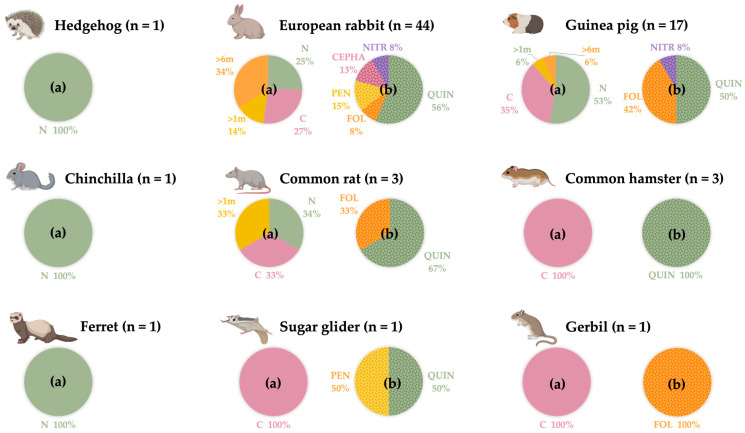 Figure 1
- —UNIVERSIDAD CARDENAL HERRERA-CEU
Peer Reviews
No public reviews on file for this paper yet. If you reviewed it on a platform where reviews are public (OpenReview, ICLR, NeurIPS, ICML), you can paste yours below so the community can read it here.
Videos
No videos yet. Explain this paper in a talk, walkthrough, or lecture? Add one.
Taxonomy
TopicsSalmonella and Campylobacter epidemiology · Antibiotic Resistance in Bacteria · Vibrio bacteria research studies
1. Introduction
Traditionally, only dogs and cats have been considered companion animals due to their close relationship with humans, either because they have been used as working animals or because they share a household [1]. Today, however, trends in pet ownership are evolving towards exotic animals such as snakes, lizards, exotic birds, rabbits or ferrets, among others, whose populations have increased by almost 25% in the last decade [2,3]. These animals are classified as non-native species in their current habitat, encompassing new species that are legally allowed to be kept at home [4]. However, the British Small Animal Veterinary Association (BSAVA) refers to them as non-traditional companion animals (NTCAs), as this term better describes the species in question. This is because some species may be indigenous to one country rather than another yet have recently been introduced into households as companion animals [4]. Several research studies highlight the importance of NTCAs, such as reptiles, as they can act as reservoirs and sources of Salmonella infection [5,6], a bacterium that is recognised by the World Health Organisation (WHO) as one of the priority pathogens with higher antimicrobial resistance (AMR) worldwide, which needs to be studied and monitored [7]. In fact, numerous outbreaks have occurred in recent years due to the close contact between these animals and their owners, causing serious disease or even death in at-risk populations such as immunocompromised patients, children or the elderly [5,8]. However, little is known about the importance of this pathogen in NTCA small mammals, even though the population of these animals, such as rabbits, guinea pigs, ferrets or mice, among others, is estimated at 29 million of the 340 million companion animals in European households [2].
This growing population has raised new public health concerns, especially in the transmission of AMR genes, as these companion animals are increasingly in close contact with their owners. Therefore, the rise of antimicrobial-resistant bacteria in both animals and humans poses a significant global risk to public health, directly related to the likelihood of antibiotic therapy failure. In fact, according to the WHO, AMR and the appearance of multidrug resistance (MDR) are one of the most important problems faced by public health worldwide [9].
In this line, the European Food and Safety Authority (EFSA) has routinely monitored AMR in commensal bacteria, such as E. coli [10], and zoonotic pathogens, such as Salmonella [11]. Traditionally, the focus has been on monitoring their transmission from food-producing animals to humans, as the role of companion animals was not considered a significant risk for AMR transmission and, therefore, was not included in these surveillance programmes. However, due to the rise of AMR and the emergence of MDR, it is necessary to analyse potential sources of AMR, and therefore, to expand these programmes to encompass a broader range of animal species. Thus, the European Union (EU) is developing the European Antimicrobial Resistance Surveillance Network in Veterinary Medicine (EARS-Vet) [12], a programme in veterinary medicine that harmonises the current ones and includes dogs and cats. This programme aims to complement the one already implemented in human medicine, the European Antimicrobial Resistance Surveillance Network (EARS-Net) [13], to underpin this problem under the One Health strategy to develop collaboration between human, veterinary and environmental health [9].
However, NTCAs are still not included in monitoring and surveillance programmes, resulting in a lack of information addressing the epidemiologic situation of AMR in small mammals as new companion animals, and the potential for transmission of AMR genes and zoonotic pathogens to humans through the home environment they share [14,15]. Therefore, the objective of this pilot study was to assess the prevalence of commensal E. coli and whether the study population carried Salmonella, along with its AMR and MDR patterns, in small mammals from the Valencia region.
2. Materials and Methods
2.1. Experimental Design
The present study was conducted in Valencia region. To this end, a large-scale veterinary centre (VC), serving almost 70% of the exotic animals in the Valencia region, as well as animals remitted from other clinics and hospitals of Valencia, was intensively sampled. This VC exclusively attended to exotic animals, not other domestic animals.
The animal study underwent review and received approval from the Animal Ethics Committee at UCH-CEU University (code of research CEEA 22/04).
2.2. Epidemiological Data Collection
In order to collect epidemiological information about the sampled animals, a questionnaire for each animal was filled out by the veterinarians in the practice. The survey was structured into three sections. The initial part focused on details concerning the animals’ origin and incorporated the signed informed consent from the owners. The second part covered general aspects of the animals, including their sex, age and cohabitation with other animals in the household. The concluding section encompassed clinical data, specifically addressing if the animal presented any chronic diseases and if it was under any daily medication, and lastly, inquired about its last antibiotic treatment and the specific antibiotics it has been administered throughout its life. The questionnaire is available as Supplementary Materials (Part SA).
2.3. Sample Collection
Between January and June 2023, samples from any small exotic mammal attending the VC were collected. A rectal swab was collected from asymptomatic animals by inserting a sterile cotton swab (Cary Blair sterile transport swabs, DELTALAB, Barcelona, Spain) into the rectum to a depth of approximately 3 cm. Subsequently, all samples were transported under refrigeration at ≤4 °C to the microbiology laboratory of the Faculty of Veterinary Sciences of the University CEU Cardenal Herrera. Microbiological analyses were performed within 24 h of sampling.
2.4. Salmonella Isolation
For Salmonella isolation, processing of all samples followed ISO 6579-1:2017 guidelines (Annex D) for the detection of Salmonella spp. Initially, samples underwent pre-enrichment in buffered peptone water (BPW; Scharlau^®^, Barcelona, Spain) at a ratio of 1:10 vol/vol, incubated at 37 ± 1 °C for 18 h. Subsequently, the pre-enriched samples were inoculated onto a Modified Rappaport Vassiliadis agar plate (MSRV; bioMerieux, Marcy l’Etoile, France), incubated at 41.5 ± 1 °C for 48 h. The positive MRSV plates were then transferred to two specific agar plates for the detection of Salmonella spp.: xylose lysine deoxycholate (XLD, Scharlau^®^, Barcelona, Spain) and a selective chromogenic agar (ASAP; bioMerieux^®^, Marcy l’Étoile, France). Both plates were incubated at 37 ± 1 °C for 24–48 h. To confirm the results, a biochemical test (API-20E, bioMerieux, Marcy l’Etoile, France) was performed. Finally, Salmonella isolates were serotyped using the Kauffman–White scheme [16] at the National Reference Laboratory for Animal Health (Algete, Madrid, Spain) and stored at −80 °C for further analysis.
2.5. E. coli Isolation
All the pre-enriched rectal swabs in BPW (Scharlau^®^, Barcelona, Spain) at a ratio of 1:10 vol/vol, were seeded on Tryptone Bile X-glucuronide agar (TBX; Scharlau, Barcelona, Spain) and incubated at 37 ± 1 °C for 24 h. Then, blue colonies showing morphology consistent with E. coli were picked and sown onto nutrient agar plates (Scharlau, Barcelona, Spain), followed by incubation at 37 °C ± 1 °C for 24 h. To validate the results, biochemical tests were performed (API-20E test, bioMerieux, Marcy l’Etoile, France). Finally, E. coli strains were kept at −80 °C for further studies.
2.6. Antimicrobial Susceptibility Testing
For the antimicrobial susceptibility test, two different panels of antibiotics were used with antibiotics of importance in public health.
The first panel, carried out with the Sensititre Plate for Gram-negative bacteria EUGNF (Thermo Scientific™ Sensititre™, Madrid, Spain), and represented in Table 1, included antibiotics of public health relevance and clinically important antibiotics for companion animals included in the EARS-Vet programme [12].
The second panel, which was performed with the EU Surveillance Salmonella / E. coli EUVSEC3 Sensititre Plate (Thermo Scientific™ Sensititre™, Madrid, Spain), represented in Table 2, included the antibiotics with relevance in public health on the monitoring and reporting of antimicrobial resistance in zoonotic and commensal bacteria in food-producing animals set out in Decision (EU) 2020/1729 [17].
AMR was assessed by the minimum inhibition concentration (MIC) assay (Thermo Scientific™ Sensititre™ Plates, Madrid, Spain). All Sensititre plate results were analysed according to the breakpoints established by the European Committee on Antimicrobial Susceptibility Testing (EUCAST) in 2024 [18]. In addition, multidrug resistance (MDR) was characterised as the acquired resistance to a minimum of one agent within three or more antibiotic classes [19].
For this purpose, each bacterium was defrosted and cultured on nutrient agar, followed by incubation at 37 ± 1 °C for 24 h. After incubation, colonies were placed in 5 mL of sterile demineralised water (T3339; ThermoFisher Scientific™, Madrid, Spain). Each bacterial suspension was mixed and standardised to a density of 0.5 McFarland using a Nephelometer (ThermoFisher Scientific™, Madrid, Spain). Subsequently, 10 μL (for EUVSEC3 plate) and 30 μL (for EUGNF plate) of the suspension were placed in a vial containing 11 mL of Mueller–Hinton broth (T3462; ThermoFisher Scientific™, Madrid, Spain) and mixed. From this suspension, 50 μL of the vial contents were transferred into each well of the Sensititre plate. Then, after filling the wells with the inoculum, plate film was used to seal the wells and incubated at 37 ± 1 °C for 24 h. Manual reading of the plates was performed employing a Sensititre Vizion (Thermo Scientific™ Sensititre™ Vizion™ Digital MIC Viewing System, ThermoFisher Scientific, Madrid, Spain).
2.7. Statistical Analysis
A generalised linear model (GLM), employing the function probit link, assuming a binomial distribution for AMR patterns in E. coli among small mammals, was conducted for microbiological results. A p-value ≤ 0.05 was used as indicative of a statistically significant difference. Data are represented as least squares mean ± standard error of the least squares means. For the statistical analyses, the R software (version 4.3.1.) was used, with the EMMs [20], car [21] and multicompView [22] packages.
3. Results
3.1. Epidemiological Results
In this study, a total of 72 small mammals of nine different species (Figure 1) were sampled. The studied population was divided into groups according to sex, where 52.8% (38/72) were females and 47.2% (34/72) were males, and age, where the studied population ranged from 1.5 months to 9 years. Regarding their habitat, 61.1% (44/72) of these small mammals cohabited in their households with other animals, but none of them (72/72) went out of their house. However, as the study population consists of several species from different families, these data are not directly comparable.
Regarding the clinical data collected from all the animals sampled, 25% (18/72) of them presented a chronic disease. Furthermore, with regard to the daily medication taken by the animals, 15.3% (11/72) were on some kind of medication. Finally, of all animals sampled, 68.1% (49/72) had undergone antibiotic treatment at some point in their lives, compared to 31.9% (22/72) who had never received antibiotics. The information in Figure 1 illustrates the antibiotic treatment history of each animal, including the specific antibiotic group and the date of the last treatment.
3.2. Salmonella and E. coli Prevalence
From the 72 specimens sampled (Table 3), 1 (1.4%) Salmonella enterica serovar Telelkebir 13,23:d:e,n,z_15_ strain was recovered from 1 Oryctolagus cuniculus (European rabbit), and 20 (27.8%) E. coli strains were isolated from 6 different species (Table 3).
3.3. Antimicrobial Susceptibility from E. coli and Salmonella Strains
Of all strains studied, 85% (17/20) of the E. coli isolates demonstrated resistance to at least one of the twenty-eight antibiotics tested, of which 82.6% (14/20) were MDR.
The highest frequency of AMR was observed in the quinolones group: nalidixic acid (NAL; 85%, 17/20); ciprofloxacin (CIP; 80%, 16/20); and levofloxacin (LEVO; 75%, 15/20) (p-value ≤ 0.05), followed by two penicillins: ticarcillin, TIC (65%, 13/20) and ampicillin (AMP; 60%, 12/20), along with sulfamethoxazole (SME; 60%, 12/20) (p-value ≤ 0.05). In addition, no resistance was found to nitrofurantoin (NIT), meropenem (MER) and tigecycline (TIG) (Table 4). Regarding Salmonella, the strain isolated was susceptible to all antibiotics tested.
Overall, for E. coli isolates, 15 different AMR patterns, grouped by antibiotic class, were found. However, only two patterns were repeated, the resistance shown to the quinolones group alone, and the resistance shown to the combination of quinolones, folate inhibitor pathway, aminoglycosides and penicillins groups (Table 5).
4. Discussion
The present study addresses the importance of the pathogenic zoonotic bacterium Salmonella in small mammals, as this bacterium has been widely associated with other NTCAs, such in the case of reptile-associated salmonellosis (RAS), of which many cases have been reported worldwide [23,24,25,26]. The presented results showed a low prevalence (1.4%) of this bacterium, in accordance with a study conducted by Kylie et al., (2017) where no Salmonella strains were found in pet rabbits, but only in food-producing rabbits [27]. In addition, other authors have found a higher rate of these bacteria in rabbits with diarrhoeal disease, up to 30%, which may indicate that the health status of the animals may favour the colonisation of this pathogenic bacterium [28]. Regarding the rest of the animals sampled in this study, no Salmonella strains have been isolated. However, other studies have reported zoonotic cases in humans caused by this bacterium, isolated from hedgehogs [29], ferrets and sugar gliders [30], or Guinea pigs [31]. In this study, the results were very different from those previously obtained in reptiles when searching for this bacterium in small mammals, as only a single isolate belonging to serov. Telelkebir 13,23:d:e,n,z_15_ was found. To the authors’ knowledge, this is the first time this serovar has been described in Oryctolagus cuniculus. However, this serovar has been reported in human cases causing pathology worldwide, especially in cases of RAS, such as that detected in an infant from a chameleon [32]. Moreover, a total of 339 and 42 acquired cases of salmonellosis were reported between 2006 and 2016 and 2014 and 2016 by the Centres for Disease Control and Prevention (CDC) [33] and the EFSA [34], respectively, caused by this serovar. Regarding the AMR observed in this bacterium in this study, no AMR was found in this isolate. Nevertheless, other authors have detected AMR genes carried by this serovar [35], so it could pose a risk in the dissemination of these genes into the environment [36]. However, when comparing these results with those obtained from the commensal bacteria study, very different results were observed.
In this study, E. coli was used, as it is considered a sentinel due to its ability to harbour AMR genes and transmit them to other commensal or pathogenic bacteria [37]. Regarding its prevalence, although more strains of E. coli than Salmonella have been isolated in the sampled species, this prevalence (27.8%) is not as high as that observed in traditional companion animals, such as dogs and cats, where the normal prevalence is around 80% [38]. Although this is not the expected result, as this commensal bacterium is present in the digestive tract of all animals, mainly mammals, it seems like a normal result, as similar prevalence has been found in other studies conducted in Canada [27] and the USA [39].
The results showed 85% AMR and 82.6% MDR, in line with other studies carried out in other Spanish regions [14,15]. These percentages are alarming, as the population of small exotic mammals is continuously growing, and in close contact with their owners, thus presenting a new challenge for authorities in the legislation of new regulations to monitor AMR and MDR in this population.
In order to control the problematic AMR and MDR represent for public health, the WHO and the European Medicines Agency (EMA) implemented a classification system for antibiotics used in animals to promote their responsible use, safeguarding both animal and public health. However, this categorisation has been updated to further control the use of antibiotics. The current WHO categorisation, published in its 7th report this year 2023 [40], includes the following categories: important antimicrobials (IAs), highly important antimicrobials (HIAs), critically important antimicrobials (CIAs), highest priority critical important antimicrobials (HPCIA) and, lastly, antibiotics not authorised for animal use, only for human medicine use.
Among the antibiotics investigated, four of them belong to the category of not authorised for animal use. They are exclusively intended for human use due to their broad-spectrum action, used in the treatment of severe infections caused by MDR bacteria in human medicine. These antibiotics, commonly recognised as last-resort antibiotics, include piperacillin/tazobactam (PIT), meropenem (MER), ertapenem (ERT) and tigecycline (TIG) [40]. Consequently, the presence of AMR is not anticipated in animals. However, this study has revealed elevated levels of AMR to ERT, consistent with findings in humans [41,42] and other animal species [43,44].
The highest AMR observed for E. coli was against the quinolones group. This could be the expected result as it was the most administered antibiotic in the study population and is the group most commonly applied in general in exotic animals [45]. However, this antibiotic group belongs to HPCIAs [40] and should therefore be restricted for use in veterinary medicine. These results stand out in comparison to those observed in conventional companion animals (dogs and cats), as for them, the main group used and with higher AMR is the penicillins group [46,47]. However, in the case of NTCAs, penicillins ranked fourth in terms of the highest AMR in this study, where AMR should practically not be observed against this group of antibiotics, as they have been taken by only a small part of the study population and are contraindicated for oral administration in lagomorphs and rodents due to their high impact on the caecal bacterial population, leading to severe intestinal dysbiosis [48,49].
Apart from penicillins, other groups within the class of β-lactam antibiotics have been studied, including cephalosporins and carbapenemases, previously mentioned. Regarding cephalosporins, moderate resistances have been observed. In general, this antibiotic class, as well as the aminoglycosides class, presents good effectiveness against E. coli infections and is one of the most common options [50]. However, none of the animals in the study population were treated with aminoglycosides and only a few with cephalosporins, so one hypothesis to explain these results could be that AMR could have been acquired through the environment, as one of the key mechanisms for the acquisition of AMR is horizontal gene transfer, which involves the transfer of AMR genes between bacteria co-inhabiting the same environment, via plasmids, conjugative transposons and other mobile genetic elements [51,52].
Similar AMR was observed for amphenicols, polymyxins and macrolides. Within these groups, the antibiotic colistin (COL) is noteworthy, since it also belongs to HPCIAs [40] and is one of the main antibiotics used to treat complicated colibacillosis infections. In the past, COL has been overused in food-producing animals, which has led to very high AMR [53] and, as a consequence, restrictions on its use and control programmes have been applied. For example, in Spain, the National Plan against Antibiotic Resistance (PRAN) [54] established the Colistin Reduce programme, which has served as an example worldwide, as it has reduced the use of this antibiotic in swine production by almost 100% [55]. Therefore, AMR to this antibiotic has decreased considerably in recent years and cases are now not so frequent, as seen in this study and in some others [53,56]. Lastly, no AMR was found in the nitrofurans group. This may be because the action mechanism is poorly understood, and it has been found to reach therapeutically effective levels only in urine [57]. Therefore, the expected results are observed in this study, as this antibiotic is underused in human and veterinary medicine.
This study presented some limitations. First, the restriction in the total sample size, which was due to the time constraint set in this study. This may affect the generalisability of the results to a wider population. Second, the difference in sample size of the different species, as for some species only a single specimen could be sampled. And finally, the detection of Salmonella with only one sample per animal, as the excretion of this bacterium into the environment is intermittent. However, despite these limitations, the rigorous methodology used and the consistency in data collection strengthen the reliability of our conclusions. Therefore, these promising results highlight the importance of extending this study in the future with larger sample sizes. This will help establish whether these animals are a source of Salmonella infection and will contribute to a better understanding of the AMR epidemiological situation in the entire Valencia region.
5. Conclusion
The results obtained in this study highlight the potential risk posed by the growing population of small exotic mammals in the dissemination of AMR and MDR in the environment. Consequently, there is a potential risk associated with the possession of these animals. However, these results also showed that small exotic mammals do not appear to be a source of Salmonella, although more large-scale studies are needed to demonstrate whether or not they really pose a threat to the spread of this bacterium in the environment. This study serves as a starting point for future plans to help control and prevent the spread of AMR and MDR. However, further studies are needed to validate our results in a larger study with more samples.
The reference list from the paper itself. Each links out to its DOI / PubMed record.
- 1Overgaauw P.A.M. Vinke C.M. van Hagen M.A.E. Lipman L.J.A. A One Health Perspective on the Human-Companion Animal Relationship with Emphasis on Zoonotic Aspects Int. J. Environ. Res. Public Health 202017378910.3390/ijerph 1711378932471058 PMC 7312520 · doi ↗ · pubmed ↗
- 2FEDIAF The European Pet and Food Industry. Annual Report 2023 Available online: https://europeanpetfood.org/about/annual-report/(accessed on 7 July 2023)
- 3FEDIAF The European Pet and Food Industry. Annual Report 2010 Available online: http://www.stray-afp.org/nl/wp-content/uploads/sites/2/2012/08/facts_and_figures_2010.pdf(accessed on 25 September 2023)
- 4García-San Román E. Hernández A. Suárez D. Veterinary A. Espinosa García-San Román J. Quesada-CanalesÓ. Arbelo Hernández M. Déniz Suárez S. Castro-Alonso A. Veterinary Education and Training on Non-Traditional Companion Animals, Exotic, Zoo, and Wild Animals: Concepts Review and Challenging Perspective on Zoological Medicine Vet. Sci.20231035710.3390/vetsci 1005035737235440 PMC 10222605 · doi ↗ · pubmed ↗
- 5Marin C. Lorenzo-Rebenaque L. Laso O. Villora-Gonzalez J. Vega S. Pet Reptiles: A Potential Source of Transmission of Multidrug-Resistant Salmonella Front. Vet. Sci.20217115710.3389/fvets.2020.61371833490138 PMC 7815585 · doi ↗ · pubmed ↗
- 6Bjelland A.M. Sandvik L.M. Skarstein M.M. Svendal L. Debenham J.J. Prevalence of Salmonella Serovars Isolated from Reptiles in Norwegian Zoos Acta Vet. Scand.2020621910.1186/s 13028-020-0502-031918736 PMC 6953243 · doi ↗ · pubmed ↗
- 7World Health Organization List of Bacteria for Which New Antibiotics Are Urgently Needed Available online: https://www.who.int/news/item/27-02-2017-who-publishes-list-of-bacteria-for-which-new-antibiotics-are-urgently-needed(accessed on 10 December 2023)
- 8Santana-Hernández K.M. Rodríguez-Ponce E. Medina I.R. Acosta-Hernández B. Priestnall S.L. Vega S. Marin C. Cerdà-Cuéllar M. Marco-Fuertes A. Ayats T. One Health Approach: Invasive California Kingsnake (Lampropeltis Californiae) as an Important Source of Antimicrobial Drug-Resistant Salmonella Clones on Gran Canaria Island Animals 202313179010.3390/ani 1311179037889724 PMC 10251910 · doi ↗ · pubmed ↗