Allostatic Load as a Predictor of Postoperative Complications in Patients with Breast Cancer
Samilia Obeng-Gyasi, JC Chen, Mohamed Elsaid, Demond Handley, Lisa Anderson, Barbara Andersen, William Carson, Joal Beane, Alex Kim, Roman Skoracki, Timothy Pawlik

TL;DR
This study shows that higher levels of stress, measured as allostatic load, are linked to more post-surgery complications in breast cancer patients.
Contribution
The study introduces allostatic load as a novel predictor of postoperative complications in breast cancer surgery.
Findings
High allostatic load was associated with 29% higher odds of postoperative complications.
A one-point increase in allostatic load was linked to 8% higher odds of complications.
Patients with complications were more likely to be unpartnered, government-insured, and have multiple comorbidities.
Abstract
Allostatic load (AL) is a biological measure of cumulative exposure to socioenvironmental stressors (e.g., poverty). This study aims to examine the association between allostatic load (AL) and postoperative complications (POC) among patients with breast cancer. Assigned females at birth ages 18 + with stage I-III breast cancer who received surgical management between 01/01/2012–12/31/2020 were identified in the Ohio State Cancer registry. The composite AL measure included biomarkers from the cardiovascular, metabolic, immune, and renal systems. High AL was defined as composite scores greater than the cohort’s median (2.0). POC within 30 days of surgery were examined. Univariable and multivariable regression analysis examined the association between AL and POC. Among 4,459 patients, 8.2% had POC. A higher percentage of patients with POC were unpartnered (POC 44.7% vs no POC 35.5%),…
Genes, proteins, chemicals, diseases, species, mutations and cell lines named across the full text — each resolved to its canonical identifier and authoritative record.
Click any figure to enlarge with its caption.
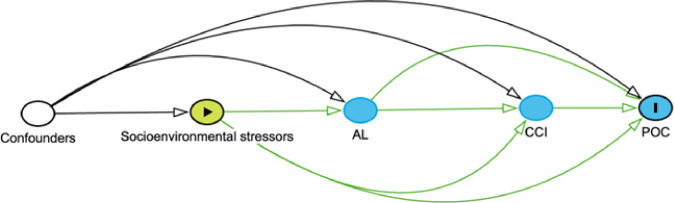 Figure 1
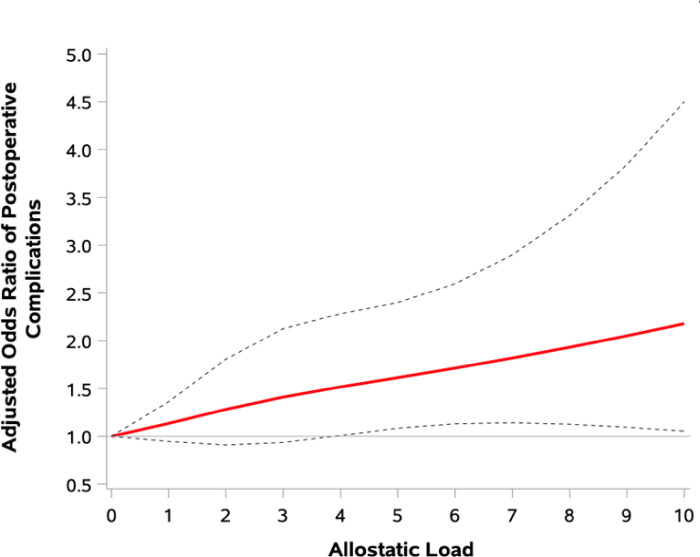 Figure 2
Peer Reviews
No public reviews on file for this paper yet. If you reviewed it on a platform where reviews are public (OpenReview, ICLR, NeurIPS, ICML), you can paste yours below so the community can read it here.
Videos
No videos yet. Explain this paper in a talk, walkthrough, or lecture? Add one.
Taxonomy
TopicsCancer Risks and Factors · Breast Cancer Treatment Studies · Nutrition and Health in Aging