Deficits in proactive avoidance and neural responses to drinking motives in problem drinkers
Thang Le, Takeyuki Oba, Luke Couch, Lauren McInerney, Chiang-Shan Li

TL;DR
This study shows that problem drinkers struggle with avoiding harmful outcomes and have specific brain activity patterns linked to drinking motives like pain and negative emotions.
Contribution
The study experimentally identifies proactive avoidance deficits and their neural correlates in problem drinkers linked to distinct drinking motives.
Findings
Problem drinkers show proactive avoidance deficits in learning and accuracy, which correlate with increased alcohol use.
Negative emotions as a drinking motive are linked to reduced right insula activation during proactive avoidance in problem drinkers.
Physical pain as a motive correlates with reduced right putamen activation, which is associated with drinking severity and avoidance performance.
Abstract
Physical pain and negative emotions represent two distinct drinking motives that contribute to harmful alcohol use. Proactive avoidance which can reduce problem drinking in response to these motives appears to be impaired in problem drinkers. However, proactive avoidance and its underlying neural deficits have not been assessed experimentally. How these deficits inter-relate with drinking motives to influence alcohol use also remains unclear. The current study leveraged neuroimaging data collected in forty-one problem and forty-one social drinkers who performed a probabilistic learning go/nogo task that involved proactive avoidance of painful outcomes. We characterized the regional brain responses to proactive avoidance and identified the neural correlates of drinking to avoid physical pain and negative emotions. Behavioral results confirmed problem drinkers’ proactive avoidance…
Genes, proteins, chemicals, diseases, species, mutations and cell lines named across the full text — each resolved to its canonical identifier and authoritative record.
Click any figure to enlarge with its caption.
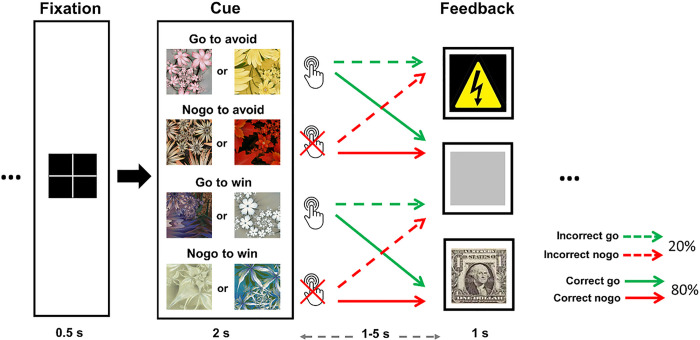 Figure 1
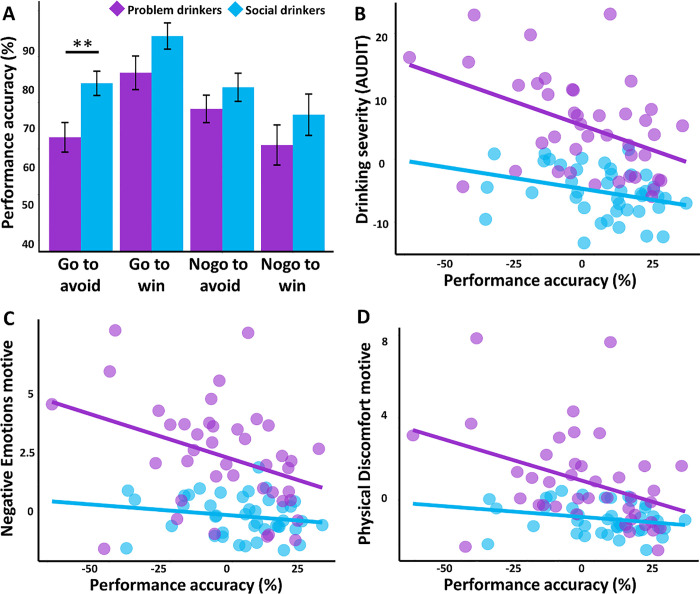 Figure 2
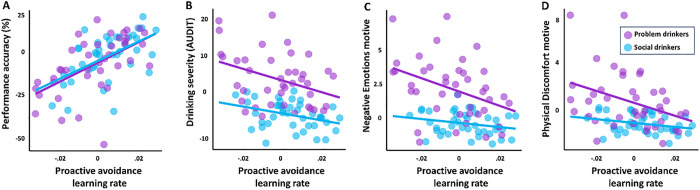 Figure 3
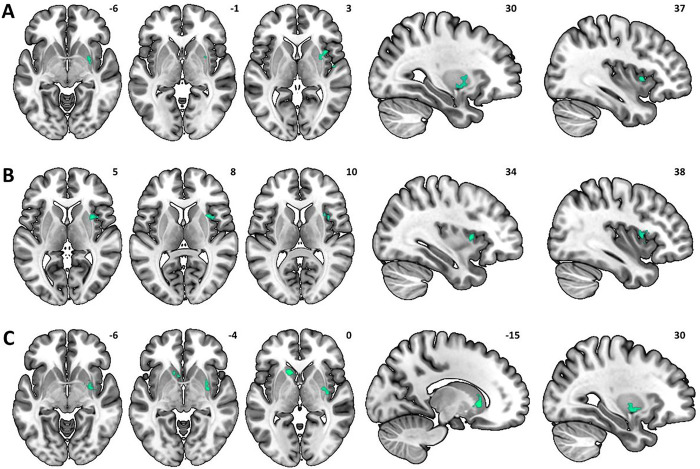 Figure 4
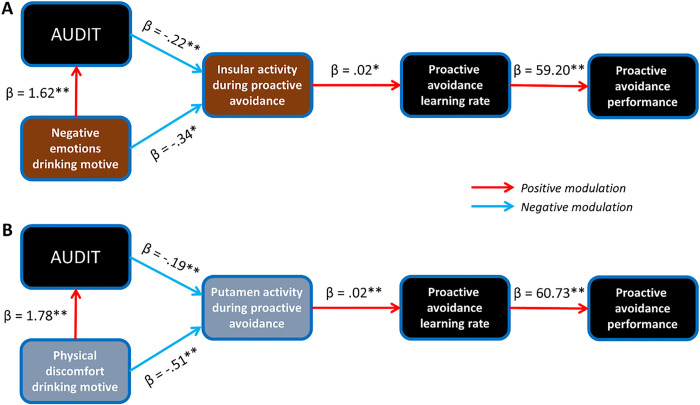 Figure 5
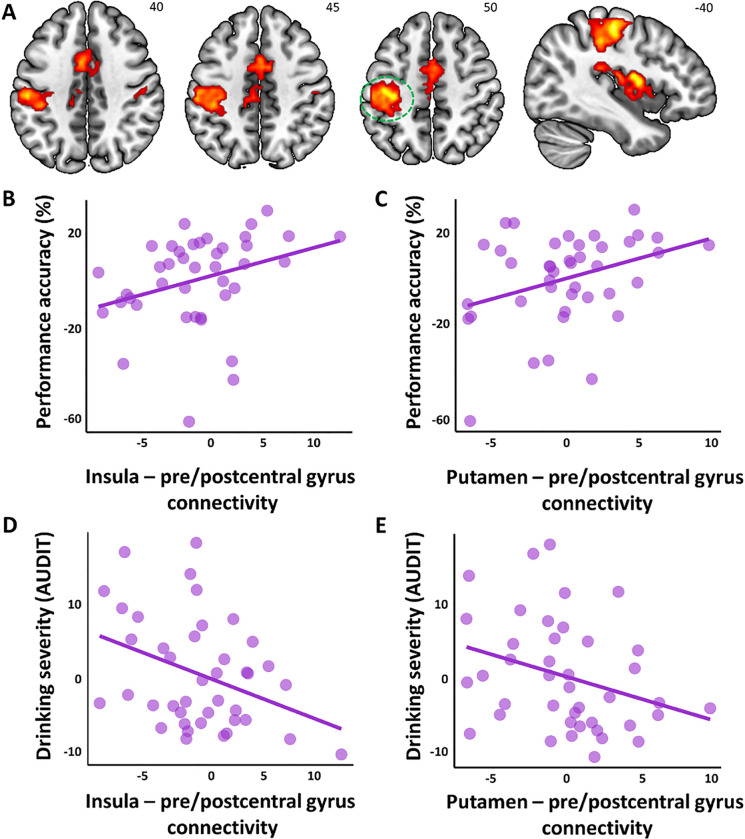 Figure 6
Peer Reviews
No public reviews on file for this paper yet. If you reviewed it on a platform where reviews are public (OpenReview, ICLR, NeurIPS, ICML), you can paste yours below so the community can read it here.
Videos
No videos yet. Explain this paper in a talk, walkthrough, or lecture? Add one.
Taxonomy
TopicsSubstance Abuse Treatment and Outcomes · Neurotransmitter Receptor Influence on Behavior · Neural and Behavioral Psychology Studies