Revealing the atomic and electronic mechanism of human manganese superoxide dismutase product inhibition
Gloria Borgstahl, Jahaun Azadmanesh, Katelyn Slobodnik, Lucas Struble, William Lutz, Leighton Coates, Kevin Weiss, Dean Myles, Thomas Kroll

TL;DR
This study reveals how hydrogen peroxide, a product of an enzyme, inhibits its own production through atomic and electronic changes in the enzyme's structure.
Contribution
The paper presents the first atomic structure of the inhibited enzyme complex and identifies a proton-coupled electron transfer mechanism for inhibition.
Findings
Neutron diffraction and X-ray spectroscopy revealed the atomic structure of the inhibited enzyme complex.
A proton-coupled electron transfer mechanism was identified for product inhibition.
The electronic configuration of the metal center was determined in different oxidation states.
Abstract
Human manganese superoxide dismutase (MnSOD) is a crucial oxidoreductase that maintains the vitality of mitochondria by converting O2∙− to O2 and H2O2 with proton-coupled electron transfers (PCETs). Since changes in mitochondrial H2O2 concentrations are capable of stimulating apoptotic signaling pathways, human MnSOD has evolutionarily gained the ability to be highly inhibited by its own product, H2O2. A separate set of PCETs is thought to regulate product inhibition, though mechanisms of PCETs are typically unknown due to difficulties in detecting the protonation states of specific residues that coincide with the electronic state of the redox center. To shed light on the underlying mechanism, we combined neutron diffraction and X-ray absorption spectroscopy of the product-bound, trivalent, and divalent states to reveal the all-atom structures and electronic configuration of the metal.…
Genes, proteins, chemicals, diseases, species, mutations and cell lines named across the full text — each resolved to its canonical identifier and authoritative record.
Click any figure to enlarge with its caption.
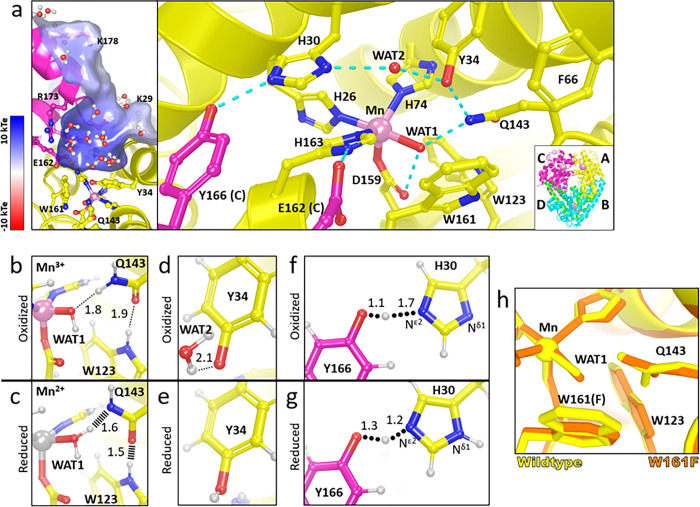 Figure 1
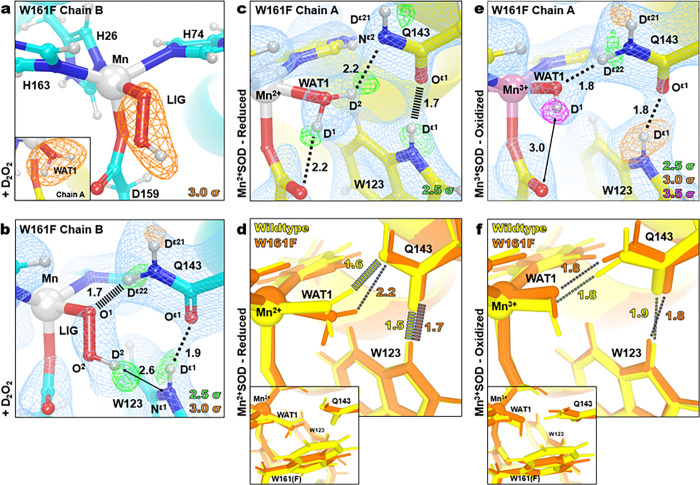 Figure 2
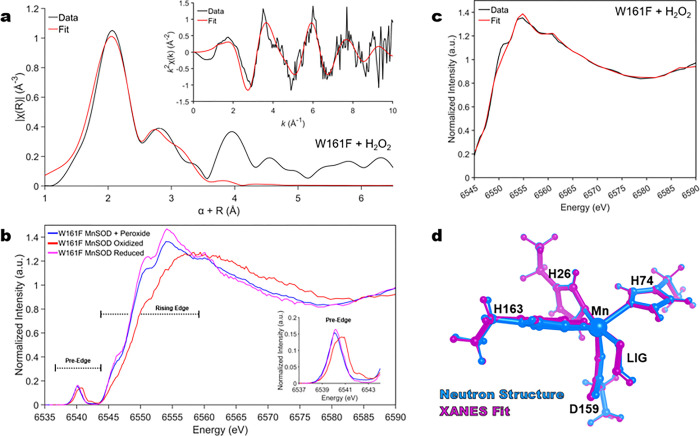 Figure 3
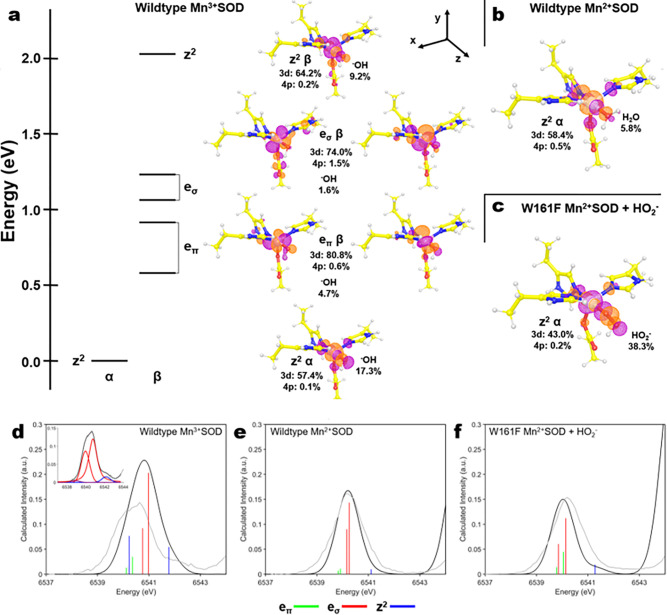 Figure 4
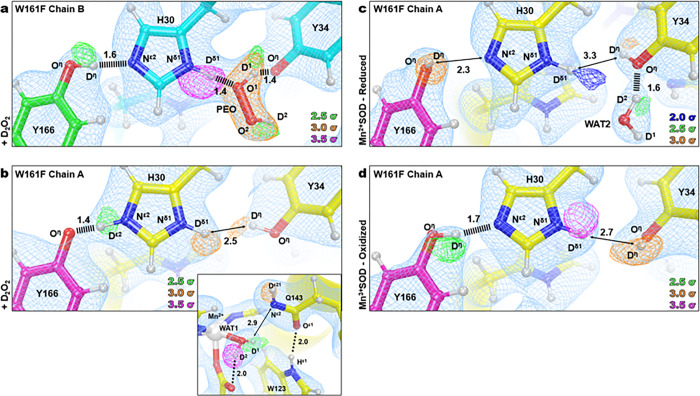 Figure 5
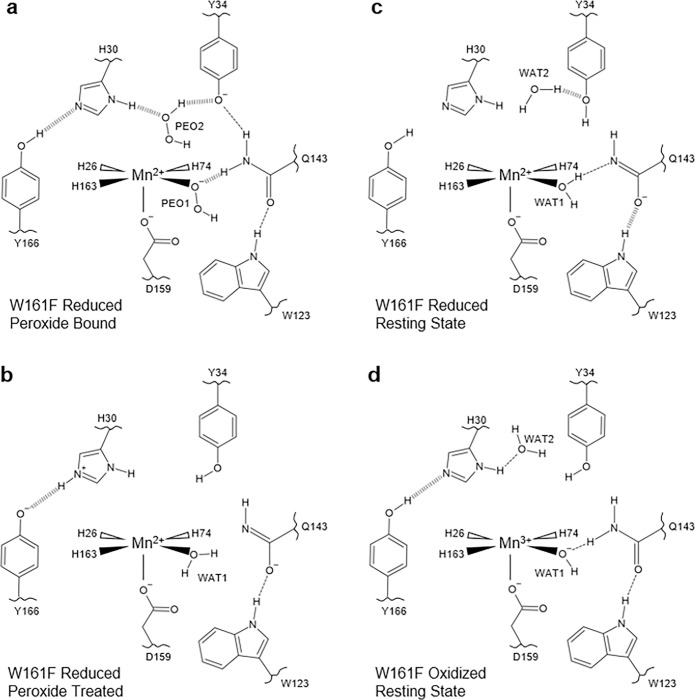 Figure 6
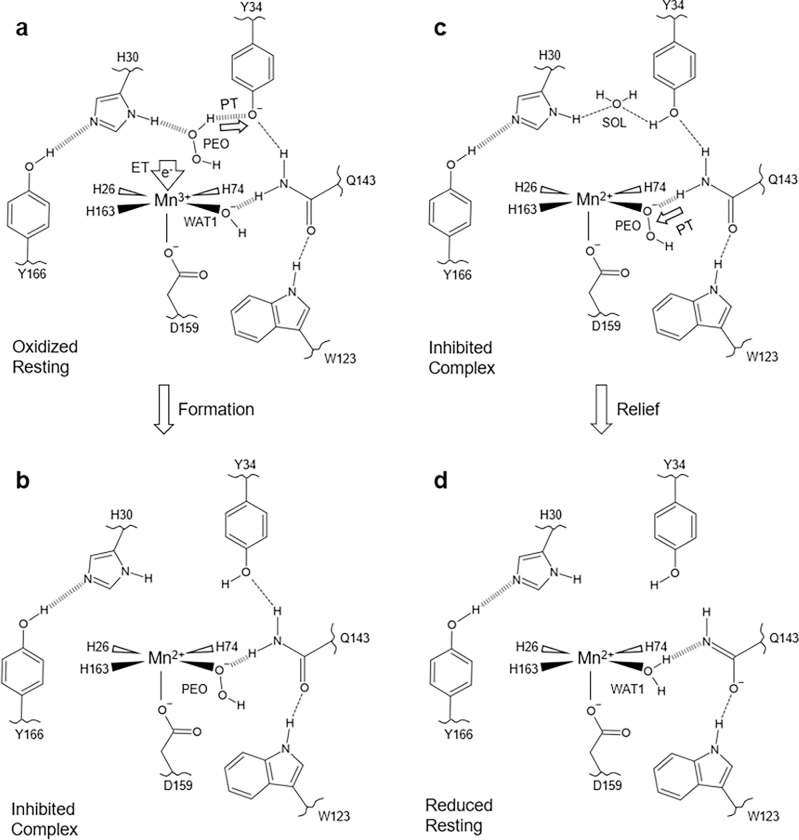 Figure 7
Peer Reviews
No public reviews on file for this paper yet. If you reviewed it on a platform where reviews are public (OpenReview, ICLR, NeurIPS, ICML), you can paste yours below so the community can read it here.
Videos
No videos yet. Explain this paper in a talk, walkthrough, or lecture? Add one.
Taxonomy
TopicsMitochondrial Function and Pathology · Metal-Catalyzed Oxygenation Mechanisms · Free Radicals and Antioxidants