Cabergoline as a Novel Strategy for Post-Pregnancy Breast Cancer Prevention in Mice and Human
Natalia García-Sancha, Roberto Corchado-Cobos, Adrián Blanco-Gómez, Oriol Cunillera Puértolas, Mercè Marzo-Castillejo, Sonia Castillo-Lluva, Diego Alonso-López, Javier De Las Rivas, Julio Pozo, Alberto Orfao, Luis Valero-Juan, Carmen Patino-Alonso, David Perera

TL;DR
Cabergoline, a drug used for other purposes, may help prevent breast cancer after pregnancy in mice and humans by enhancing post-lactational tissue changes.
Contribution
Cabergoline is shown to reduce post-pregnancy breast cancer risk in a Brca1/P53-deficient mouse model and in human retrospective studies.
Findings
A single dose of cabergoline delayed breast cancer onset and reduced incidence in Brca1/P53-deficient mice.
Cabergoline accelerated post-lactational involution with increased apoptosis and altered gene expression.
Retrospective human data showed lower post-pregnancy breast cancer incidence in cabergoline-treated women.
Abstract
Post-pregnancy breast cancer often carries a poor prognosis, posing a major clinical challenge. The increasing trend of later-life pregnancies exacerbates this risk, highlighting the need for effective chemoprevention strategies. Current options, limited to selective estrogen receptor modulators, aromatase inhibitors, or surgical procedures, offer limited efficacy and considerable side effects. Here, we report that cabergoline, a dopaminergic agonist, reduces the risk of breast cancer post-pregnancy in a Brca1/P53-deficient mouse model, with implications for human breast cancer prevention. We show that a single dose of cabergoline administered post-pregnancy significantly delayed the onset and reduced the incidence of breast cancer in Brca1/P53-deficient mice. Histological analysis revealed a notable acceleration in post-lactational involution over the short term, characterized by…
Genes, proteins, chemicals, diseases, species, mutations and cell lines named across the full text — each resolved to its canonical identifier and authoritative record.
Click any figure to enlarge with its caption.
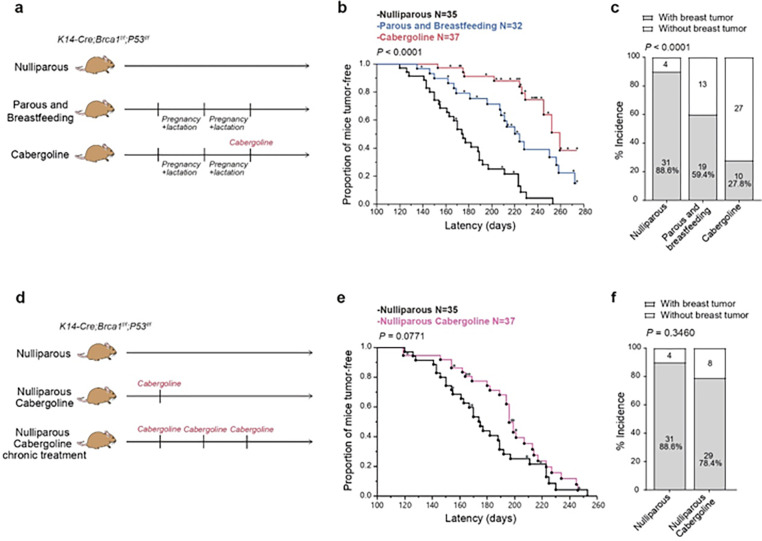 Figure 1
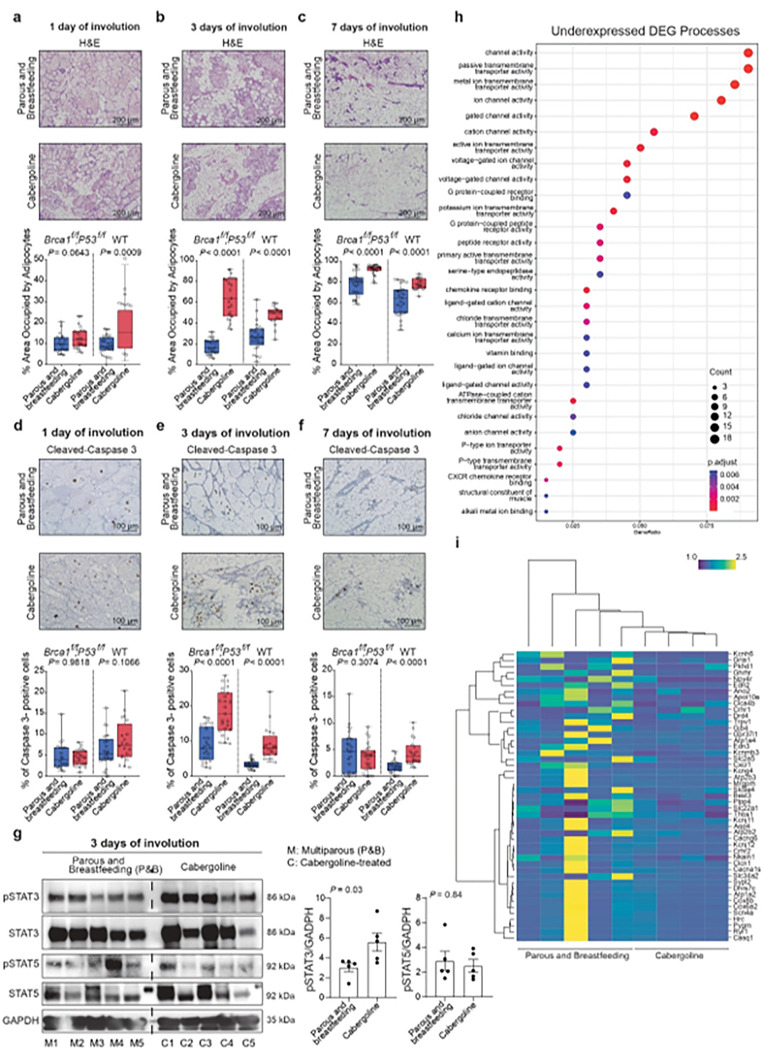 Figure 2
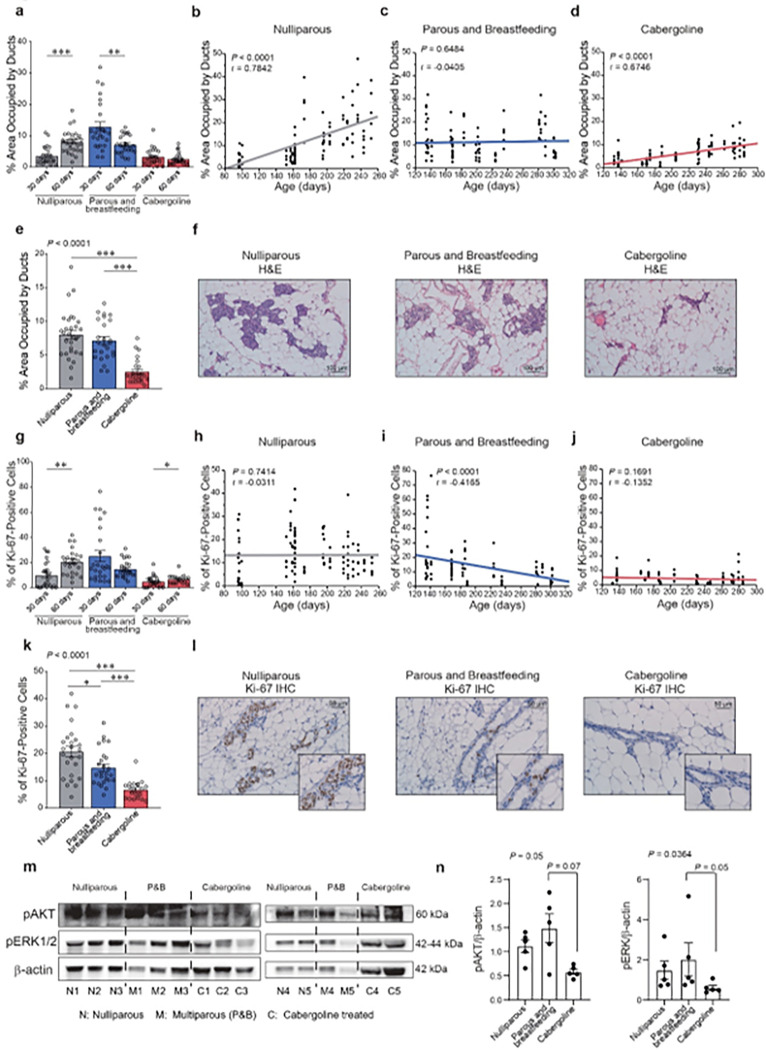 Figure 3
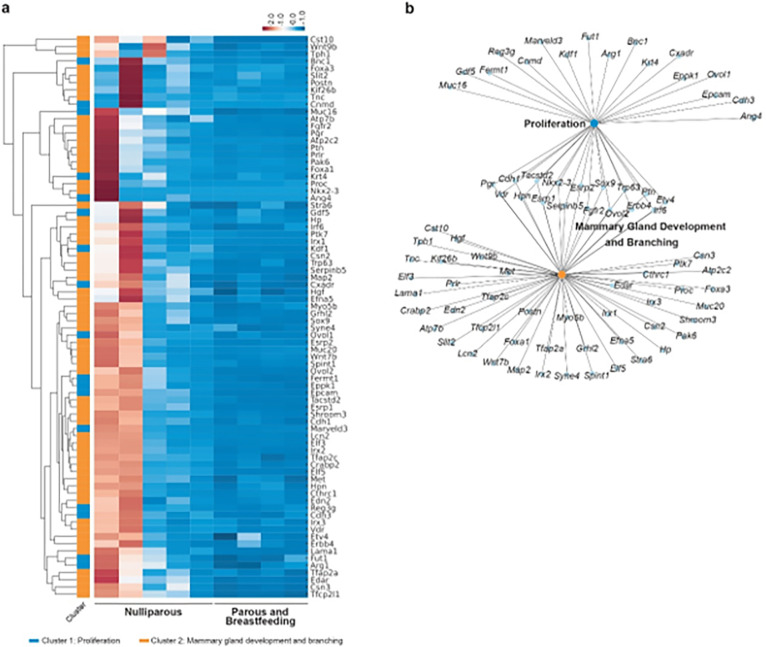 Figure 4
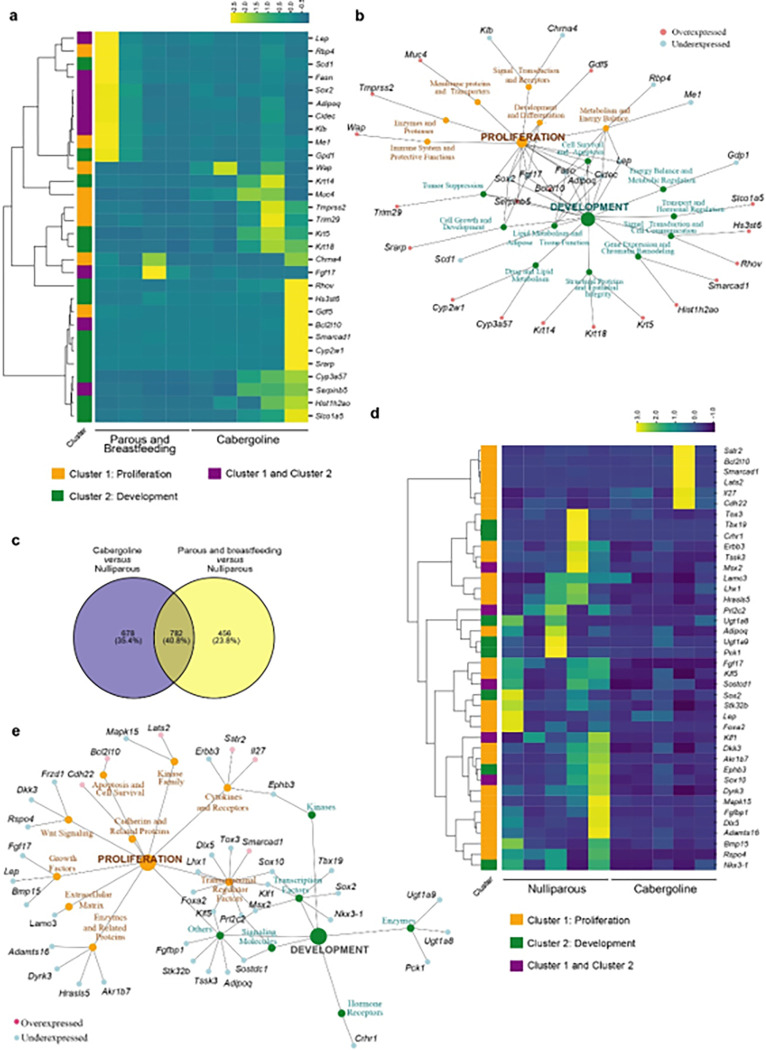 Figure 5
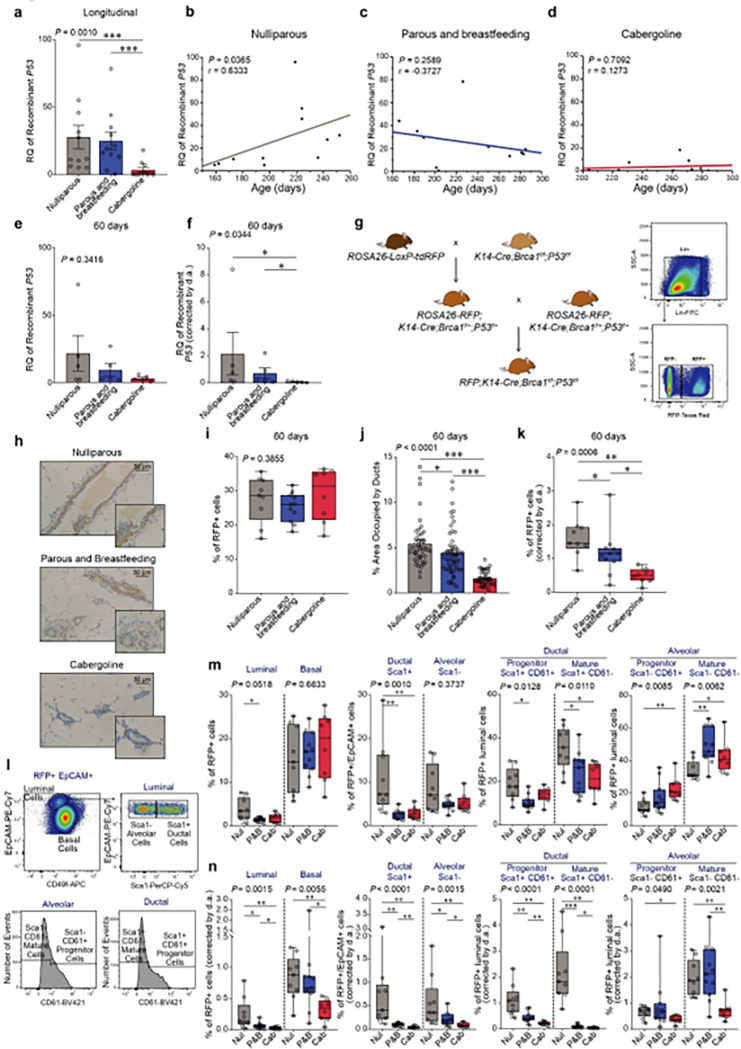 Figure 6
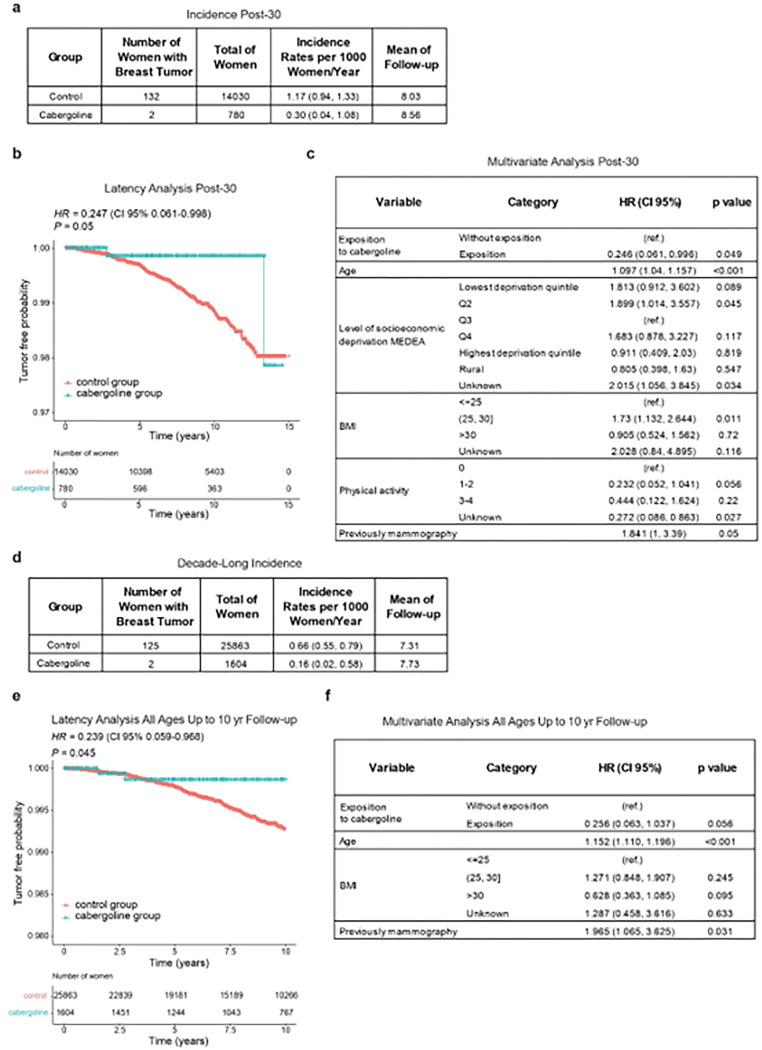 Figure 7
Peer Reviews
No public reviews on file for this paper yet. If you reviewed it on a platform where reviews are public (OpenReview, ICLR, NeurIPS, ICML), you can paste yours below so the community can read it here.
Videos
No videos yet. Explain this paper in a talk, walkthrough, or lecture? Add one.
Taxonomy
TopicsCancer, Stress, Anesthesia, and Immune Response · Estrogen and related hormone effects · Cancer Risks and Factors