Skeletal abnormalities caused by a Connexin43R239Q mutation in a mouse model for autosomal recessive craniometaphyseal dysplasia
Yasuyuki Fujii, Iichiro Okabe, Ayano Hatori, Shyam Kishor Sah, Jitendra Kanaujiya, Melanie Fisher, Rachael Norris, Mark Terasaki, Ernst J. Reichenberger, I-Ping Chen

TL;DR
A mouse model with a specific Connexin43 mutation shows bone abnormalities similar to a rare human bone disorder, revealing new insights into its causes.
Contribution
A novel mouse model with a CX43R239Q mutation reveals both loss-of-function and a potential dominant mechanism in autosomal recessive CMD.
Findings
Cx43KI/KI mice show increased cortical bone thickness and expanded bone marrow cavity due to altered osteoclast activity.
Cx43R239Q mutation causes mislocalization of CX43 and reduced osteocyte dendrite formation with lower expression of key signaling molecules.
Female Cx43KI/KI mice exhibit a more severe CMD-like phenotype that worsens with age.
Abstract
Craniometaphyseal dysplasia (CMD), a rare craniotubular disorder, occurs in an autosomal dominant (AD) or autosomal recessive (AR) form. CMD is characterized by hyperostosis of craniofacial bones and flaring metaphyses of long bones. Many patients with CMD suffer from neurological symptoms. To date, the pathogenesis of CMD is not fully understood. Treatment is limited to decompression surgery. Here, we report a knock in (KI) mouse model for AR CMD carrying a R239Q mutation in CX43. Cx43KI/KI mice replicate many features of AR CMD in craniofacial and long bones. In contrast to Cx43+/+ littermates, Cx43KI/KI mice exhibit periosteal bone deposition and increased osteoclast (OC) numbers in the endosteum of long bones, leading to an expanded bone marrow cavity and increased cortical bone thickness. Although formation of Cx43+/+ and Cx43KI/KI resting OCs are comparable, on bone chips the…
Genes, proteins, chemicals, diseases, species, mutations and cell lines named across the full text — each resolved to its canonical identifier and authoritative record.
Click any figure to enlarge with its caption.
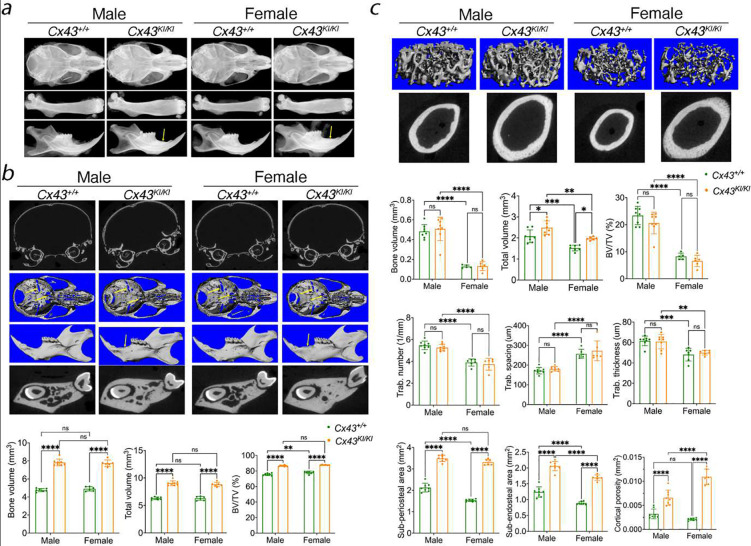 Figure 1
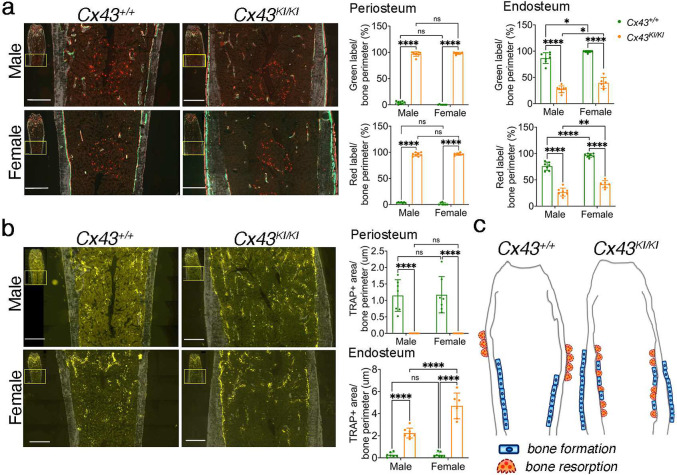 Figure 2
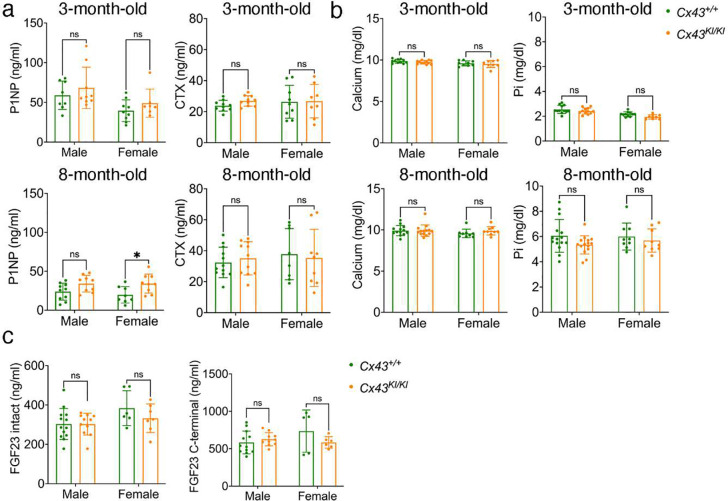 Figure 3
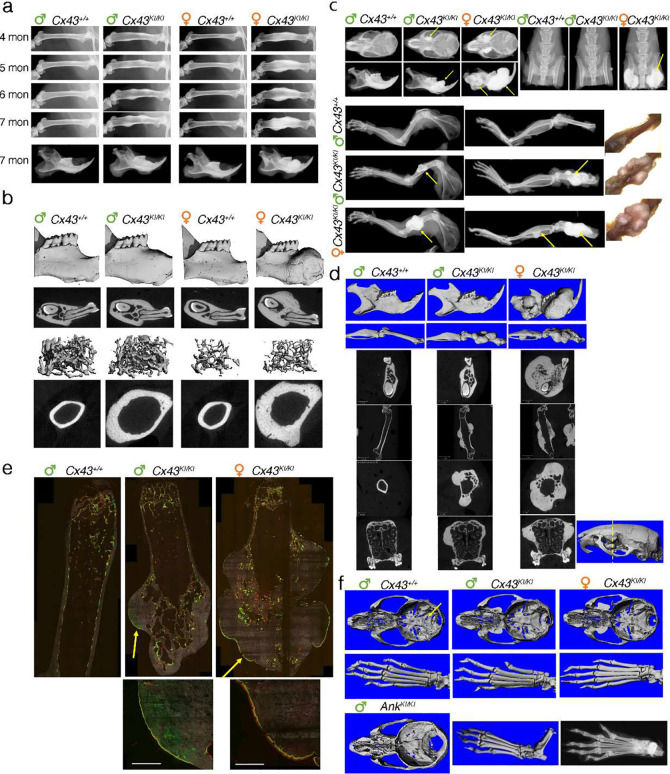 Figure 4
 Figure 5
 Figure 6
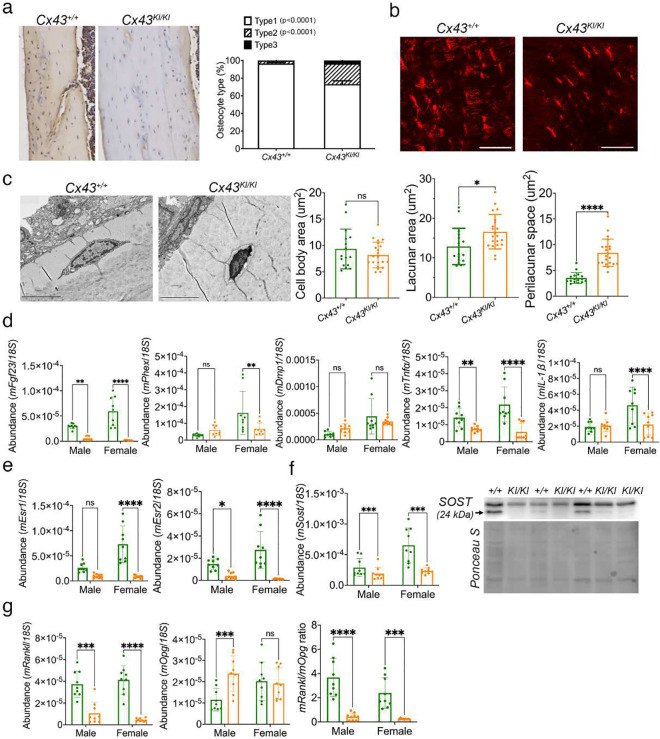 Figure 7
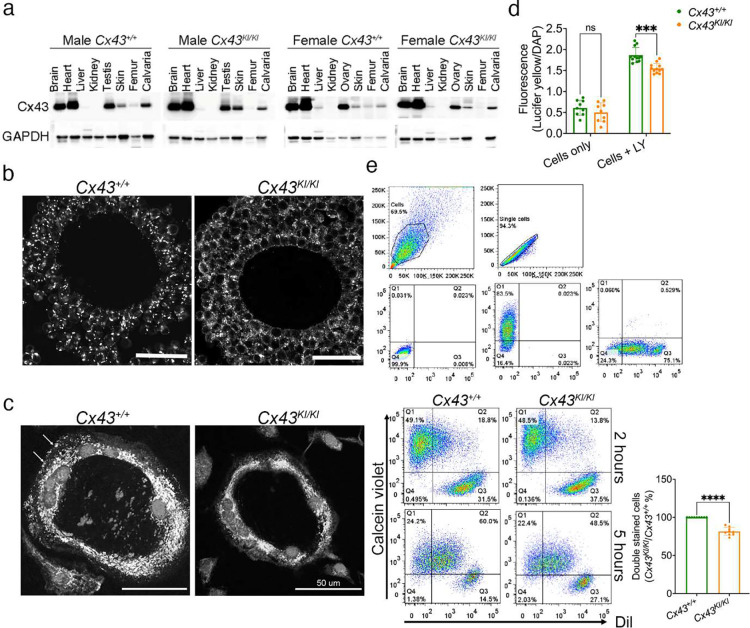 Figure 8
Peer Reviews
No public reviews on file for this paper yet. If you reviewed it on a platform where reviews are public (OpenReview, ICLR, NeurIPS, ICML), you can paste yours below so the community can read it here.
Videos
No videos yet. Explain this paper in a talk, walkthrough, or lecture? Add one.
Taxonomy
TopicsConnexins and lens biology · Heme Oxygenase-1 and Carbon Monoxide · Heat shock proteins research