Food Behaviour and Metabolic Characteristics of Children and Adolescents with Type 1 Diabetes: Relationship to Glycaemic Control
Eulalia Catamo, Gianluca Tornese, Klemen Dovc, Davide Tinti, Raffaella Di Tonno, Vittoria Cauvin, Egidio Barbi, Roberto Franceschi, Riccardo Bonfanti, Ivana Rabbone, Tadej Battelino, Antonietta Robino

TL;DR
This study explores how food behaviors and parental feeding practices affect blood sugar control in children and teens with type 1 diabetes.
Contribution
The study identifies new associations between food neophobia, parental feeding practices, and poor glycaemic control in children with type 1 diabetes.
Findings
Food neophobia is inversely linked to liking vegetables, fruits, fish, sweets, and carbohydrates.
Parental practices like restriction and pressure to eat are associated with higher HbA1c levels in children with T1D.
Higher BMI and cholesterol are observed in children with poor glycaemic control (HbA1c >8.5%).
Abstract
Diet is an essential element of treating and managing type 1 diabetes (T1D). However, limited research has examined food behaviour in children and adolescents with T1D and their relationship to glycaemic control. This study evaluated food behaviour, metabolic characteristics and their impact on the glycaemic control of children and adolescents with T1D. Two hundred and fifty-eight participants with T1D (6–15 years, duration of diabetes >1 year) were recruited. Demographic, anthropometric and clinical data were collected. Questionnaires on food neophobia and food preferences were administered. The Child Food Questionnaire (CFQ) also assessed parental feeding practices. An analysis of food behaviour showed that food neophobia was inversely associated with the liking of vegetables, fruits, fish, sweets and carbohydrates. Moreover, by analysing parental feeding practices, an inverse…
Genes, proteins, chemicals, diseases, species, mutations and cell lines named across the full text — each resolved to its canonical identifier and authoritative record.
Click any figure to enlarge with its caption.
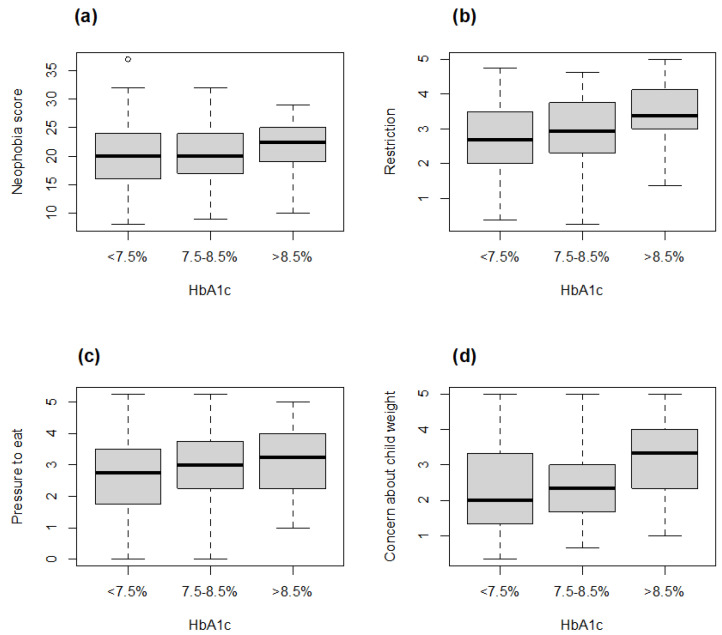 Figure 1
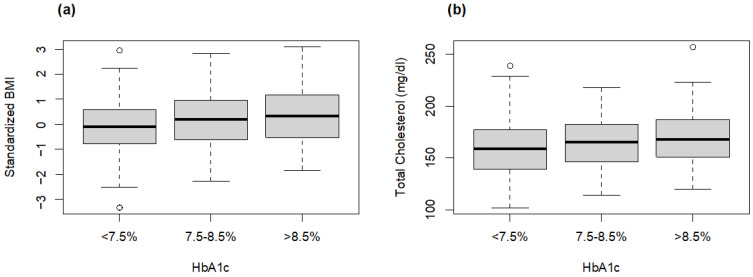 Figure 2
Peer Reviews
No public reviews on file for this paper yet. If you reviewed it on a platform where reviews are public (OpenReview, ICLR, NeurIPS, ICML), you can paste yours below so the community can read it here.
Videos
No videos yet. Explain this paper in a talk, walkthrough, or lecture? Add one.
Taxonomy
TopicsPalliative Care and End-of-Life Issues · Ethics in medical practice