Does it take two to tango?
Daniel Mol, Erik A. Stel, Irene E. Hof

Abstract
Genes, proteins, chemicals, diseases, species, mutations and cell lines named across the full text — each resolved to its canonical identifier and authoritative record.
Click any figure to enlarge with its caption.
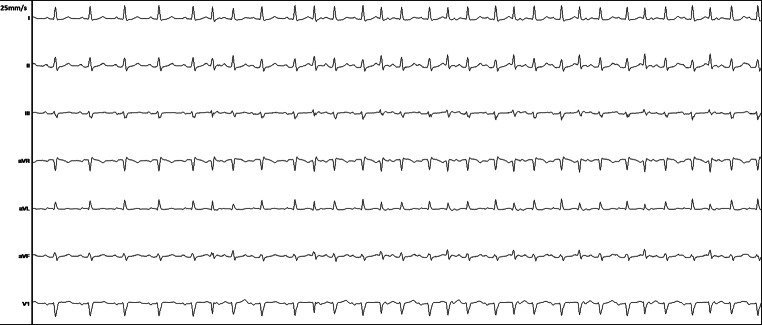 Figure 1
Peer Reviews
No public reviews on file for this paper yet. If you reviewed it on a platform where reviews are public (OpenReview, ICLR, NeurIPS, ICML), you can paste yours below so the community can read it here.
Videos
No videos yet. Explain this paper in a talk, walkthrough, or lecture? Add one.
Taxonomy
TopicsSports and Physical Education Studies
A 35-year-old athlete patient without any relevant medical history was referred to our electrophysiology laboratory because of exercise-induced palpitations. Due to the disabling complaints, the patient had to stop his marathon training. Cardiac echocardiography revealed a 47% ejection fraction and a left atrial volume index of 45 ml/m^2^. A previous exercise test showed an irregular heart rhythm which was suggestive of atrial ectopic beats and atrial fibrillation. We performed an electrophysiological study to induce and localise the atrial ectopic beats that may be the trigger for atrial fibrillation. The patient received general anaesthesia. During the isoprenaline washout phase, ‘irregularities’ became prominent, and the tracing displayed in Fig. 1 was recorded.Fig. 1. Seven-lead electrocardiogram recorded during the electrophysiological study
What would be your diagnosis for the rhythm displayed in Fig. 1?
Answer
You will find the answer elsewhere in this issue.