Editorial: SARS-CoV-2: implications for maternal-fetal-infant and perinatal mortality, morbidity, pregnancy outcomes and well-being
Cheryl K. Walker, Balaji Govindaswami

Abstract
Genes, proteins, chemicals, diseases, species, mutations and cell lines named across the full text — each resolved to its canonical identifier and authoritative record.
Click any figure to enlarge with its caption.
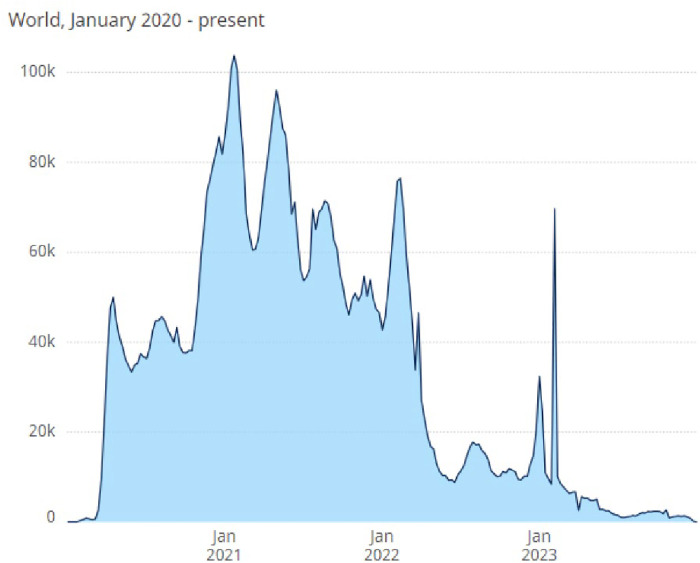 Figure 1
Peer Reviews
No public reviews on file for this paper yet. If you reviewed it on a platform where reviews are public (OpenReview, ICLR, NeurIPS, ICML), you can paste yours below so the community can read it here.
Videos
No videos yet. Explain this paper in a talk, walkthrough, or lecture? Add one.
Taxonomy
TopicsCOVID-19 Impact on Reproduction · Maternal Mental Health During Pregnancy and Postpartum · Pregnancy and preeclampsia studies
Editorial on the Research Topic SARS-CoV-2: implications for maternal-fetal-infant and perinatal mortality, morbidity, pregnancy outcomes and well-being
Introduction
On the fourth anniversary of the report of unusual pneumonia cases later identified as severe acute respiratory syndrome coronavirus 2 (SARS-CoV-2), the causal agent of Coronavirus Disease 2019 (COVID-19) (1), it is instructive to review what has been learned about the impact of this emerging global disease on the health and wellness of pregnant individuals, neonates, infants, and children. By the end of 2023, nearly 7 million COVID-19 deaths had been reported to the World Health Organization (WHO) (Figure 1) (2).
Total COVID-19 deaths reported to WHO (weekly). The World Health Organization (WHO) reports weekly deaths attributable to 3 COVID-19 infection worldwide (2).
Maternal effects and adverse pregnancy outcomes
Pregnant persons who contract COVID-19 are at increased risk for morbidity, intensive care unit admission, mechanical ventilation, and mortality compared with nonpregnant women (3–5) and those with diabetes mellitus, hypertension, and cardiovascular disease face greater severity of infection and adverse outcomes (6). SARS-CoV-2 is a multisystem disorder with particular affinity for neurological, immune and cardiovascular systems (7). COVID-19 in pregnancy increases risk for hypertensive disorders (8, 9). A study in this edition reported increased incidence of maternal chronic hypertension during the pandemic that linked to higher neonatal intensive care unit (NICU) admissions (Jegatheesan et al.). Affected populations were largely publicly insured individuals of color, accentuating existing obstetric health disparities. Hypertension in pregnancy predisposes to cardiovascular disease risk in the mother (10), intrauterine growth restriction, and programming of long-term cardiovascular (11) and neurodevelopmental health (12).
The impact of COVID-19 on preterm birth rates is complicated. Large cohort studies in international populations provided clear evidence that pregnant persons with symptomatic COVID-19 had significantly higher risk for preterm birth and NICU admission (3, 13, 14). Findings from temporal studies comparing rates before and after the onset of COVID-19 yielded mixed results likely reflecting other environmental influences. Lower preterm birth in multiple gestations in one German perinatal center was explained in part by restricted physical activity during lockdown (15). An analysis of 52 million births in 26 countries documented small decreases in preterm birth in the first 3 months of the pandemic lockdown, perhaps resulting from lower infection acquisition due to restricted social movement, better air quality from less traffic, and/or decrease in obstetric interventions for fetal wellbeing; only in Brazil was a concomitant increase in stillbirth noted (16). Several publications cited changing potency of circulating viral variants to explain fluctuating levels of infection acquisition and adverse perinatal outcomes over time (17–19). Others suggested that rising maternal immunity through prior infection or vaccination reduced infection incidence and complications over time (20, 21). The two studies included in this issue found no impact of COVID-19 on preterm birth rates (Rodriguez et al., Lorenzi et al.), which reinforces that infection risk is not randomly distributed in populations or over time and that combining data over several years may have diluted subtle time-sensitive effects.
Infant morbidity/mortality and long-term population health
Newborn COVID-19 is rarely the result of vertical transmission and more commonly is acquired through contact with family members, healthcare workers, and visitors. Most cases are asymptomatic or mildly symptomatic (22). Two descriptive studies in this edition report mild clinical courses for COVID-19 infected neonates in Chinese study populations (Yang et al., Dai et al.). Also in this compendium is a review of dermatologic manifestations of COVID that is particularly useful in infants in whom case identification may be complicated (Young).
More serious infant and childhood manifestations are rare, with a retrospective cohort study from China in this edition reporting a 1.8% incidence of seizures in children aged 6 months to 3 years (Xu et al.). We also include a case series describing four children with moderate-to-severe neonatal hepatitis following omicron infection which cautions that clinicians monitor liver function during recovery (Wang et al.).
Importantly, the provisional infant mortality rate for the United States rose 3% from 2021 to 2022, the first year-to-year increase in two decades (23). The rise involved two leading causes of death: maternal complications and bacterial sepsis. While these data are preliminary and the underlying causes are likely to be multifactorial, COVID-19 may be a driver for the observed increase in infant mortality. The full impact of the pandemic on worldwide excess mortality has been estimated to exceed 300 deaths per 100,000 (24).
Long-term outcomes are being studied in children with fetal exposure to COVID-19. There is growing evidence that in utero exposure is associated with adverse neurodevelopmental sequelae, particularly in males (25, 26). Serious concerns reported in this edition involve a Brazilian birth cohort in which fetal COVID-19 exposure was associated with cerebral deep white matter changes suggesting zonal impairment of myelin content at 6 months adjusted age (Alves de Araujo et al.). These findings build on an established literature associating maternal infection, with fever and exaggerated immune response, with neurodevelopmental impairment including autism (27, 28).
Post-acute sequelae of COVID-19 infection (PASC) or Long COVID includes a broad set of persistent symptoms following infection. In a meta-analysis of 40 studies with 12,424 children, the pooled prevalence of Long COVID was 23.36% (29). A cohort study of 659,286 children with confirmed SARS-CoV-2 measured the incidence proportion of at least one feature of PASC was 41.9% in the COVID-positive group and 38.2% in those negative for COVID-19, for a difference of 3.7% (30). Increased rates were associated with acute illness severity, young age, and medical complexity. In adults, myalgic encephalomyelitis/chronic fatigue syndrome (ME/CFS), post-exertional malaise, memory loss and neurocognitive impairment are amongst the most common and debilitating Long COVID symptoms (31, 32). Systemic features of PASC often include viral persistence, chronic inflammation, hypercoagulability, and autonomic dysfunction (33, 34).
Mechanistic insights into disease
Cytokines are essential regulators of the immune response that mediate protective inflammation. Early studies suggest that some individuals respond to COVID-19 with exuberant proinflammatory cytokine proliferation, with interferon-gamma (IFN-γ), Interleukin-1 beta (IL-1β), and IL-6 most implicated, particularly in severe cases (35, 36). Two contributions in this edition evaluated cord blood for evidence of COVID-19 vaccine or infection-induced immune and inflammatory biomarker elevation. One reported higher cord blood levels of cortisol, critical to fetal and neonatal anti-inflammatory activities, in pregnancies exposed to SARS-CoV-2 but did not find elevation in acute phase reactants (Mendenhall et al.). The other found no increase in cord blood cytokine levels (Jain et al.). Neither finding was unexpected, as cytokines have relatively short lives, and both studies had lags between maternal infection and sample collection.
Underlying molecular mechanisms have been hypothesized in adult PASC. Mitochondrial dysfunction, involving impaired cellular energy production with redox imbalance and oxidative stress, has been implicated in the etiology of Long COVID (37) and the efficacy of coenzyme Q10 (CoQ10) supplementation is being investigated as a therapeutic strategy (38). Reduction in serotonin levels through viral and immunological processes in PASC appears to impair vagal nerve, hippocampal responses and memory and targeted interventions are under investigation (39). An elegant longitudinal cohort study explored the pathophysiology of Long-COVID post-exertional malaise and found that exercise caused immediate skeletal muscle alterations, including reduction in mitochondrial enzyme activity, increased accumulation of amyloid-containing deposits, blunted T-cell response, and severe tissue damage (40). The implications for all these findings in children are unclear but profoundly concerning.
Implications for health care services
Perinatal care practices evolved rapidly during lockdown in response to broad concerns for patient and provider safety Most face-to-face visits were replaced by remote monitoring and telehealth. Investigators are evaluating the adequacy of these health service modifications retrospectively. Three studies in this edition addressed the issue, with reassuring findings. One identified a slight delay in the timing of mid-pregnancy anatomy ultrasound scans during the pandemic that was unlikely to be clinically significant (Handley et al.). Another reported an increase in NICU admissions for hypoxic-ischemic encephalopathy (HIE) evaluation related to maternal hypertension but found no difference in HIE diagnosis or treatment (Song et al.). A final study demonstrated that there was no change in NICU discharge orders for maternal milk, though insured mothers were twice as likely to be providing milk perhaps due to the benefits of telework options not available to uninsured individuals (Boudreau et al.).
Conclusion
This edition of Frontiers in Pediatrics adds to the existing SARS-CoV-2 literature in important ways. While serious pregnancy adverse outcomes appear to be attenuating due to preventive and treatment measures, maternal infection may induce cardiovascular and immune changes with profound implications for the mother and fetus. In utero exposure may lead to a form of Long COVID that induces brain changes and neurodevelopmental consequences. Evidence continues to reassure that most neonatal and pediatric COVID-19 infections are mild, but clinicians must remain vigilant for rare more serious manifestations and the potential for Long COVID. Investigation of PASC and its underlying pathophysiology and molecular mechanisms in children is a high priority, as is the impact of telehealth on pregnant individuals, infants, and children in the endemic stage of COVID-19. Vaccination strategies must creatively target pregnant persons and infants 6 months of age and older (41, 42). Finally, given the disproportionate impact of the pandemic on underrepresented communities already predisposed to excess perinatal morbidity and mortality, health officials must re-focus resources to optimize perinatal care quality through attention to the social determinates that place these populations at unacceptably enhanced risk.
The reference list from the paper itself. Each links out to its DOI / PubMed record.
- 1Cucinotta D Vanelli M. WHO declares COVID-19 a pandemic. Acta Biomed. (2020) 91(1):157–60. 10.23750/abm.v 91i 1939732191675 PMC 7569573 · doi ↗ · pubmed ↗
- 2Organization WH. WHO COVID-19 dashboard. (2024).
- 3Allotey J Stallings E Bonet M Yap M Chatterjee S Kew T Clinical manifestations, risk factors, and maternal and perinatal outcomes of coronavirus disease 2019 in pregnancy: living systematic review and meta-analysis. Br Med J. (2020) 370:m 3320. 10.1136/bmj.m 332032873575 PMC 7459193 · doi ↗ · pubmed ↗
- 4Zambrano LD Ellington S Strid P Galang RR Oduyebo T Tong VT Update: characteristics of symptomatic women of reproductive age with laboratory-confirmed SARS-Co V-2 infection by pregnancy status—United States, January 22–October 3, 2020. MMWR Morb Mortal Wkly Rep. (2020) 69(44):1641–7. 10.15585/mmwr.mm 6944 e 333151921 PMC 7643892 · doi ↗ · pubmed ↗
- 5Briller JE Aggarwal NR Davis MB Hameed AB Malhame I Mahmoud Z Cardiovascular complications of pregnancy-associated COVID-19 infections. JACC Adv. (2022) 1(3):100057. 10.1016/j.jacadv.2022.10005735967591 PMC 9364954 · doi ↗ · pubmed ↗
- 6Smith ER Oakley E Grandner GW Rukundo G Farooq F Ferguson K Clinical risk factors of adverse outcomes among women with COVID-19 in the pregnancy and postpartum period: a sequential, prospective meta-analysis. Am J Obstet Gynecol. (2023) 228(2):161–77. 10.1016/j.ajog.2022.08.03836027953 PMC 9398561 · doi ↗ · pubmed ↗
- 7Chatzis DG Magounaki K Pantazopoulos I Bhaskar SMM. COVID-19 and the cardiovascular system-current knowledge and future perspectives. World J Clin Cases. (2022) 10(27):9602–10. 10.12998/wjcc.v 10.i 27.960236186205 PMC 9516937 · doi ↗ · pubmed ↗
- 8Baracy MJ Afzal F Szpunar SM Tremp M Grace K Liovas M Coronavirus disease 2019 (COVID-19) and the risk of hypertensive disorders of pregnancy: a retrospective cohort study. Hypertens Pregnancy. (2021) 40(3):226–35. 10.1080/10641955.2021.196562134428127 · doi ↗ · pubmed ↗