Obituary for a diagnosis: B‐cell prolymphocytic leukaemia (1974–2022)
Stephen P. Hibbs, Matthew L. Smith, Deborah Swinglehurst

Abstract
Genes, proteins, chemicals, diseases, species, mutations and cell lines named across the full text — each resolved to its canonical identifier and authoritative record.
Click any figure to enlarge with its caption.
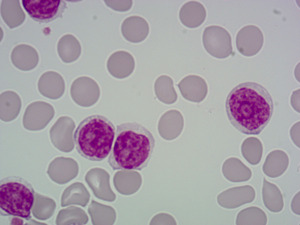 Figure 1
- —Wellcome Trust
Peer Reviews
No public reviews on file for this paper yet. If you reviewed it on a platform where reviews are public (OpenReview, ICLR, NeurIPS, ICML), you can paste yours below so the community can read it here.
Videos
No videos yet. Explain this paper in a talk, walkthrough, or lecture? Add one.
Taxonomy
TopicsChronic Lymphocytic Leukemia Research · Lymphoma Diagnosis and Treatment · Cutaneous lymphoproliferative disorders research
Born in 1974 at the Royal Marsden Hospital in London,1 B‐cell prolymphocytic leukaemia was often referred to as ‘B‐PLL’ (bee‐pul) throughout their illustrious five‐decade career. During the 1970s and early 1980s, B‐PLL worked exclusively with their original supervisors, but later began collaborating with researchers in Italy,2 the Netherlands3 and Japan.4 In 1997, B‐PLL joined other prestigious diagnostic entities in the official canon of haematopathology: the World Health Organization's Classification of Haematological Malignancies,5 and proudly maintained their position through to the revised 4th edition of 2016.6
At the peak of their career, B‐PLL collaborated on hundreds of research projects, provided structure for the treatment of thousands of patients across the world, and appeared regularly in postgraduate haematology exams. Trainee haematologists were always advised to look out for B‐PLL who was clearly recognisable by their striking appearance but usually arrived unannounced. Depictions in medical textbooks inevitably focused on the large nucleolus that accompanied B‐PLL and that seemed to stare back from the slide when viewed under the microscope (Figure 1). While B‐PLL forged cordial, productive and durable alliances with researchers and clinicians, relationships with patients were challenging. Patients who encountered B‐PLL often experienced disabling symptoms and witnessed B‐PLL's stubborn refusal to cooperate with chemotherapy.
Reports of concern for B‐PLL's health emerged in 2021, even as they continued to collaborate with scientists in France7 and Florida.8 Colleagues in haematopathology began to lose confidence in their ability to distinguish B‐PLL from other diagnostic entities, even with advanced genetic methods.9 In 2022, experts responsible for the World Health Organization classification system formally certified the demise of B‐PLL. Their departure coincided with that of the hairy cell leukaemia variant, a close associate. The clinical commitments previously fulfilled by B‐PLL have been transferred to one of their ex‐colleagues (mantle cell lymphoma) and two newly recruited entities with unusually long names.10
B‐PLL is survived by several diagnostic siblings, numerous patients who still carry its label and a medical worldview that stubbornly assumes the stability of diagnostic categories despite a convincing body of evidence that refutes this.11 Diagnostic labels are not timeless scientific truths, but instead reflect the understanding of a few people at a particular historical moment; they often have shorter lifespans than their human inventors.
AUTHOR CONTRIBUTIONS
Stephen P. Hibbs conceptualized the article, wrote the initial draft and is the guarantor of the article. Matthew L. Smith and Deborah Swinglehurst critically reviewed the article and revised it. All authors agreed to the final version.
CONFLICT OF INTEREST STATEMENT
All authors declare no conflict of interest.
FUNDING
Stephen P. Hibbs is supported by a HARP doctoral research fellowship, funded by the Wellcome Trust (Grant number 223500/Z/21/Z).
The reference list from the paper itself. Each links out to its DOI / PubMed record.
- 1Galton DAG , Goldman JM , Wiltshaw E , Catovsky D , Henry K , Goldenberg GJ . Prolymphocytic leukaemia. Br J Haematol. 1974;27(1):7‐23. 10.1111/j.1365-2141.1974.tb 06769.x 4137136 · doi ↗ · pubmed ↗
- 2De Paoli P , Battistin S , Fantin O , Nimis R , Reitano M , Santini G . Expression and modulation of common acute lymphoblastic leukaemia antigen by B prolymphocytic leukaemia cells. Immunol Lett. 1985;9(5):263‐266. 10.1016/0165-2478(85)90005-7 3158600 · doi ↗ · pubmed ↗
- 3Sauerwein R , van der Meer W , Aarden L . Induction of proliferation of B prolymphocytic leukemia cells by phorbol ester and native or recombinant interferon‐gamma. Blood. 1987;70(3):670‐675.3113513 · pubmed ↗
- 4Matsushita A , Nagai K , Ishikawa T , Tatsumi E , Ohno Y , Takahashi T . B‐cell prolymphocytic leukemia expressing CD 13 antigen. Int J Hematol. 1994;60(2):157‐161.7524729 · pubmed ↗
- 5Harris NL , Jaffe ES , Diebold J , et al. World Health Organization classification of neoplastic diseases of the hematopoietic and lymphoid tissues: report of the Clinical Advisory Committee meeting—Airlie House, Virginia, November 1997. J Clin Oncol. 1999;17(12):3835‐3849. 10.1200/JCO.1999.17.12.3835 10577857 · doi ↗ · pubmed ↗
- 6Swerdlow SH , Campo E , Pileri SA , et al. The 2016 revision of the World Health Organization classification of lymphoid neoplasms. Blood. 2016;127(20):2375‐2390. 10.1182/blood-2016-01-643569 26980727 PMC 4874220 · doi ↗ · pubmed ↗
- 7Nguyen‐Khac F , Bouzy S , Roos‐Weil D , et al. Acquisition of TCF 3 and CCND 3 mutations and transformation to Burkitt lymphoma in a case of B‐cell prolymphocytic leukemia. Hema Sphere. 2021;5(5):e 563. 10.1097/HS 9.0000000000000563 33969276 PMC 8096467 · doi ↗ · pubmed ↗
- 8Bell S , Lattanzio N , Braham J , et al. An unusual case of prolymphocytic leukemia transformation in a patient with chronic lymphocytic leukemia. J Investig Med High Impact Case Rep. 2021;9:232470962199076. 10.1177/2324709621990767 PMC 786844533533282 · doi ↗ · pubmed ↗