Selective breast/gynecologic pathology fellowship training in the United States: Experience of program directors
Mohamed Mokhtar Desouki, Ian S. Hagemann, Thaer Khoury, Oluwole Fadare, Rohit Bhargava, Jennifer L. Clark, Michael T. Deavers, Julie M. Jorns, Ashraf Khan, Ediz F. Cosar, Rouzan G. Karabakhtsian, Molly E. Klein, Andre Pinto, Muhammad Ali

TL;DR
This study surveys breast and gynecologic pathology fellowship programs in the US, providing insights into their structure, accreditation, and training requirements.
Contribution
The study offers the most comprehensive and up-to-date census of combined breast/gyn pathology fellowships in the US.
Findings
There are 25 academic programs offering one-year combined breast/gyn fellowship training in the US.
An average of 3000 breast and 3000 gyn cases per year is typical for these programs.
Only 36% of program directors are graduates of a combined breast/gyn fellowship program.
Abstract
Published data on combined breast and gynecologic [breast/gyn] surgical pathology fellowship training programs are limited. Our study aimed to survey the landscape of such fellowships in the United States (US), including specific information about their characteristics and the educational activities therein. Using web searches, we identified programs offering combined breast/gyn surgical pathology fellowship training. We developed a 26-item questionnaire asking program directors to report on the characteristics of their fellowship training structure. The search revealed 25 academic based programs offering one-year combined breast/gyn fellowship training, predominantly located (40 %) in the Northeast area. The following data was obtained: 44 % of the programs were accredited by the ACGME, 82 % required >19 weeks of breast and gyn service, and 69.6 % accepted the common application, 54.5…
Genes, proteins, chemicals, diseases, species, mutations and cell lines named across the full text — each resolved to its canonical identifier and authoritative record.
Click any figure to enlarge with its caption.
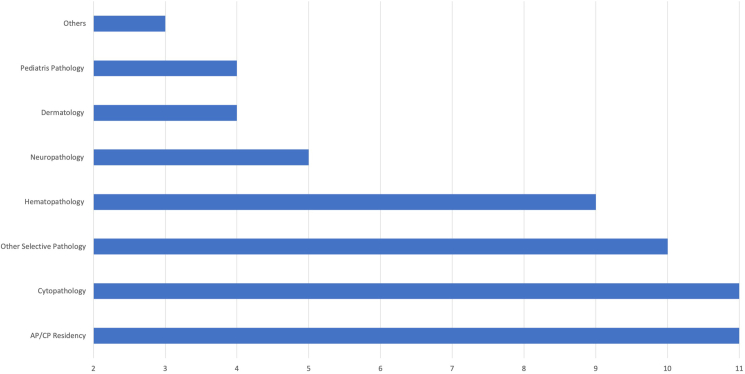 Figure 1
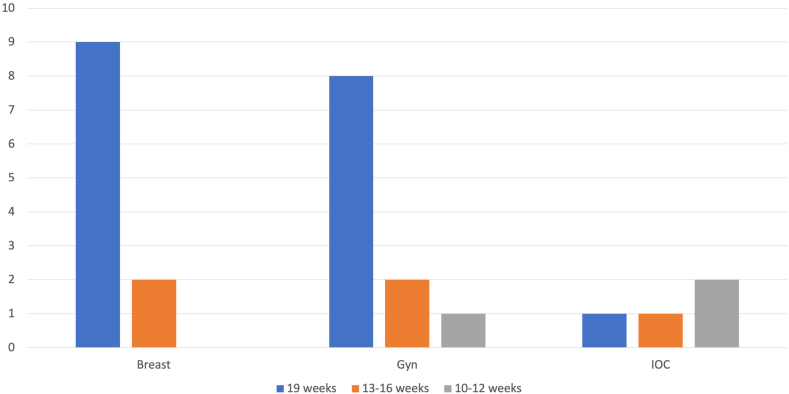 Figure 2
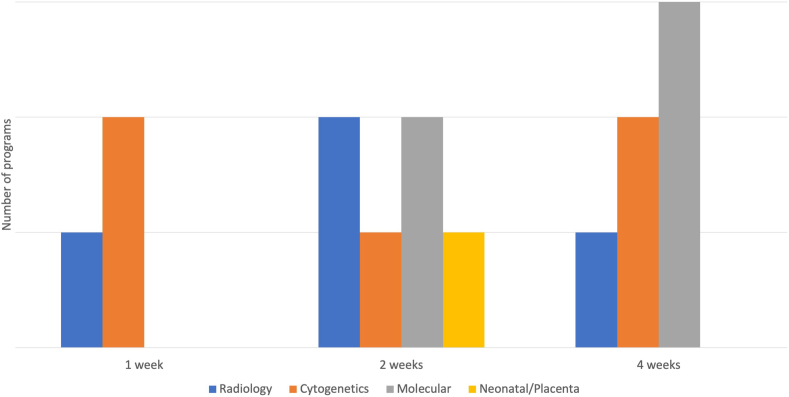 Figure 3
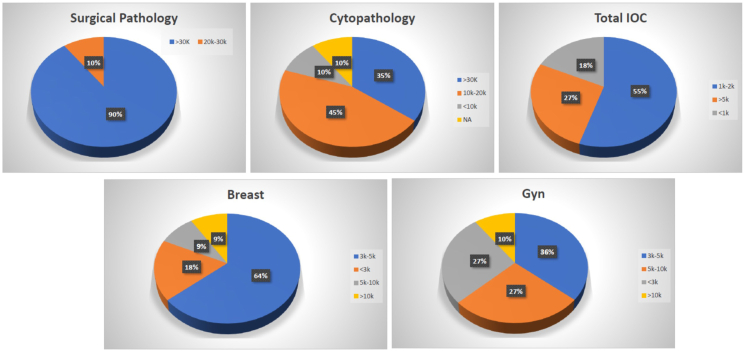 Figure 4
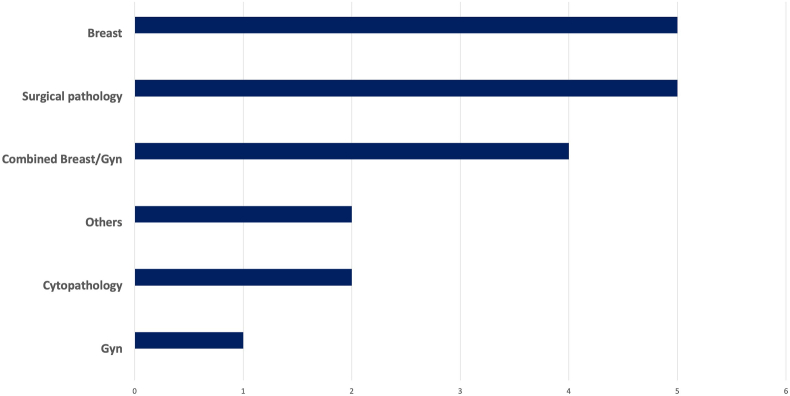 Figure 5
Peer Reviews
No public reviews on file for this paper yet. If you reviewed it on a platform where reviews are public (OpenReview, ICLR, NeurIPS, ICML), you can paste yours below so the community can read it here.
Videos
No videos yet. Explain this paper in a talk, walkthrough, or lecture? Add one.
Taxonomy
TopicsAdvances in Oncology and Radiotherapy · Global Cancer Incidence and Screening · Radiology practices and education
Introduction
Surgical pathology is a medical subspecialty focused on the study of tissue samples to help in diagnosing diseases, assist in formulating management plans, and study prognostic and predictive markers.1 The number of subspecialties of training in anatomic pathology has grown rapidly over the past decade, with more than 13 subspecialties now being recognized.2, 3, 4 Although there are general surgical pathology fellowships that cover a range of organ systems, most subspecialty fellowships (“selective pathology” programs) focus on a single organ system.
The high volume of breast and gyn specimens, complex surgical procedures, frequent updates and new classifications mandate up-to-date knowledge. Such refined skills for pathologists are best acquired through subspecialty training. In recent years, there have been remarkable advances in our understanding of the molecular basis of diseases, and the advent of next-generation molecular biology techniques have further contributed to the demand for experts and leaders in the field, driving the need for subspecialty fellowship programs.5 These factors have made breast and/or gyn pathology some of the most common pathology fellowship areas in the United States (US).6
There is, however, no central repository of data on fellowships in each area of surgical pathology. A database published by the Association of Pathology Chairs for the academic year 2025–2026 listed combined breast/gyn in addition to other subspecialties (Table 1).2^,^4Table 1. List of selective surgical pathology fellowship training in the United States published by the Association of Pathology Chairs for the academic year 2025–2026.Table 1. FellowshipNumber of slotsGeneral surgical or oncologic pathology72Gastrointestinal ( ± liver, pancreas)56Combined breast/gyn compared23Genitourinary (GU)22Gynecologic (gyn)19Breast18Renal15Head and neck±endocrine13Bone and soft tissue11Flexible subspecialty8Pulmonary7combined pulmonary and cardiovascular5combined GU + Renal4Cardiovascular2Transplant1combined clinical informatics + surgical pathology1GU + gyn1
Our study aimed to determine the following characteristics of combined breast/gyn pathology fellowships in the US: Institution type, educational activities, and the structure of the pathology department. Additionally, we collected survey data on typical curriculum and educational goals during the fellowship training period. Describing current training practices may facilitate standardization of training across the US.
Materials and methods
An online search was completed to identify programs that offer combined breast/gyn selective surgical pathology fellowship training. The search included the Association of Pathology Chairs website,2 the American Medical Association fellowship list,3 the Pathology Outlines website,7 the International Society of Gynecological Pathologists,8 and personal communications by the corresponding author (MMD).
A 26-item questionnaire on Microsoft 365 Forms to collect characteristics of the fellowship programs (Supplemental Material 1) was created. The link to the questionnaire was sent to all program directors of combined breast/gyn fellowships via e-mail in August 2022 with follow-up emails, allowing the programs to update their data or reminding them to respond. Survey responses and publicly available data were collated for analysis.
Results
The search identified 25 programs (“all programs”) that currently offer one year training in combined breast/gyn fellowship training in the US (Table 2). Eleven of twenty-five (44 %) programs responded to the survey “responding/participating programs.” The first participating program reported that fellowship training started in 2003 (University of Pittsburgh Medical Center), and the most recent one started in July 2023 (Roswell Park Comprehensive Cancer Center).Table 2. List of all combined breast/gyn fellowships in the US identified by the search strategy as of 2023.Table 2#aInstitutionSlotsStateACGME accredited1University of Alabama at Birmingham1ALNo2University of California Davis1CANo3University of California San Diego1CANo4University of Colorado1CONo5University of Miami/Jackson Health System2FLYes6University of Chicago, NorthShore Program1ILNo7Baystate Health - University of Massachusetts Chan Medical School1MAYes8Umass Chan Medical Center (Worcester)1MAYes9Detroit Medical Center/Wayne State University School of Medicine1MIYes10University of Minnesota1MNYes11Washington University2MOYes12University at Buffalo1NYYes13Montefiore Medical Center/Albert Einstein College of Medicine1NYYes14Zucker School of Medicine at Hofstra/Northwell1NYYes15NYU Grossman School of Medicine1NYNo16University of Rochester1NYNo17Oregon Health & Science University1ORNo18Magee-Womens Hospital/University of Pittsburg3PANo19Women and Infants Hospital of Rhode Island/Brown University1RINo20Houston Methodist Hospital1TXYes21University of Virginia1VANo22University of UtahUTNo23University of Washington2WAYes24Medical College of Wisconsin1WINo25University of Wisconsin School of Medicine and Public Health1WINoaThe programs are sorted from A–Z according to the state where they are located. Programs in bold font are participating in the study (n = 11).
All programs (25/25) are academics based in a university/medical school setting with an accredited pathology residency program. Table 2 lists all combined breast/gyn fellowships in the US identified by the search strategy as of 2023 along with the location and accreditation status by the Accreditation Council for Graduate Medical Education (ACGME). All the participating programs reported having additional (non-breast/gyn) fellowship programs in the department (Fig. 1). Responding programs vary in their block rotations in breast and gyn services as well as other rotations (Fig. 2, Fig. 3). Fellows participate in teaching medical students and residents in all participating programs.Fig. 1. Fellowship training other than combined breast/gyn offered by the department of pathology of the participating programs.Fig. 1. Fig. 2Rotations (in weeks) in breast, gyn, and intraoperative consultation (IOC) in participating programs.Fig. 2. Fig. 3Additional rotations (in weeks) offered by participating programs.Fig. 3
Table 3 lists the majority of the self-reported information by the program directors in regard to the structure of their programs in response to the survey. Fig. 4 summarizes the average annual number of surgical pathology, cytology, intraoperative consultation (IOC), breast and gyn cases in the departments of pathology housing the combined breast/gyn fellowship training. Fig. 5 illustrates the post-residency training of the program directors of the responding programs.Table 3. Characteristics of the combined breast/gyn fellowship training programs in participating institutions (n = 11).Table 3. Variable# of programs, (%)State license required for the fellows rowhead Full5 (45.5) Temporary5 (45.5) Not required1 (9)Research project for graduation Required6 (55) Not required5 (45)Fellows' sign-out cases independently Yes3 (27) No8 (73)Educational curriculum present Yes6 (55) No5 (45)Fellowship common application (2022)a Accept16/25 (64 %) Do not accept9/25 (36 %)Graduates' job destination Private practice5 (46) Academic3 (27) Others2 (18) Another fellowship1 (9)Other variablesMean (range)Breast and gyn referral/consult cases received per year.500 (50–4000)Number of interviews conducted for one position.4 (1–6)Number of practicing pathologists in the department Breast5 (1->10) Gyn5 (1->10) Cytology8 (4->10)aInformation obtained from reference # 2 for all combined breast/gyn fellowship training in the US in 2022.Fig. 4. Average number of cases per year in the department of pathology of the participating programs.Fig. 4. Fig. 5Program director's post residency fellowship training in participating programs.Fig. 5
Discussion
According to an American Society of Clinical Pathology (ASCP) survey conducted in 2020, fellowship training is planned by 97 % of the residents with about half of the residents plan to complete one fellowship, and 44 % reporting interest in two or more fellowships post residency.2 Determining the formal goals and objectives of training helps to structure the training program as well as assess the progress of trainees during the year. Table 4 describes one possible example of program goals.Table 4. Goals and objectives of training in the combined breast/gyn rotation.Table 4. Patient Care
-
•To develop proficiency in the grossing and microscopic diagnosis of gynecologic and breast diseases. Medical Knowledge
-
•To understand the concept of diseases and correlation with morphology.
-
•To understand the basis and clinical applications of immunohistochemistry in the discipline of gynecologic and breast pathology.
-
•To correlate the morphology with the clinical and radiologic presentation. Interpersonal and communication skills
-
•To develop proficiency in presentation of findings to the trainees, and clinicians.
-
•To communicate effectively with the clinicians.
-
•To prepare accurate, written pathologic reports including synoptic templates. Professionalism
-
•To demonstrate respect, compassion, and integrity when encountering patients, clinicians, other trainees, and staff.
-
•To complete tasks efficiently in a timely fashion.
-
•To work effectively and respectively as a team with technical and administrative staff
-
•To participate effectively in multidisciplinary conferences that include presentations and multidisciplinary conferences. Systems-Based Practice
-
•To understand the role of quality assurance in diagnostic surgical pathology by participating in quality assurance project(s).
-
•To select appropriate, special studies.
-
•To apply current and up-to-date tumor staging and grading systems. Practice-Based Learning
-
•To use case-based learning as a tool for understanding pathogenesis.
-
•To locate and appraise pertinent evidence from scientific studies.
Recruitment of candidates to the fellowship training is an integral part of program success. A recent survey by the Surgical Pathology and Surgical Pathology Subspecialties Fellowship Recruitment team found that 126/155 (81.3 %) of the programs support a unified approach with either full or partial participation to fill their positions. Among selective pathology programs, 60/76 (78.9 %) supported a unified approach.2 Eighty-two percent of the participating programs in our report post their fellowship positions on the Pathology Outlines, and 69.6 % accept College of American Pathologists (CAP) common application. The preferred method of conducting interviews is virtually, using online platforms.
Eleven out of twenty-five (44 %) of the combined breast/gyn fellowship programs are accredited while 14 (56 %) are not accredited by the ACGME. Depending on the availability of each institution, a few weeks of rotation in the clinical departments, cytogenetics and/or molecular laboratory with an emphasis on applied technology (e.g., FISH) will assist in preparing the fellow for independent practice. Our report indicates that there is no consistency among the programs in rotations for other subspecialties, with few programs offer rotations in radiology, cytogenetics, molecular, and neonatal/placental pathology. We identified that some programs require the completion of a research project for graduation, while most require scholarly activities. This suggests that there is a strong emphasis on research in all programs.
To the best of our knowledge, our study represents the first survey of the combined breast/gyn fellowship training programs. Our survey provides a unique understanding of the infrastructure opted for by the breast/gyn fellowship programs for the pathologists in training. By obtaining the perspective of the program directors, we have attempted to impart a holistic view of training in the breast/gyn subspecialty.
Limitations of our study include the low survey response rate (11/25), which limits the ability to understand the landscape. Moreover, the responding programs could be a non-representative subset due to respondent bias. The search strategy did not guarantee that all programs would be identified. We did not receive information about any discontinued programs. The information was self-reported. We contacted only program directors and did not have a means to contact program coordinators or other respondents.
In conclusion, our study provides valuable insights into the current state of combined breast/gyn pathology fellowship training. It is our hope that the information we gathered will be helpful to current and prospective trainees, as well as program leaders and other stakeholders.
Funding disclosures
None. This research did not receive any specific grant from funding agencies in the public, commercial, or non-for-profit sectors.
Disclosure/conflict of interest
Dr. Rohit Bhargava serves as consultant to Agilent, ImmunoGen, and GE Healthcare/Cogora. All other authors have no conflict of interest.
Declaration of competing interest
The authors declare that they have no known competing financial interests or personal relationships that could have appeared to influence the work reported in this paper.
The reference list from the paper itself. Each links out to its DOI / PubMed record.
- 1Kumar V.Abbas A.K.Aster J.C.Robbins & Cotran Pathologic Basis of Diseasetenth ed.2020 Elsevier
- 2Association of Pathology Chairs (APC). Surgical Pathology and Surgical Pathology Subspecialties Fellowship Recruitment. Accessed October 9, 2023. https://apc.memberclicks.net/surgpath-recruitment-page.
- 3American Medical Association. Pathology-Anatomic and Clinical. Accessed October 9, 2023. https://freida.ama-assn.org/specialty/pathology-anatomic-and-clinical.
- 4Fletcher L.King L.Criswell S.Herr M.J.Pathology education project (PEP): a pilot program to spark student understanding in pathology as a career Acad Pathol 102202310008410.1016/j.acpath.2023.100084 PMC 1019633237215755 · doi ↗ · pubmed ↗
- 5Sokolenko A.P.Imyanitov E.N.Molecular diagnostics in clinical oncology Front Mol Biosci 520187610.3389/fmolb.2018.0007630211169 PMC 6119963 · doi ↗ · pubmed ↗
- 6Lagwinski N.Hunt J.L.Fellowship trends of pathology residents Arch Pathol Lab Med 133920091431143610.5858/133.9.143119722750 · doi ↗ · pubmed ↗
- 7Pathology Outlines. Pathology Fellowship listings. Accessed October 9, 2023. https://www.pathologyoutlines.com/fellowships.
- 8International Society of Gynecological Pathologists. Gynecologic Pathology Fellowships. Accessed October 9, 2023. https://www.isgyp.org/home/fellowships.