RELATIVE AEROBIC LOAD OF WALKING IN PEOPLE WITH MULTIPLE SCLEROSIS
Arianne S. GRAVESTEIJN, Sjoerd T. TIMMERMANS, Jip AARTS, Hanneke E. HULST, Brigit A. DE JONG, Heleen BECKERMAN, Vincent DE GROOT

TL;DR
People with multiple sclerosis use a large portion of their available energy when walking, which can lead to early fatigue and may be improved through exercise or assistive devices.
Contribution
This study quantifies the relative aerobic load of walking in people with multiple sclerosis using objective measures of energy demand and aerobic capacity.
Findings
Participants walked at a mean relative aerobic load of 60% of peak aerobic capacity and 89% of the first ventilatory threshold.
31% of participants walked above the first ventilatory threshold, indicating high energy demand.
45% had reduced peak aerobic capacity and 52% had increased energy demands during walking.
Abstract
To examine the energy demand of walking relative to aerobic capacity in people with multiple sclerosis. Cross-sectional cohort study. A total of 45 people with multiple sclerosis (32 females), median disease duration 15 years (interquartile range (IQR) 9; 20), median Expanded Disability Status Scale 4 (min–max range: 2.0; 6.0). Aerobic capacity, derived from a cardiopulmonary exercise test and gas exchange measurements, assessed during a 6-min overground walk test at comfortable speed, were analysed. The relative aerobic load of walking was determined as the energy demand of walking relative to oxygen uptake at peak and at the first ventilatory threshold. Healthy reference data were used for clinical inference. People with multiple sclerosis walk at a mean relative aerobic load of 60.0% (standard deviation 12.8%) relative to peak aerobic capacity, and 89.1% (standard deviation…
Genes, proteins, chemicals, diseases, species, mutations and cell lines named across the full text — each resolved to its canonical identifier and authoritative record.
Click any figure to enlarge with its caption.
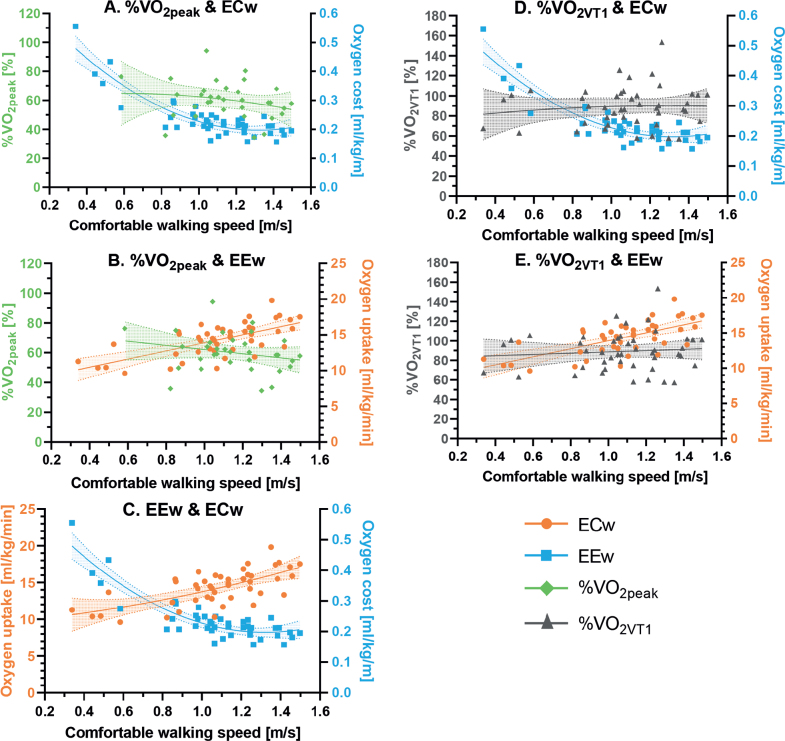 Figure 1
Peer Reviews
No public reviews on file for this paper yet. If you reviewed it on a platform where reviews are public (OpenReview, ICLR, NeurIPS, ICML), you can paste yours below so the community can read it here.
Videos
No videos yet. Explain this paper in a talk, walkthrough, or lecture? Add one.
Taxonomy
TopicsEffects of Vibration on Health · Balance, Gait, and Falls Prevention · Fibromyalgia and Chronic Fatigue Syndrome Research