Transcatheter Resolution of a Failed Neoconfluence in Pulmonary Atresia With Discontinuous Pulmonary Arteries
Jorge Alberto Silva-Estrada, Pavel Martinez-Dominguez, José Luis Colín-Ortiz, Alfredo Bobadilla-Aguirre, Nilda Espinola-Zavaleta

TL;DR
A newborn with severe heart defects underwent surgery and stenting to improve blood flow to the lungs.
Contribution
This case highlights a novel transcatheter approach to resolve complications following a failed neoconfluence in complex congenital heart disease.
Findings
A newborn with pulmonary atresia and discontinuous pulmonary arteries underwent surgical neoconfluence and shunt placement.
Postoperative stenting was required to address pulmonary artery stenosis.
Transcatheter intervention successfully resolved the failed neoconfluence.
Abstract
We present a case of a full-term newborn with complex congenital heart defects, including single-ventricle physiology and discontinuous pulmonary arteries. Prompt surgical intervention was performed, which involved pulmonary neoconfluence with autologous pericardium graft and systemic-to-pulmonary shunt placement. However, postoperative complications required stenting to address pulmonary artery stenosis.
Genes, proteins, chemicals, diseases, species, mutations and cell lines named across the full text — each resolved to its canonical identifier and authoritative record.
Click any figure to enlarge with its caption.
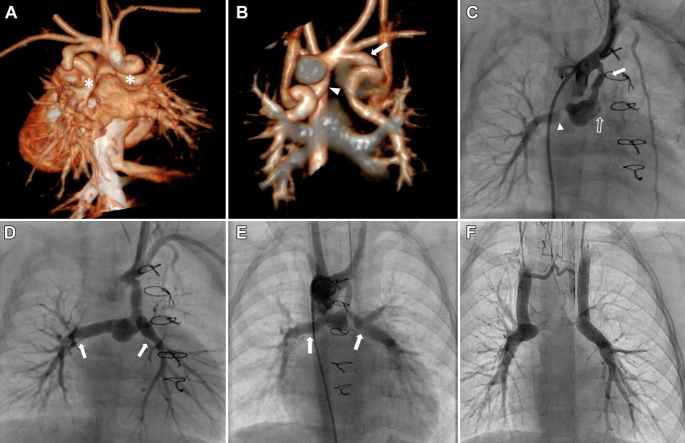 Figure 1
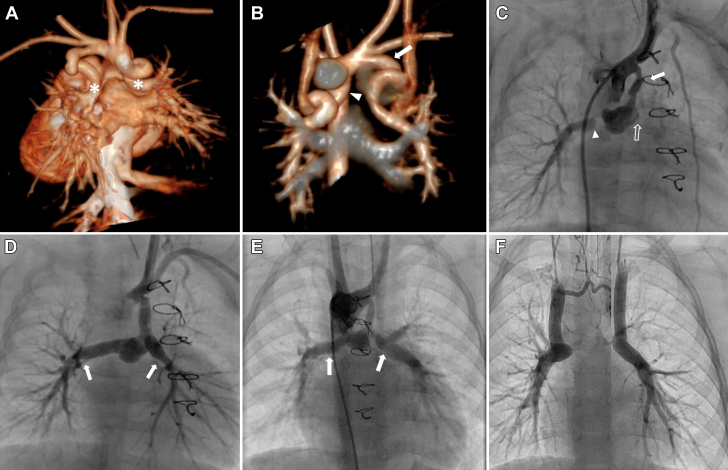 Figure 2
Peer Reviews
No public reviews on file for this paper yet. If you reviewed it on a platform where reviews are public (OpenReview, ICLR, NeurIPS, ICML), you can paste yours below so the community can read it here.
Videos
No videos yet. Explain this paper in a talk, walkthrough, or lecture? Add one.
Taxonomy
TopicsCongenital Heart Disease Studies · Congenital Diaphragmatic Hernia Studies · Tracheal and airway disorders