A nose for trouble: ecotoxicological implications for climate change and disease in Saiga antelope (S. t. tatarica)
S. T. Mullineaux, J. M. McKinley, N. J. Marks, R. Doherty, D. M. Scantlebury

TL;DR
Saiga antelope mass die-offs are linked to climate factors and pollutants, which may worsen with climate change.
Contribution
A new pollutant linkage mechanism is proposed, combining climate variables and environmental pollutants to explain Saiga die-offs.
Findings
Relative humidity, dewpoint temperature, and pollutants like Hg, As, Acetone, and SO2 were linked to Saiga die-offs.
Precipitation events and temperature spikes during calving season triggered the spread of Pasteurella multocida.
Environmental pollutants from soils formed smog events that synergistically caused mass mortality.
Abstract
In recent decades, Saiga antelope (Saiga t. tatarica) mass die-offs have become more common. The mass die-off of 2015 in central Kazakhstan, recorded 140,000 individual deaths across multiple herds. Previously, research has shown atmospheric humidity, the bacterium Pasteurella multocida serotype B, and resultant haemorrhagic septicaemia, were the primary cause. However, other synergistic factors may have impacted this process. Here we use a multivariate compositional data analysis (CoDA) approach to assess what other factors may have been involved. We show a pollutant linkage mechanism where relative humidity and dewpoint temperature combine with environmental pollutants, potentially toxic elements (e.g., Hg, As), complex carbon compounds (e.g., Acetone, Toluene), and inorganic compounds (e.g., CHx, SO2) which affected the Saiga during the calving season (start and peak) and at the…
Genes, proteins, chemicals, diseases, species, mutations and cell lines named across the full text — each resolved to its canonical identifier and authoritative record.
Click any figure to enlarge with its caption.
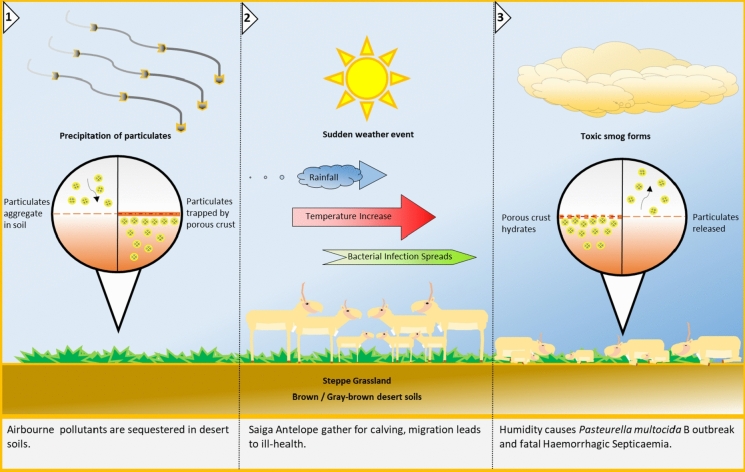 Figure 1
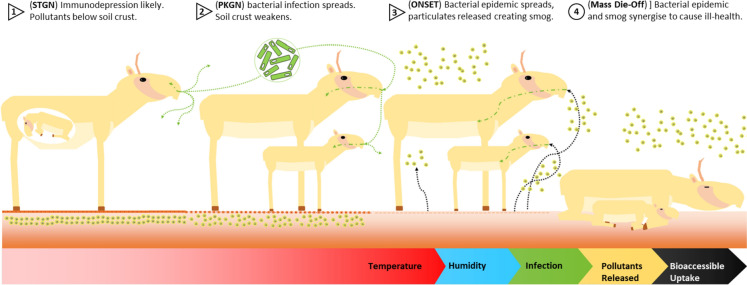 Figure 2
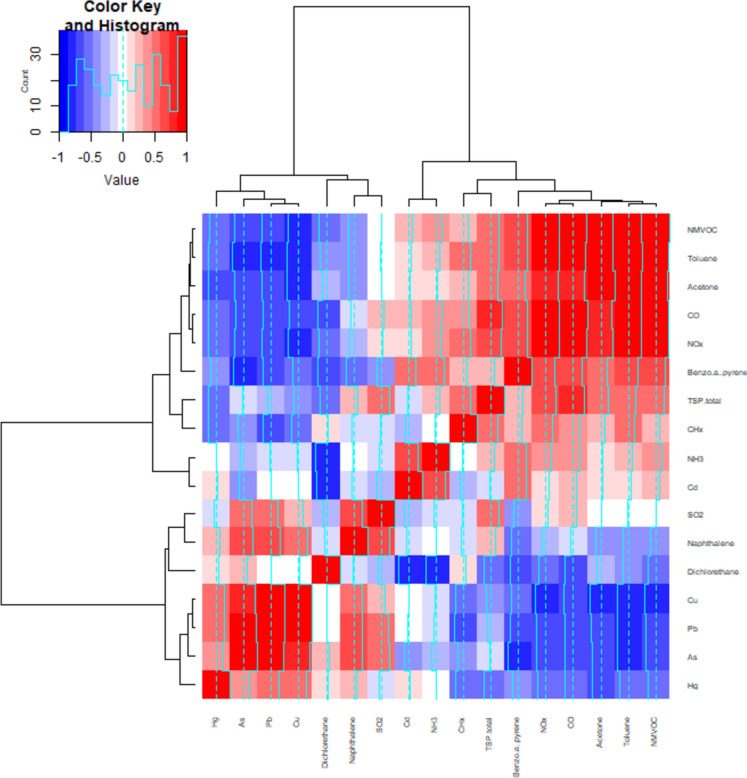 Figure 3
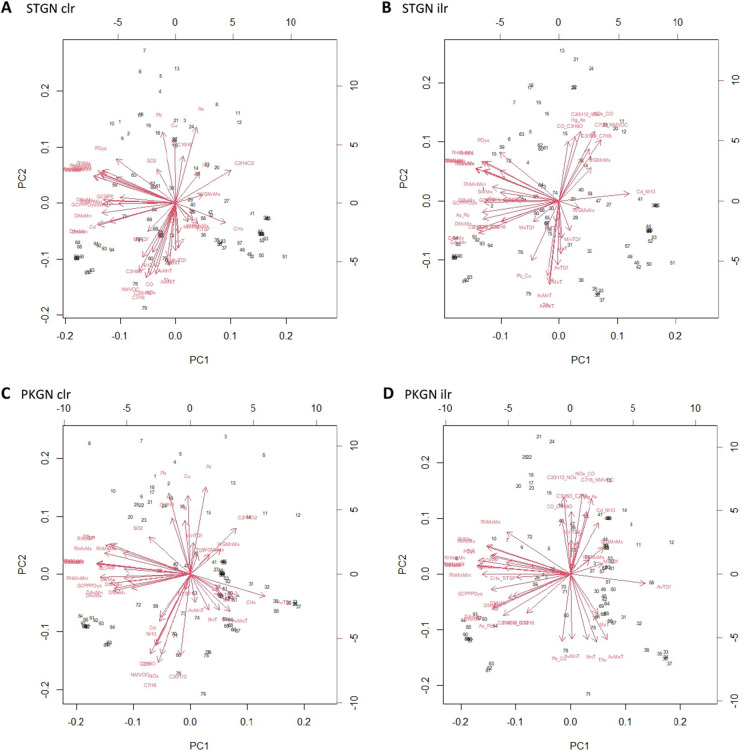 Figure 4
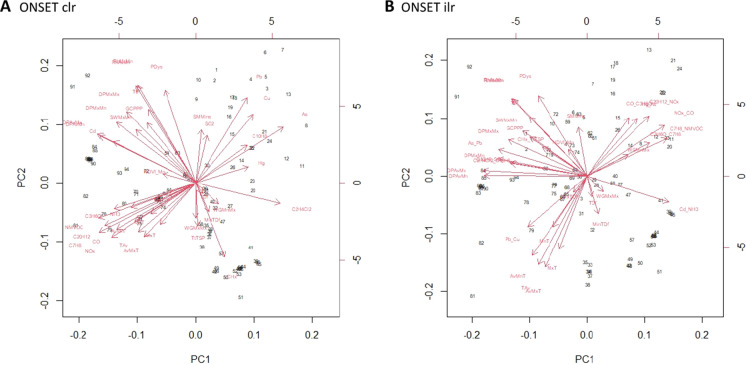 Figure 5
Peer Reviews
No public reviews on file for this paper yet. If you reviewed it on a platform where reviews are public (OpenReview, ICLR, NeurIPS, ICML), you can paste yours below so the community can read it here.
Videos
No videos yet. Explain this paper in a talk, walkthrough, or lecture? Add one.
Taxonomy
TopicsYersinia bacterium, plague, ectoparasites research · Zoonotic diseases and public health · Geochemistry and Geologic Mapping