A114 IMPROVING THE QUALITY OF PARACENTESIS PRACTICES IN PEOPLE WITH ADVANCED CIRRHOSIS IN AN AMBULATORY CARE SETTING
M Sedarous, E Lee, A Verma, K Quinn, G Hirschfield

TL;DR
This study aimed to improve the collection of fluid cell counts during paracentesis in cirrhosis patients in an outpatient setting, but saw only a small increase in compliance.
Contribution
The study highlights a practice gap in ambulatory care regarding adherence to guidelines for fluid cell count collection during paracentesis.
Findings
Baseline adherence for FCC collection was 78%, increasing marginally to 79.6% post-intervention.
Subgroup analysis showed 100% FCC collection among RNs and NPs, but only 40% among specialty hepatology groups.
The overall spontaneous bacterial peritonitis rate was 1.62% (N=3).
Abstract
Spontaneous bacterial peritonitis (SBP) is a lethal complication of decompensated cirrhosis carrying a 90% mortality rate when left untreated. Despite AASLD recommendations, there is a practice gap regarding fluid cell count (FCC) collection during paracentesis. We initiated prospective quality improvement (QI) project to improve FCC collection in an ambulatory care setting from a baseline of 78% to a goal of 100% compliance between September 11, 2022 and April 17, 2023. We examined the effects of a quality improvement initiative in 233 adult patient encounters with cirrhosis undergoing paracentesis in an ambulatory setting located within a quaternary care centre in Toronto, Canada within the study timeframe. Using a multidisciplinary approach, the quality improvement initiatives included focused groups, education regarding AASLD guidelines, development of a paracentesis bundle, and…
Genes, proteins, chemicals, diseases, species, mutations and cell lines named across the full text — each resolved to its canonical identifier and authoritative record.
Click any figure to enlarge with its caption.
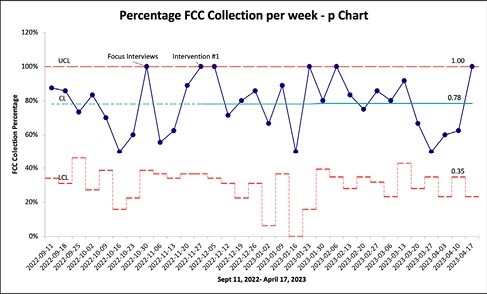 Figure 1
Peer Reviews
No public reviews on file for this paper yet. If you reviewed it on a platform where reviews are public (OpenReview, ICLR, NeurIPS, ICML), you can paste yours below so the community can read it here.
Videos
No videos yet. Explain this paper in a talk, walkthrough, or lecture? Add one.
Taxonomy
TopicsLiver Disease and Transplantation