Trends in mortality from ill-defined causes among the elderly in Brazil, 1979-2013: ecological study: Tendências de mortalidade por causas mal definidas em idosos no Brasil, 1979-2013: estudo ecológico
Davi Félix Martins, Ridalva Dias Martins Felzemburg, Acácia Batista Dias, Tania Maria Costa, Pedro Nascimento Prates Santos

TL;DR
This study shows a significant decline in deaths from unclear causes among elderly people in Brazil from 1979 to 2013, though the rate of decline varied by region.
Contribution
The study provides a detailed, nationwide analysis of declining mortality from ill-defined causes among the elderly in Brazil over a 34-year period.
Findings
Mortality from ill-defined causes among the elderly decreased continuously from 1985 to 2013.
The northeastern region of Brazil saw an average reduction of 80% in such deaths.
Amapá was the only region that did not show a significant reduction in mortality from ill-defined causes.
Abstract
Mortality measurements are traditionally used as health indicators and are useful in describing a population's health situation through reporting injuries that lead to death. The aim here was to analyze the temporal trend of proportional mortality from ill-defined causes (IDCs) among the elderly in Brazil from 1979 to 2013. Ecological study using data from the Mortality Information System of the Brazilian Ministry of Health. The proportional mortality from IDCs among the elderly was calculated for each year of the study series (1979 to 2013) in Brazil, and the data were disaggregated according to sex and to the five geographical regions and states. To analyze time trends, simple linear regression coefficients were calculated. During the study period, there were 2,646,194 deaths from IDCs among the elderly, with a decreasing trend (ß -0.545; confidence interval, CI: -0.616 to -0.475;…
Genes, proteins, chemicals, diseases, species, mutations and cell lines named across the full text — each resolved to its canonical identifier and authoritative record.
Click any figure to enlarge with its caption.
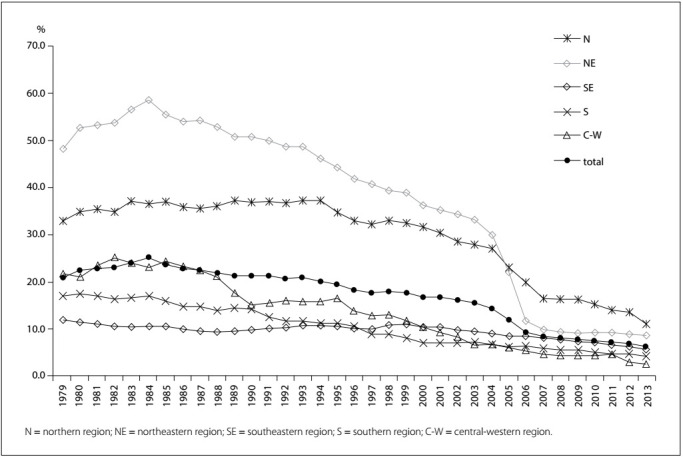 Figure 1
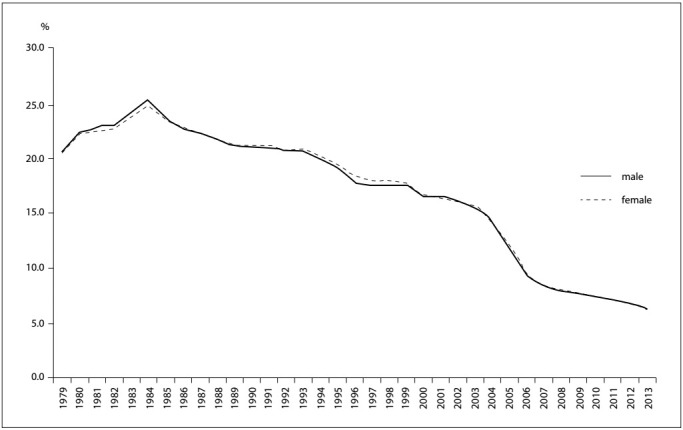 Figure 2
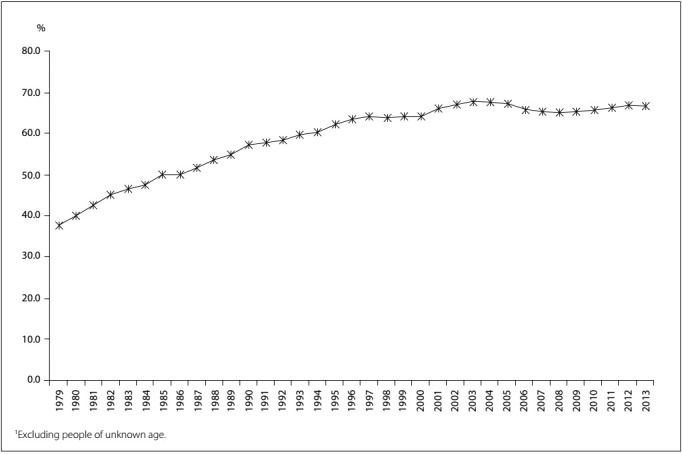 Figure 3
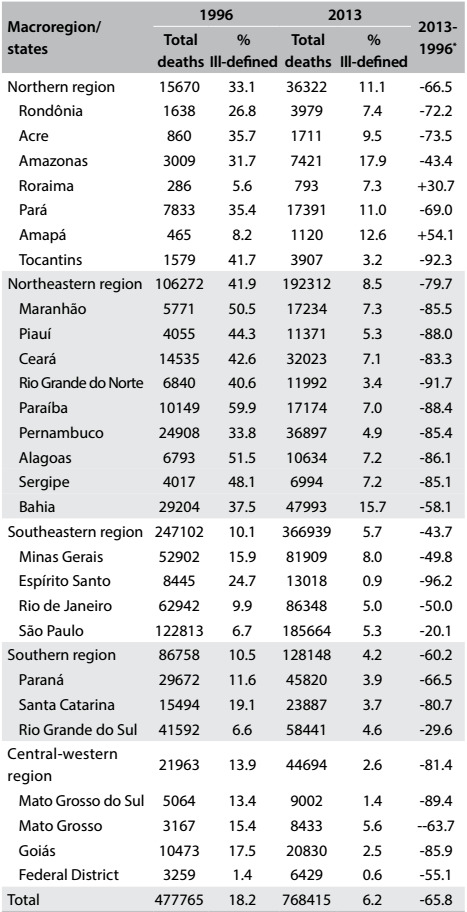 Figure 4
Peer Reviews
No public reviews on file for this paper yet. If you reviewed it on a platform where reviews are public (OpenReview, ICLR, NeurIPS, ICML), you can paste yours below so the community can read it here.
Videos
No videos yet. Explain this paper in a talk, walkthrough, or lecture? Add one.
Taxonomy
TopicsLaw and Political Science · European Law and Migration