Concurrent Occurrence of Trichilemmal Cyst and Nevus of Ota: Case Series
Ramachandra Reddy Gowda Venkatesha, Karthik Rajaram Mohan, Vasu Sridhar Rao, Saramma Mathew Fenn, Reethika Rathan

TL;DR
This paper reports three cases where individuals had both a trichilemmal cyst and nevus of Ota, which are rare skin conditions.
Contribution
The novelty lies in documenting the concurrent occurrence of two rare dermatological conditions in multiple patients.
Findings
Three patients presented with both trichilemmal cyst and nevus of Ota.
The cases highlight a rare coexistence of two distinct dermatological conditions.
The findings suggest a possible but unexplained association between these two skin conditions.
Abstract
Nevus of Ota or congenital oculodermal melanosis (ODM) is characterized by brown or blue/gray asymptomatic brown or blue/gray flat lesions of the skin, mucosae, episcleral/sclera, and uvea, which are located near the trigeminal nerve's ophthalmic and mandibular branches. The main ophthalmic complications are glaucoma and predisposition to uveal melanoma. "trichilemmal cyst" is also known as "wen" "pilar cyst" or " isthmus catagen cyst". It occurs in the scalp and mimics sebaceous cysts clinically. The swelling appears smooth in outline and is filled with cytokeratin. An unusual case of a 32-year-old male with both trichilemmal cyst and nevus of Ota, a 27-year-old female, and a 47-year-old male with nevus of Ota is discussed here.
Genes, proteins, chemicals, diseases, species, mutations and cell lines named across the full text — each resolved to its canonical identifier and authoritative record.
Click any figure to enlarge with its caption.
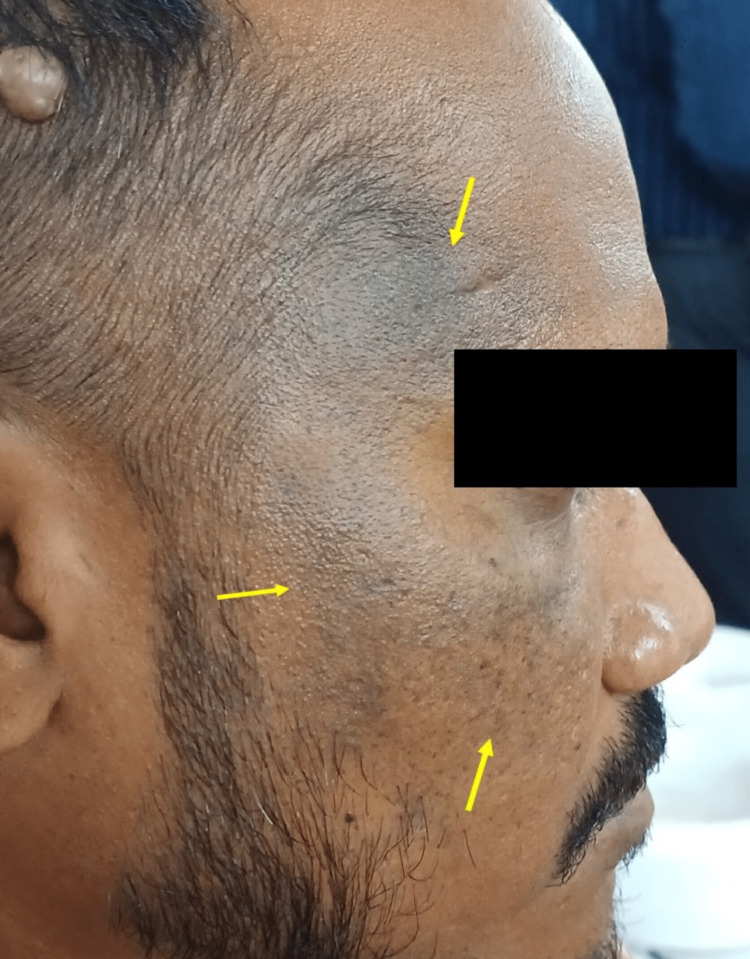 Figure 1
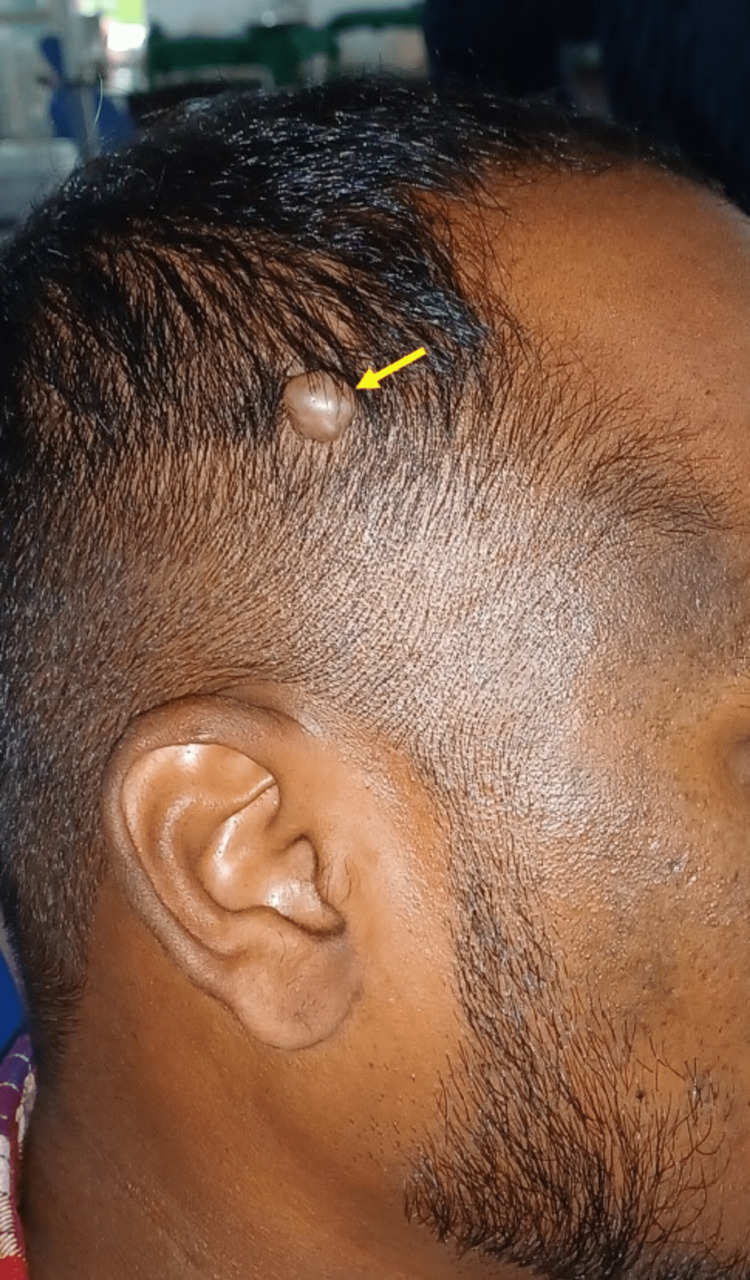 Figure 2
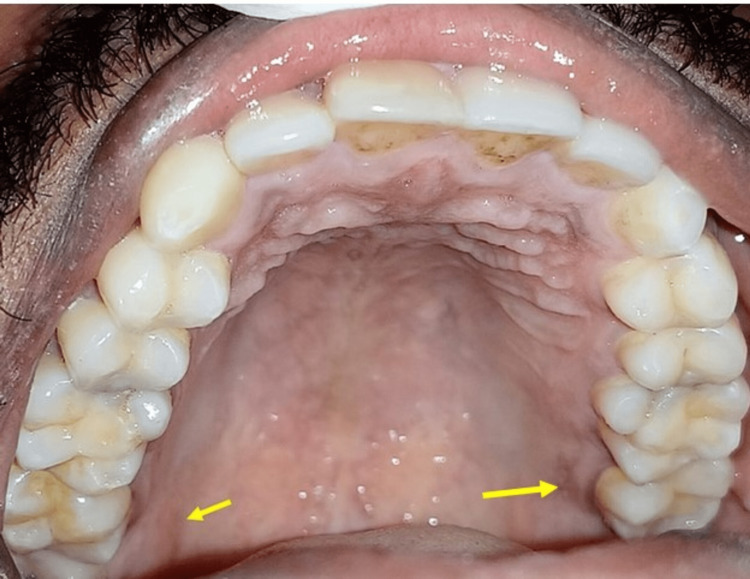 Figure 3
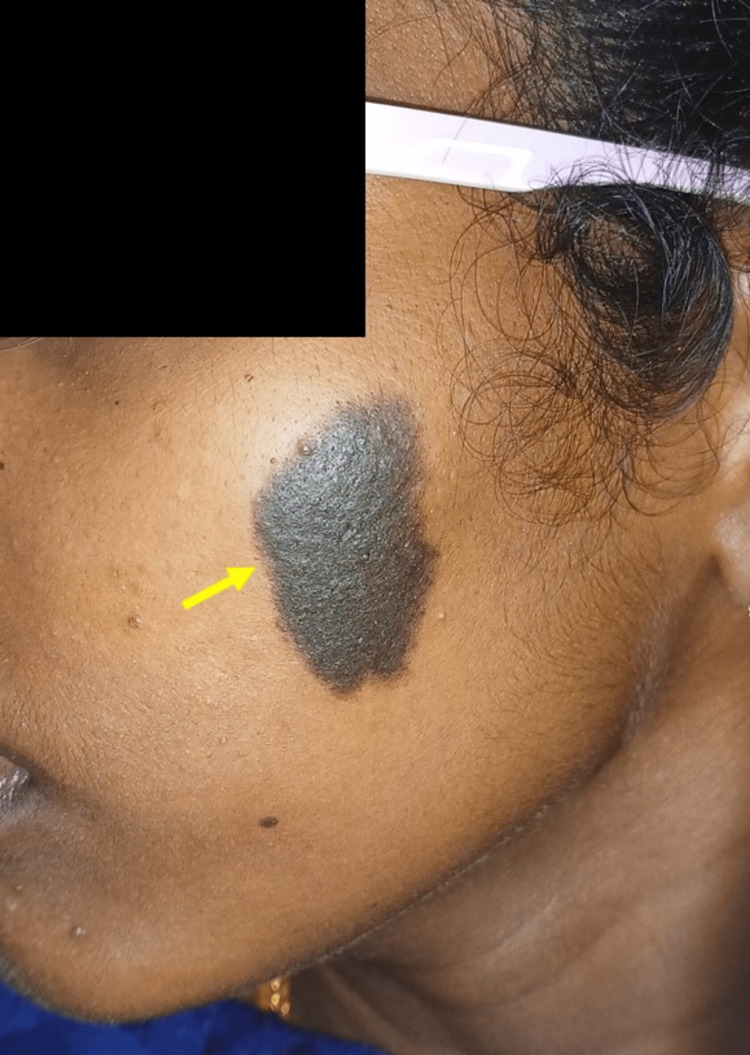 Figure 4
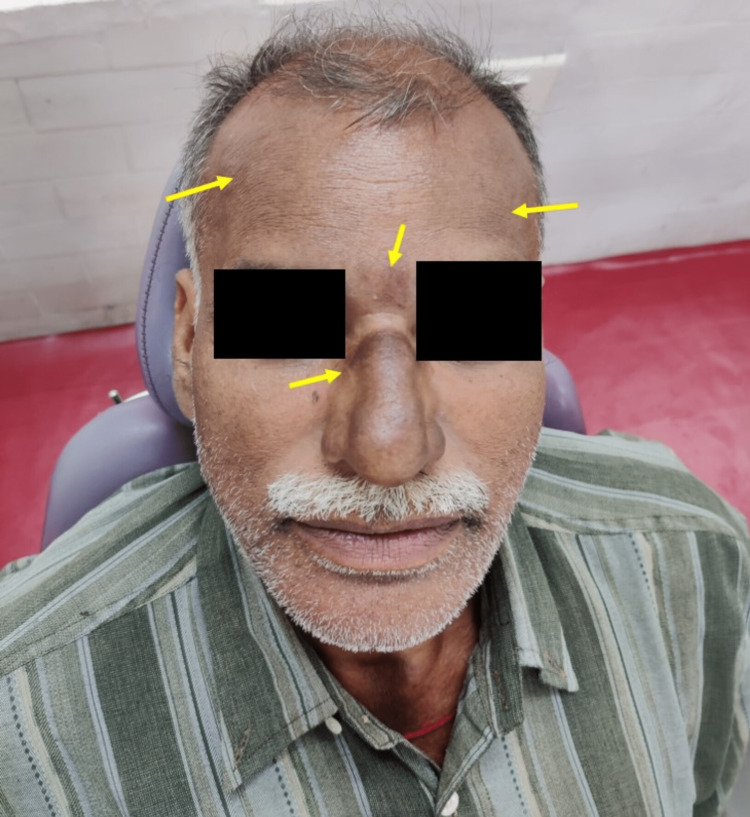 Figure 5
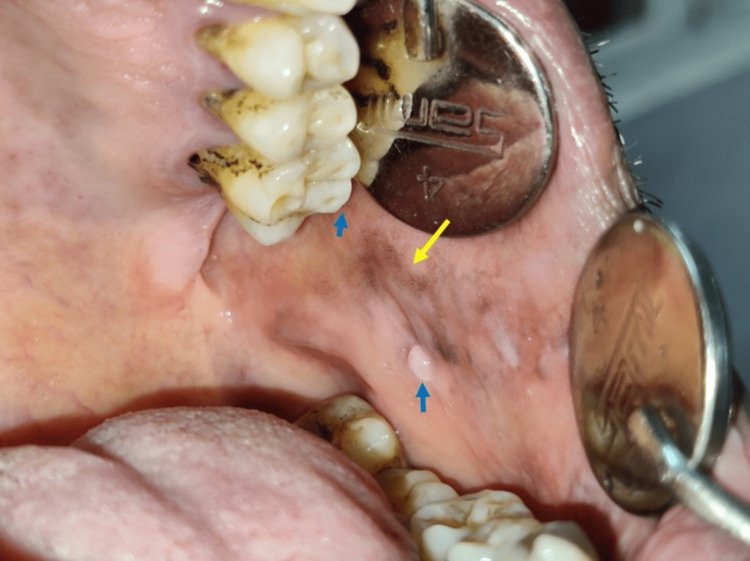 Figure 6
Peer Reviews
No public reviews on file for this paper yet. If you reviewed it on a platform where reviews are public (OpenReview, ICLR, NeurIPS, ICML), you can paste yours below so the community can read it here.
Videos
No videos yet. Explain this paper in a talk, walkthrough, or lecture? Add one.
Taxonomy
TopicsCancer and Skin Lesions · Hedgehog Signaling Pathway Studies · Genetic and rare skin diseases.