Can Short Tau Inversion Recovery (STIR) Imaging Be Used as a Stand-Alone Sequence To Assess a Perianal Fistulous Tract on MRI? A Retrospective Cohort Study Comparing STIR and T1-Post Contrast Imaging
Armeen Ahmad, Sudeep Roplekar, Anna Podlasek

TL;DR
This study compares STIR and T1-post contrast MRI sequences for diagnosing perianal fistulas and finds that STIR could be used alone or in combination for accurate assessment.
Contribution
The study evaluates STIR imaging as a potential stand-alone diagnostic tool for perianal fistulas, offering a simplified clinical approach.
Findings
STIR imaging demonstrated high sensitivity and 100% specificity for identifying internal openings and tracts.
Combining STIR with T1-post contrast improved diagnostic accuracy with near-perfect AUC values.
Moderate to substantial agreement was found between radiological assessments and clinical diagnosis.
Abstract
Introduction: Perianal fistulas demand precise preoperative assessment for optimal surgical outcomes. MRI, using Short Tau Inversion Recovery (STIR) and T1-post contrast sequences, plays a crucial role in this evaluation.This retrospective cohort study compared STIR imaging's diagnostic efficacy with T1-post contrast sequences in identifying perianal fistulous tracts. The study investigated whether STIR imaging could serve as the sole diagnostic sequence, simplifying clinical practice. Methods: In a tertiary care hospital, 100 patients underwent pelvic MRI for suspected perianal fistulas. Radiologists independently evaluated STIR and T1-post contrast sequences for internal openings, tract extent, distinction, abscess presence, and tract type. Sensitivity, specificity, area under the curve (AUC), and Cohen's kappa analysis were used for diagnostic assessment. Results: STIR imaging…
Genes, proteins, chemicals, diseases, species, mutations and cell lines named across the full text — each resolved to its canonical identifier and authoritative record.
Click any figure to enlarge with its caption.
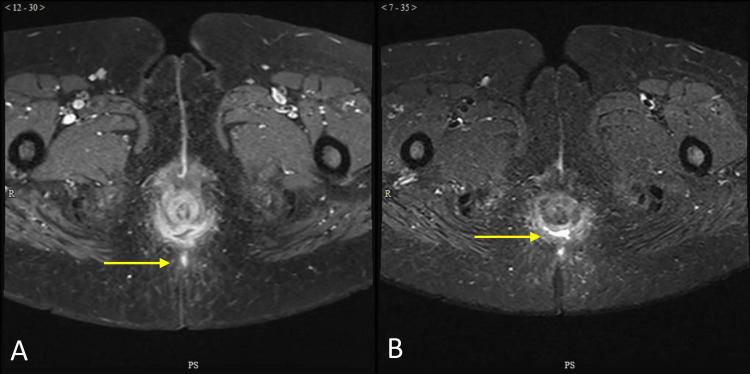 Figure 1
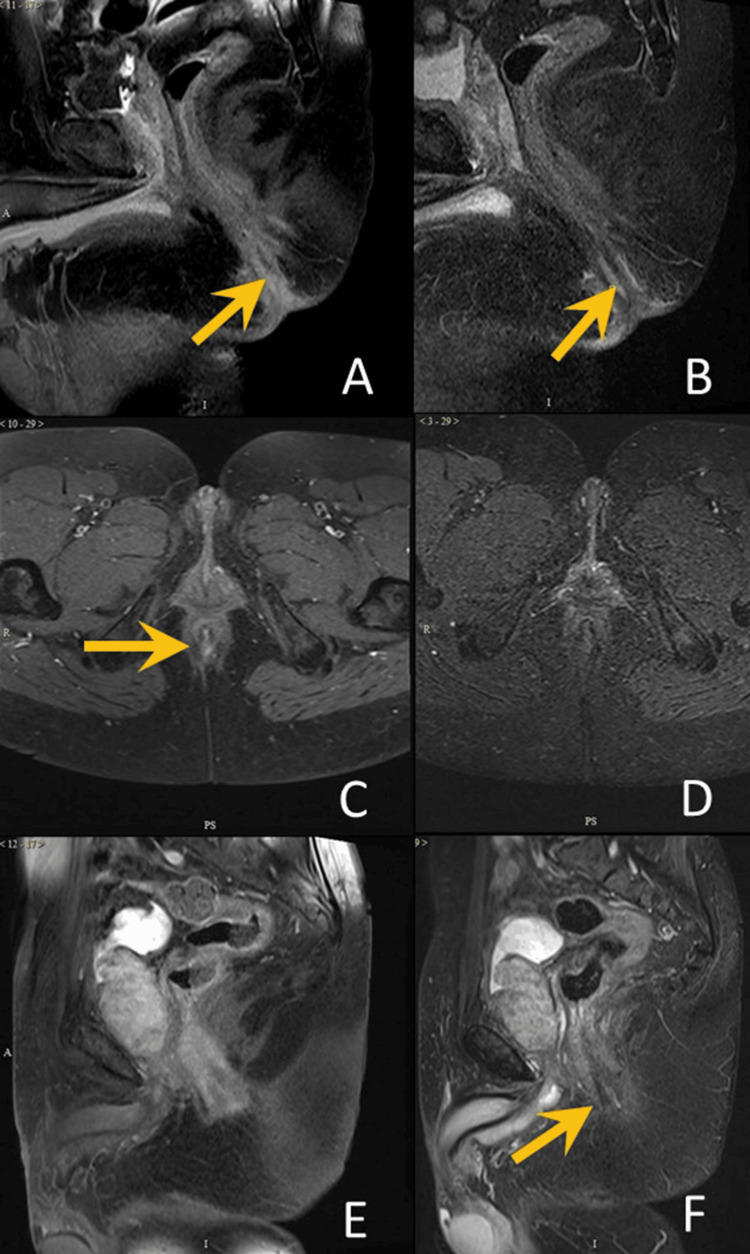 Figure 2
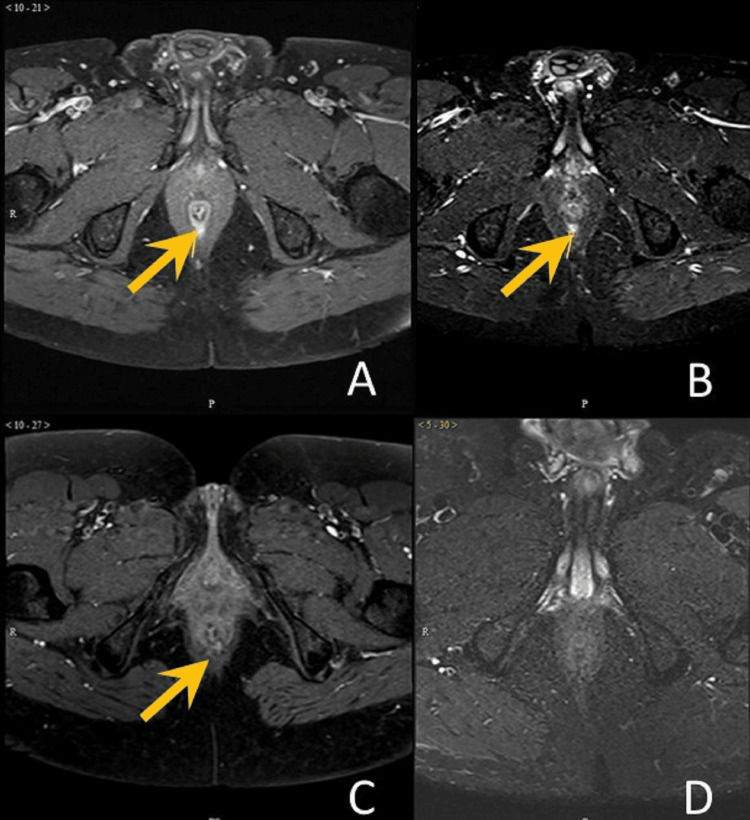 Figure 3
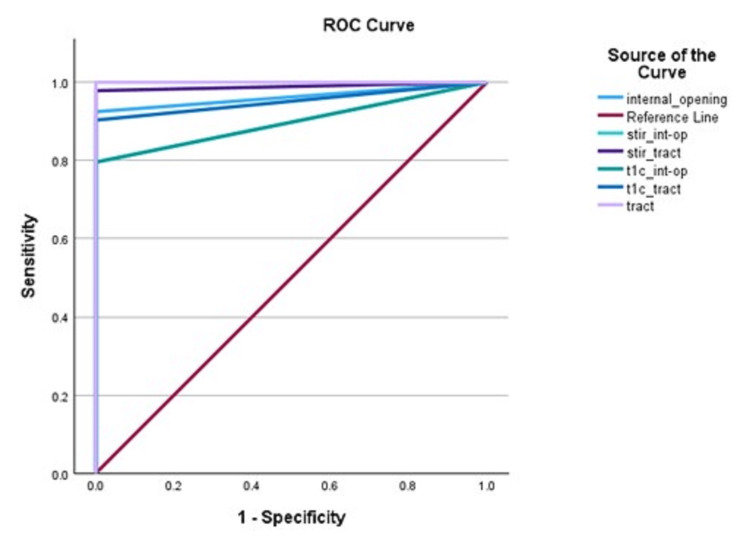 Figure 4
Peer Reviews
No public reviews on file for this paper yet. If you reviewed it on a platform where reviews are public (OpenReview, ICLR, NeurIPS, ICML), you can paste yours below so the community can read it here.
Videos
No videos yet. Explain this paper in a talk, walkthrough, or lecture? Add one.
Taxonomy
TopicsAnorectal Disease Treatments and Outcomes · Colorectal and Anal Carcinomas · Diverticular Disease and Complications