Immune endotyping and gene expression profile of patients with chronic rhinosinusitis with nasal polyps in the aspirin-exacerbated respiratory disease (AERD) and the non-AERD subgroups
Javad Nazari, Faezeh Shahba, Negin Jafariaghdam, Saleh Mohebbi, Saba Arshi, Mohammad Hassan Bemanian, Morteza Fallahpour, Sima Shokri, Fatemeh Atashrazm, Saeed Amini, Maryam Roomiani, Mahnaz Jamee, Pegah Babaheidarian, Majid Khoshmirsafa, Mohammad Nabavi

TL;DR
This study compares immune profiles and gene expression in patients with chronic rhinosinusitis with nasal polyps, focusing on those with and without aspirin-exacerbated respiratory disease.
Contribution
The study identifies distinct immune and gene expression patterns in AERD versus non-AERD CRSwNP patients, highlighting Th2 inflammation in AERD.
Findings
AERD patients showed higher infiltration of eosinophils, neutrophils, and plasma cells in nasal polyps compared to non-AERD patients.
Gene expression levels of GATA3, IL4, IL5, and IL17 were significantly higher in the AERD group.
Th2 inflammation appears to predominate in AERD patients based on gene and immune profile differences.
Abstract
Chronic Rhinosinusitis (CRS) is a paranasal sinus inflammatory disease and is divided into two subgroups defined as CRS with nasal polyps (CRSwNP) and CRS without nasal polyps (CRSsNP). CRSwNP displays a T helper (Th)2 biased phenotype, and based on sensitivity or tolerance to aspirin or non-steroidal anti-inflammatory drugs (NSAID), is further subdivided into Aspirin-exacerbated respiratory disease (AERD) and non-AERD groups. Considering the challenge of diagnosis and treatment in patients with CRSwNP, particularly the AERD subtype, and the significance of endotyping in these patients, we examined the immune profile and endotyping based on gene expression analysis in the AERD and the non-AERD groups of patients with CRSwNP. In this study, 21 patients were enrolled and were categorized into AERD (N = 10) and non-AERD (N = 11) groups based on their sensitivity to aspirin. After the…
Genes, proteins, chemicals, diseases, species, mutations and cell lines named across the full text — each resolved to its canonical identifier and authoritative record.
Click any figure to enlarge with its caption.
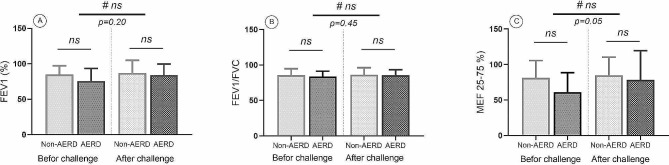 Figure 1
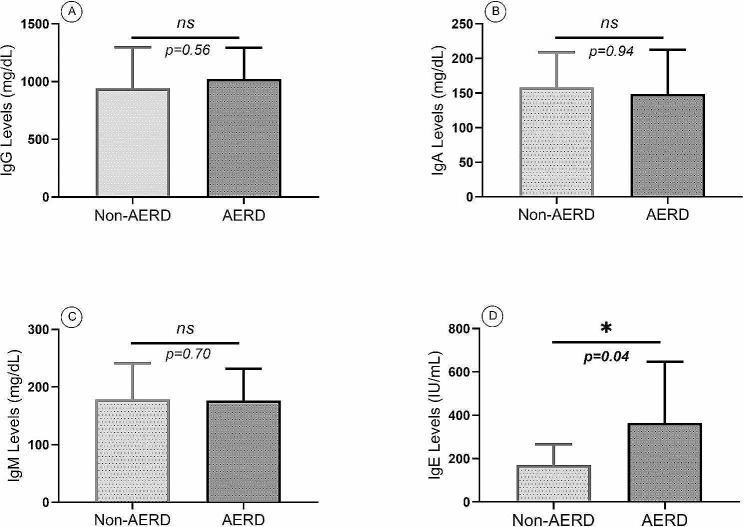 Figure 2
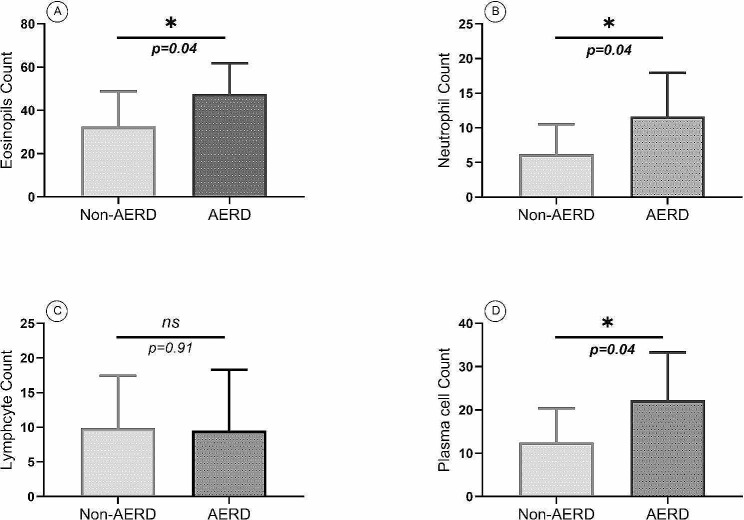 Figure 3
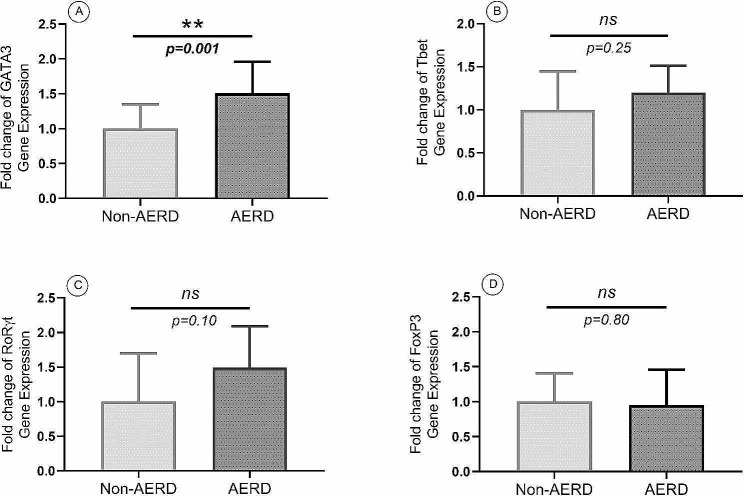 Figure 4
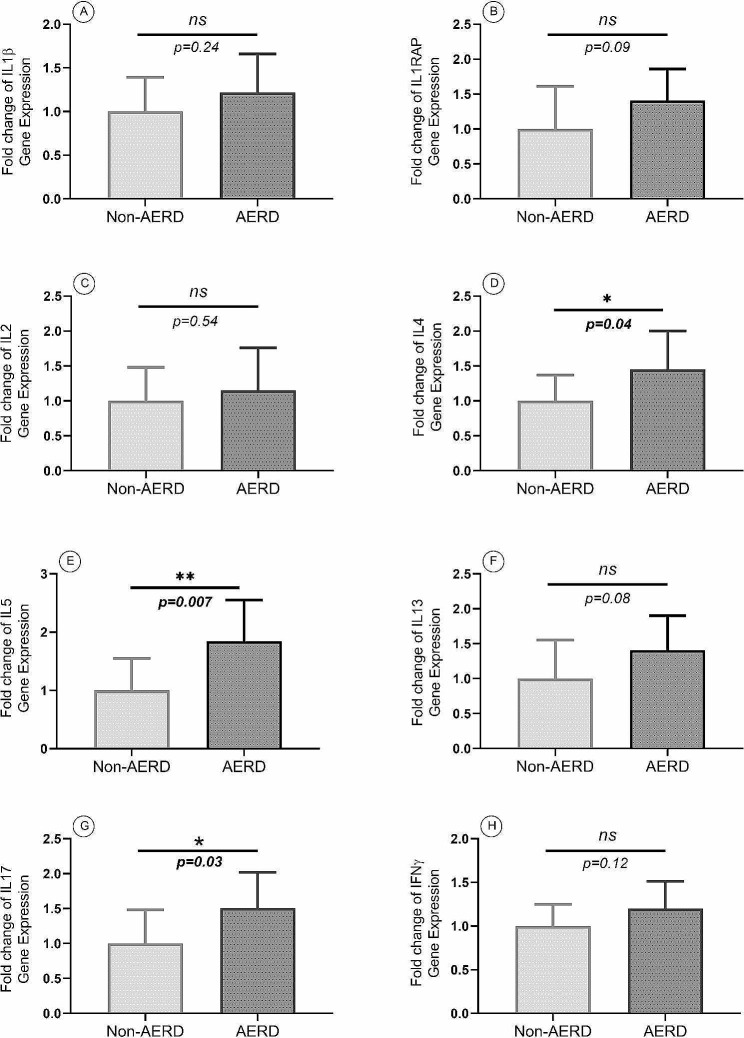 Figure 5
Peer Reviews
No public reviews on file for this paper yet. If you reviewed it on a platform where reviews are public (OpenReview, ICLR, NeurIPS, ICML), you can paste yours below so the community can read it here.
Videos
No videos yet. Explain this paper in a talk, walkthrough, or lecture? Add one.
Taxonomy
TopicsDiabetes and associated disorders · Thyroid Disorders and Treatments · Immunodeficiency and Autoimmune Disorders