Translation and validation of a simplified Chinese version of the psychosocial assessment tool
Jun Kou, Ruiqi Wang, Yuxin Tang, Yi Tang, Yang Gao

TL;DR
Researchers translated and validated a psychosocial assessment tool for Chinese families of children with cancer.
Contribution
The study provides a validated simplified Chinese version of the Psychosocial Assessment Tool (PAT2.0).
Findings
The Chinese PAT2.0 showed good internal consistency with Cronbach’s alpha values between 0.732 and 0.843.
Test-retest reliability was excellent, with intraclass correlation coefficients ranging from 0.869 to 0.984.
The translated tool demonstrated high construct validity through factor analysis and correlations with other measures.
Abstract
The Psychosocial Assessment Tool (PAT2.0) is widely used to assess psychosocial risk in families of children with cancer. Our study aims to apply PAT2.0 to Chinese patients and assess the reliability, content validity, and construct validity of the Chinese version. A total of 161 participants completed the study, each with only one child diagnosed with cancer. Psychometric evaluations, including internal consistency, score distribution, test-retest reliability, and construct validity, were conducted. Cronbach’s alpha values ranged from 0.732 to 0.843, indicating good internal consistency. Additionally, intraclass correlation coefficient values ranged from 0.869 to 0.984, indicating excellent test-retest reliability. The Simplified Chinese version of PAT2.0 demonstrated high construct validity in factor analyses and correlations with the General Functioning Subscale of the Family…
Genes, proteins, chemicals, diseases, species, mutations and cell lines named across the full text — each resolved to its canonical identifier and authoritative record.
Click any figure to enlarge with its caption.
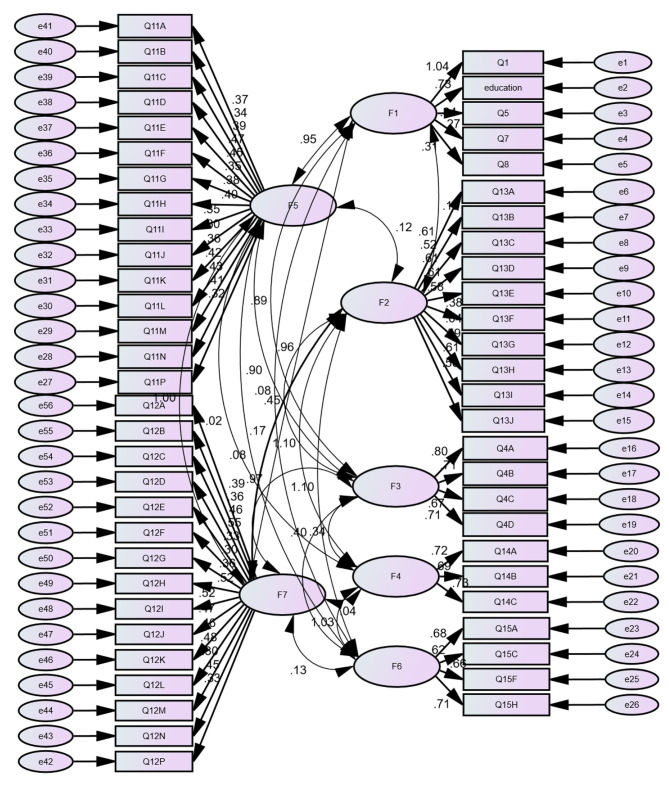 Figure 1
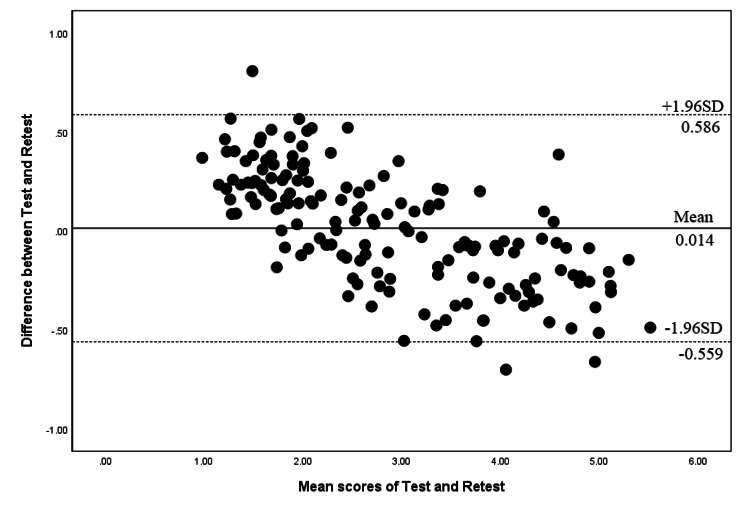 Figure 2
Peer Reviews
No public reviews on file for this paper yet. If you reviewed it on a platform where reviews are public (OpenReview, ICLR, NeurIPS, ICML), you can paste yours below so the community can read it here.
Videos
No videos yet. Explain this paper in a talk, walkthrough, or lecture? Add one.
Taxonomy
TopicsChildhood Cancer Survivors' Quality of Life · Family Support in Illness · Cancer survivorship and care