Stereoselective Reduction of Steroidal 4-Ene-3-ketones in the Presence of Biomass-Derived Ionic Liquids Leading to Biologically Important 5β-Steroids
Eszter Szánti-Pintér, Lada Jirkalová, Radek Pohl, Lucie Bednárová, Eva Kudova

TL;DR
Scientists developed a green method to create biologically important steroids using ionic liquids, achieving high selectivity and efficiency.
Contribution
A biomass-derived ionic liquid improves stereoselectivity in steroid hydrogenation, enabling efficient and clean synthesis of 5β-steroids.
Findings
Tetrabutylammonium d-mandelate enables high yield and stereoselectivity in steroid reduction.
The catalyst can be recycled without loss of efficiency.
Additional steroid substituents significantly affect 5β-selectivity.
Abstract
The stereoselective reduction of the steroidal 4-ene-3-ketone moiety (enone) affords the 5β-steroid backbone that is a key structural element of biologically important neuroactive steroids. Neurosteroids have been currently studied as novel and potent central nervous system drug-like compounds for the treatment of, e.g., postpartum depression. As a green methodology, we studied the palladium-catalyzed hydrogenation of steroidal 4-ene-3-ketones in the presence of ionic liquids derived from natural carboxylic acids. The hydrogenation proceeds with improved 5β-selectivity in the presence of tetrabutylammonium carboxylates as additives compared to the exclusive use of an organic solvent. Under optimal conditions, using tetrabutylammonium d-mandelate, the reduction of testosterone led to 5β-dihydrotestosterone in high yield and stereoselectivity and no byproduct formation was observed.…
Genes, proteins, chemicals, diseases, species, mutations and cell lines named across the full text — each resolved to its canonical identifier and authoritative record.
Click any figure to enlarge with its caption.
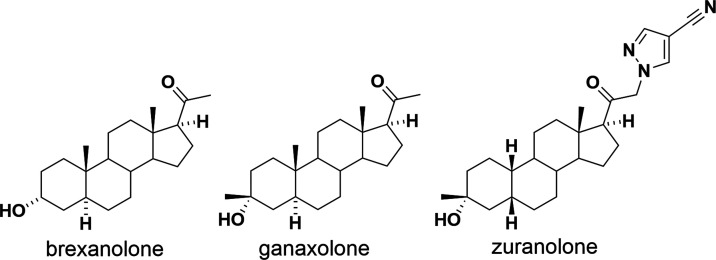 Figure 1
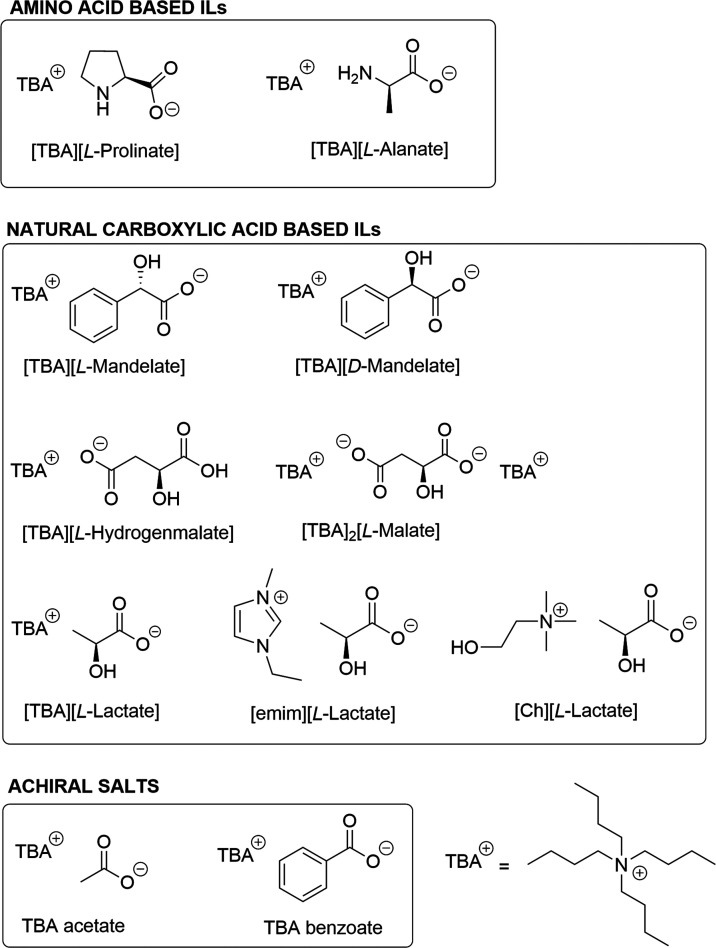 Figure 2
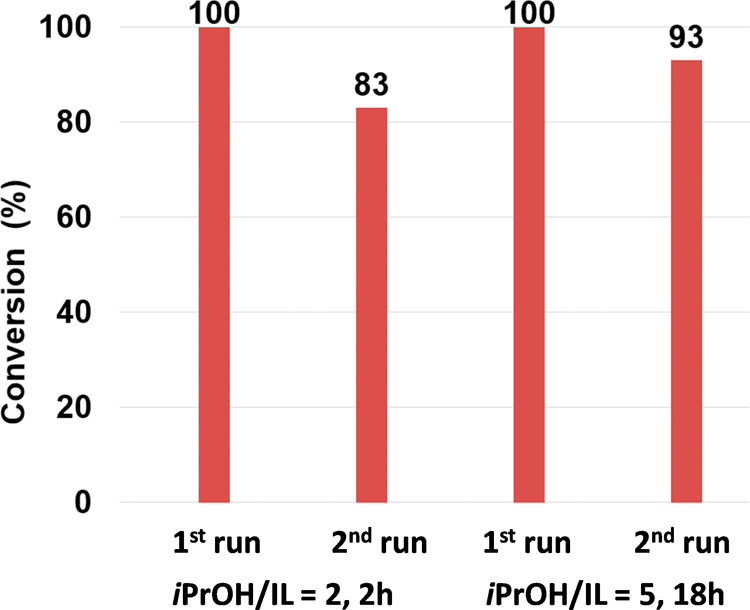 Figure 3
 Figure 4
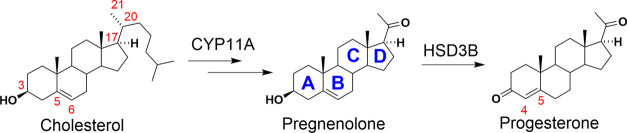 Figure 5
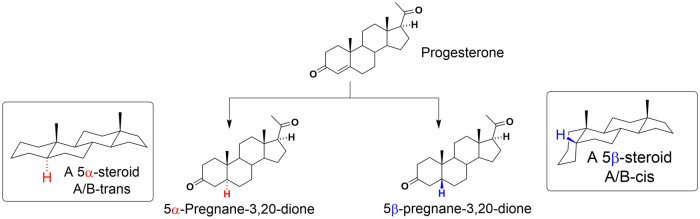 Figure 6
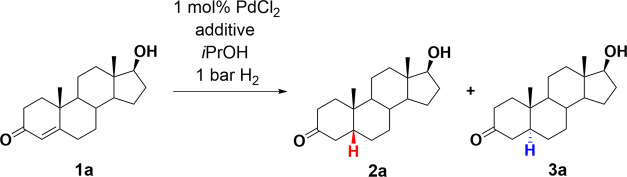 Figure 7
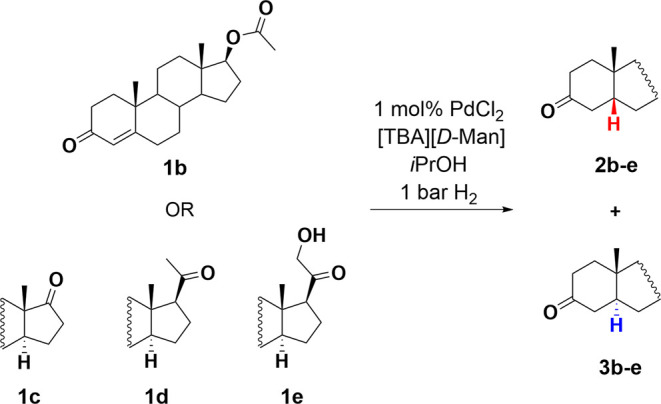 Figure 8
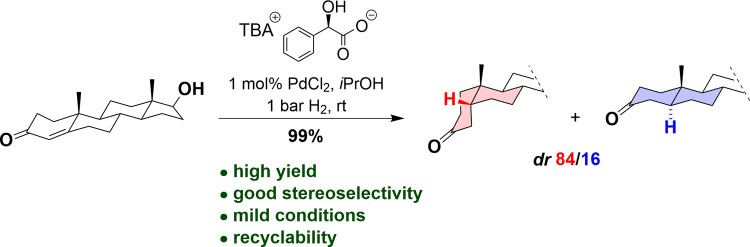 Figure 9
Peer Reviews
No public reviews on file for this paper yet. If you reviewed it on a platform where reviews are public (OpenReview, ICLR, NeurIPS, ICML), you can paste yours below so the community can read it here.
Videos
No videos yet. Explain this paper in a talk, walkthrough, or lecture? Add one.
Taxonomy
TopicsIonic liquids properties and applications · Asymmetric Synthesis and Catalysis · Chemical Synthesis and Reactions